The Crusader in the Pentagon: How Pete Hegseth's Theology Shapes US Iran Policy
Nine months before a Tomahawk missile devastated the Shajareh Tayyebeh elementary school in Minab, Iran, killing more than 175 people including numerous children, the personal pastor of US Defense Secretary Pete Hegseth delivered a sermon at the Pentagon that would foreshadow the administration's theological approach to warfare. Brooks Potteiger, Hegseth's closest spiritual adviser, told military leaders gathered for the first of what have become monthly Christian worship services at the Department of Defense that "Jesus has the final say over all of it," including Tomahawk and Minuteman missiles.
Divine Sanction for Military Action
Despite evidence suggesting US responsibility for the 28 February school bombing that predominantly killed children, neither Donald Trump nor Hegseth has accepted accountability or expressed remorse. Instead, Hegseth has consistently framed the six-week war in Iran as divinely sanctioned, repeatedly invoking "God's almighty providence" and expressing certainty that God supports the US military. Amid boasts about American firepower and theatrical disdain for rules of engagement, the defense secretary has promised "no quarter" to what he calls "barbaric savages" of the Iranian regime while calling on Americans to pray for victory "in the name of Jesus Christ."
Hegseth's distinctive fusion of piety and bloodlust reached a peak at the 25 March Pentagon worship service, where he prayed for "overwhelming violence of action against those who deserve no mercy." The prayer proved so extreme that it reportedly provoked a direct rebuke from Pope Leo, who preached on Palm Sunday that God ignores prayers from those whose "hands are full of blood" from making war.
Calvinist Foundations and Predestination Beliefs
The 45-year-old army veteran and former Fox News host belongs to an obscure, deeply Calvinist wing of evangelical Christianity that rejects papal authority and embraces predestination theology. According to Julie Ingersoll, a University of North Florida religious studies professor who researches this branch of Reformed Christianity, adherents believe "nothing happens that isn't in God's will" and that "God directs everything that happens."
When questioned about whether this theology could justify bombing an elementary school, Ingersoll cited Deuteronomy 20, where God instructs Israelites to "destroy every living thing" in certain cities, asking: "What makes you think he wouldn't cause a girl's school to be attacked?"
Crusader Symbolism and Theological Influences
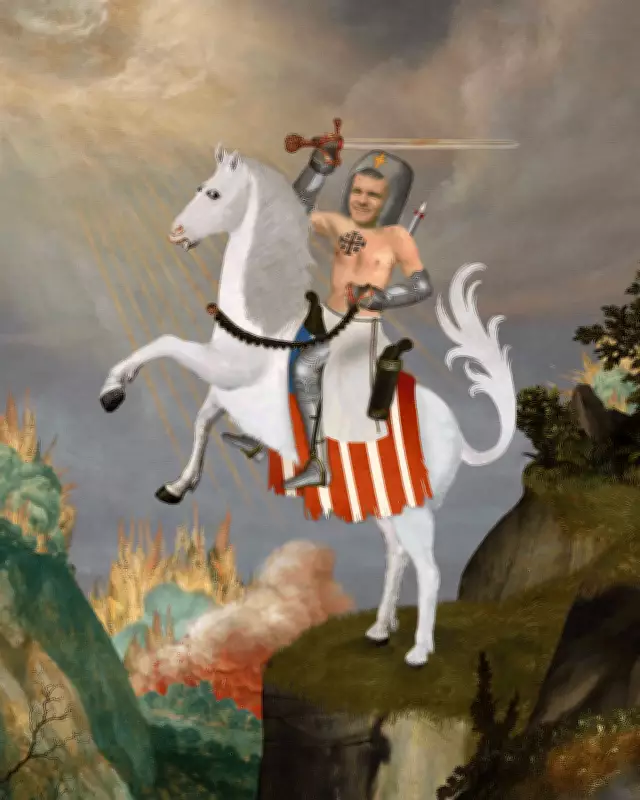
The Latin phrase "Deus Vult" (God wills it) is tattooed across Hegseth's right biceps, referencing the battle cry of Christian warriors during the Crusades. This symbolism reflects his broader theological orientation, which has developed through his involvement with the Communion of Reformed Evangelical Churches (CREC) and his relationship with pastor Douglas Wilson, a 72-year-old theologian who has spent five decades attempting to establish a "theocracy" in Moscow, Idaho.
Wilson's extreme views include advocating for "biblical patriarchy" where wives submit to husbands, supporting painful discipline for children, opposing women's suffrage, and not opposing the death penalty for homosexuality. He describes himself as a Christian nationalist who wants "to take over the world for Christ" and has written controversial defenses of antebellum southern slavery as "far more humane than that of ancient Rome."
Militant Masculinity and Evangelical Culture Shift
According to historian Kristin Kobes Du Mez, author of "Jesus and John Wayne," Hegseth embodies a particular strain of militant masculinity that has developed among white evangelicals since World War II. Facing threats to their status from social movements and economic shifts, evangelicals invested in a chauvinistic religiosity that allowed them to reassert dominance, particularly within domestic spheres.
"You could not get a better embodiment of that ideology, that particularly militaristic conception of Christianity and ends-justifies-the-means mentality that baptizes violence and cruelty in the name of righteousness," Du Mez said of Hegseth. She notes that while previous leaders of this movement typically hadn't served in the military themselves, Hegseth combines "the bluster, the rhetoric, that underlying ideology" with actual military experience and now, political power.
Christian Nationalism's Growing Political Influence
The contemporary Christian nationalist movement in the United States unites Christians from disparate denominations, with Hegseth representing the Reformed/Calvinist wing. This movement enjoys significant support, with about one in three Americans either sympathetic or strong believers in the idea of the US as a Christian nation according to Public Religion Research Institute surveys.
Brian Kaylor, editor-in-chief of the Baptist publication Word&Way, has closely followed Hegseth's promotion of Christian theology in government and finds his statements alarming. "This is not just Crusader theology but something that would be considered heretical in most of Christianity today," Kaylor said. "It's really dangerous and scary. It makes his comments about the religious fanaticism of Iran's regime ironic at best, if not downright hypocritical."
Long-Term Strategic Implications
Leaders of Christian nationalism operate on timelines spanning centuries, Ingersoll notes, pointing to their persistence in campaigns against the Department of Education (established 1979) and their 50-year battle to overturn Roe v. Wade. This long-term planning contributes to why she believes Christian nationalism is "on the ascendancy, historically speaking."
As the Iran conflict reached a temporary ceasefire, Hegseth declared: "Our troops, our American warriors, deserve the credit for this day, but God deserves all the glory." The statement reflects his ongoing theological framing of military action, raising profound questions about how religious ideology influences strategic decisions with global consequences.
The historical parallel that emerges most starkly comes from Abraham Lincoln's second inaugural address in 1865, when he acknowledged that both sides in the Civil War believed themselves to be acting according to God's wishes. "Both read the same Bible and pray to the same God, and each invokes His aid against the other," Lincoln said, concluding that "The Almighty has his own purposes." This measured perspective stands in stark contrast to the certainty expressed by Hegseth about divine support for specific military actions.