US Defense Secretary Claims Iran 'Begged' for Ceasefire After Devastating Military Campaign
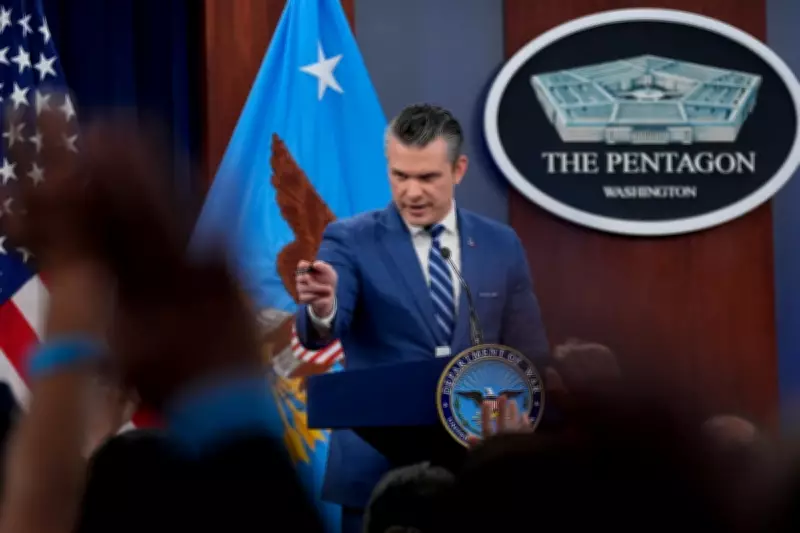
In a dramatic press briefing at the Pentagon, US Defense Secretary Pete Hegseth asserted that Iran had "begged" for the recently announced ceasefire, following forty days of intense conflict that left the country's military infrastructure in ruins. The briefing marked the first public comments from the Defense Department since former President Donald Trump announced a two-week pause in hostilities.
Operation Epic Fury's Devastating Impact
Standing alongside Joint Chiefs Chair Dan Caine, Hegseth detailed the extensive damage inflicted during what he termed "Operation Epic Fury." "Iran's weapons factories have been reduced to rubble," Hegseth declared, adding that the country's military had been rendered "combat ineffective for years to come."
The defense secretary revealed that Supreme Leader Ali Khamenei had been killed on the first day of the conflict, with his son Mojtaba Khamenei designated as successor on March 8. Hegseth described the current supreme leader as "wounded and disfigured" from the sustained attacks.
The Final Wave of Destruction
According to military officials, strikes conducted in the final hours before Trump's deadline had "completely destroyed Iran's defense industrial base." While acknowledging Iran still possessed stockpiled weapons, Hegseth emphasized that "they can no longer manufacture the weapons to replace them."
The ceasefire came after what Trump described as a "last-minute intervention" by Pakistan's Prime Minister Shehbaz Sharif and Army Chief General Asim Munir. Trump announced the suspension of military operations less than two hours before his self-imposed deadline to "decimate the entirety of Iranian civilization."
Contradictory Claims and Regional Fallout
Despite the ceasefire announcement, significant disagreements persist between the involved parties:
- Iran's Supreme National Security Council claimed "nearly all the objectives of the war have been achieved" while simultaneously warning that "our hands are on the trigger" should hostilities resume
- Trump asserted Iran would surrender its enriched uranium with "no enrichment going forward"
- Iran's ten-point counter-proposal explicitly demands the right to continue uranium enrichment
- Disagreement exists over whether the ceasefire extends to Lebanon, where Israel continues military operations
Human and Financial Costs
The conflict has exacted a heavy toll across the region:
- Thirteen US service members confirmed killed in action
- Total regional deaths exceeding 5,000, including over 1,600 Iranian civilians
- At least 1,497 fatalities reported in Lebanon
- US military expenditures reaching approximately $12.7 billion by day six
- A $200 billion supplemental funding request pending before Congress
Uncertain Future and Continued Presence
When questioned about the duration of US military presence in the region, Hegseth responded with unambiguous determination: "We're not going anywhere." He emphasized that Iran's acceptance of the ceasefire resulted from the threat of even more devastating strikes targeting power plants, bridges, and energy infrastructure—targets he described as "impossible to defend and realistically rebuild."
The war began on February 28 with nearly 900 US and Israeli strikes against Iranian military infrastructure, missile facilities, and leadership targets within twelve hours. While the two-week pause provides temporary relief, the fundamental disagreements over uranium enrichment and regional military activities suggest the ceasefire represents merely an intermission rather than a resolution to the broader conflict.