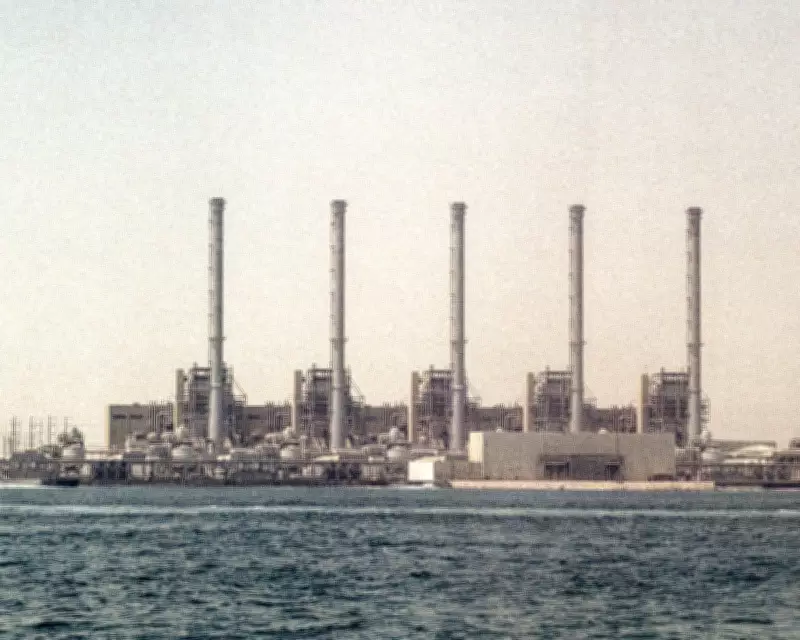
Gulf's Desalination Plants: Critical Water Infrastructure Under Threat
In 1983, the Central Intelligence Agency identified desalinated potable water as the most crucial commodity in the Gulf region. The agency warned that while losing a single desalination plant might be manageable, successful attacks on multiple facilities in the most dependent nations could trigger national crises, potentially leading to mass panic and civil unrest. The greatest threat to the region's water supply at that time was identified as Iran.
Recent Attacks Raise Regional Tensions
Four decades later, these warnings gained renewed relevance when Iran's foreign minister, Abbas Araghchi, accused the United States of committing "a blatant and desperate crime" by attacking a desalination facility on Qeshm Island in the Strait of Hormuz. Araghchi asserted that "The US set this precedent, not Iran." The United States promptly denied responsibility for the incident.
The following day, Bahrain announced that one of its own desalination plants had been struck, blaming "Iranian aggression" for the attack. This exchange created fears that the region might descend into a cycle of retaliatory strikes targeting critical water infrastructure. However, the attacks on desalination facilities subsequently ceased, raising questions about the strategic calculations behind this restraint.
Regional Dependence on Desalination
Potable water has always been scarce in the Gulf region due to low and highly variable rainfall patterns and the absence of substantial permanent rivers. Historically, communities relied on limited groundwater supplies, but the post-1950s oil industry boom dramatically increased water demand, depleted aquifers, and forced rapid development of desalination technology.
Current data reveals the extent of this dependence:
- Saudi Arabia obtains 70% of its drinking water from desalination plants
- Oman relies on desalination for 86% of its potable water
- The United Arab Emirates depends on desalination for 42% of its water needs
- Kuwait sources 90% of its drinking water from desalination facilities
- Even Israel, with access to the Jordan River, relies on five major coastal desalination plants for half its potable water
Collectively, the Middle East accounts for approximately 40% of global desalinated water production, generating a combined capacity of 28.96 million cubic meters daily. "In several Persian Gulf states, modern cities would simply not function without it," emphasized Nima Shokri, director of the Institute of Geo-Hydroinformatics at Hamburg University of Technology.
Strategic Vulnerabilities and Environmental Risks
Shokri noted that targeting desalination plants could rapidly create water shortages in multiple Persian Gulf nations. Many urban centers depend on a limited number of large coastal facilities, meaning successful strikes could disrupt drinking water supplies within days. Unlike oil infrastructure, desalination plants cannot be easily replaced or quickly repaired, potentially forcing governments to implement water rationing for entire populations.
Beyond humanitarian concerns, attacks on desalination facilities pose environmental hazards. The Conflict and Environment Observatory has warned that such incidents could release dangerous chemicals including sodium hypochlorite, ferric chloride, and sulfuric acid into surrounding ecosystems.
Iran's Own Water Challenges
The cessation of attacks following the Bahrain incident may reflect strategic restraint. Shokri suggested that "Desalination plants are critical civilian infrastructure and attacking them risks severe humanitarian consequences" that could trigger international condemnation and potentially escalate conflicts.
Iran faces its own significant water challenges, with experts noting that the country has been struggling with a severe drought exacerbated by human-caused climate change. "Iran already faces severe water stress from drought, over-extraction of groundwater, and declining river flows," Shokri explained. Retaliatory strikes on Iran's water infrastructure could compound these existing shortages by damaging reservoirs, pumping stations, or treatment facilities.
In 1983, the CIA documented Tehran's promise to Arab neighbors that it would not attack their desalination plants. Whether this assurance remains valid four decades later remains uncertain, particularly after Mohammad Bagher Ghalibaf, speaker of Iran's parliament, recently declared that Iran would adopt an "eye for an eye" approach to warfare, stating "If they initiate war on infrastructure, we will undoubtedly target their infrastructure."
The delicate balance between water security and regional tensions continues to define Gulf geopolitics, with desalination plants representing both technological achievements and potential flashpoints in an increasingly volatile region.