Gulf Nations Rethink Security in Wake of US-Israel War on Iran
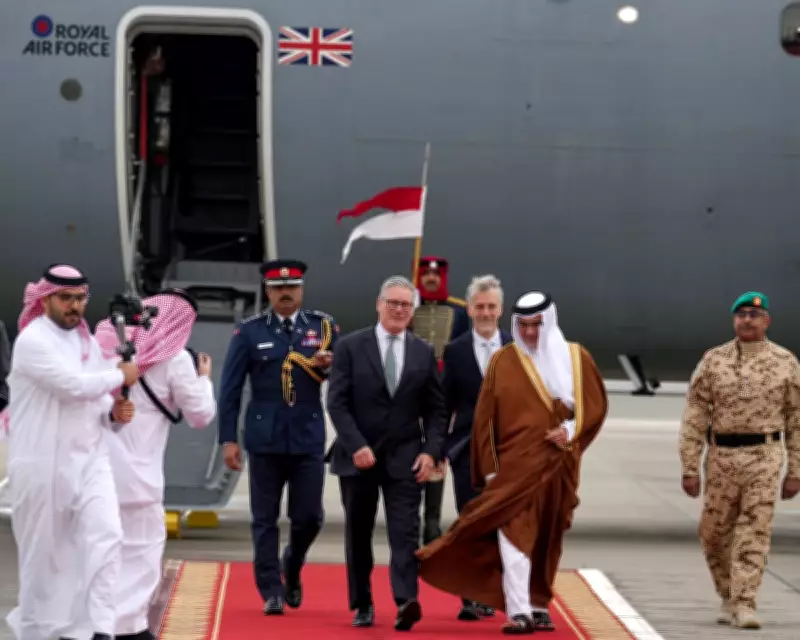
Britain's Prime Minister, Keir Starmer, arrived in Bahrain on Thursday as part of a three-day diplomatic tour of Gulf states, highlighting the region's urgent reassessment of security frameworks following the recent US-Israel war on Iran. Regardless of ceasefire outcomes, Gulf countries must contend with a persistent threat from Tehran's regime and its missile arsenal, which has forced a strategic pivot toward diversifying security partnerships.
Iran's Lingering Threat and Regional Divisions
American military bases in the Gulf became targets during Iran's retaliation against joint US-Israeli attacks, exposing vulnerabilities. Gulf states cannot tolerate Iran's control over the Strait of Hormuz, a critical trade route, which Tehran seized during the conflict and insists on retaining in ceasefire talks set to begin in Islamabad. This issue will be a central dispute in upcoming negotiations.
While Gulf nations successfully intercepted most of Iran's missiles and drones over five weeks, demonstrating defensive capabilities, they remain split on future relations with Iran. A hawkish bloc led by the United Arab Emirates and Bahrain advocates a tougher stance, whereas other countries seek peace through renewed ties with Tehran.
Escalating Tensions and Diplomatic Moves
Iranian state media accused the UAE of attacking oil facilities on Lavan Island post-ceasefire, marking the only known offensive action by a Gulf nation in the conflict. The UAE has not commented. Meanwhile, Saudi Arabia and Iran held their first official contact since the war began, with foreign ministers discussing tension reduction to restore regional stability.
Experts like Bader Mousa Al-Saif, a professor at Kuwait University, urge the Gulf to reconsider its security model, advocating partnerships with middle powers such as Turkey to avoid reliance solely on the US and prevent recurring conflicts. "The question is how to insulate the region as a whole from going into a forever war," Al-Saif emphasized.
Expanding Security Alliances and Economic Impacts
Countries like Turkey and Pakistan, with robust militaries, are poised to play larger roles in Gulf security. Recent months saw Saudi Arabia forge a defence pact with Pakistan, the UAE announce a partnership with India, and Gulf states sign agreements with Ukraine to counter Iranian drones. A proposed "Muslim Nato" remains unlikely, but new alignments like "Step" involving Saudi Arabia, Turkey, Egypt, and Pakistan have emerged, though rivalries and unclear objectives complicate these relationships.
The UK, which assisted in defending Gulf skies during the war, could deepen involvement, as discussed by Keir Starmer with Saudi Arabia's crown prince regarding defence cooperation. Abdulkhaleq Abdulla, a UAE political science professor, expects strengthened US ties and more Gulf nations following the UAE's lead in forming military and intelligence partnerships with Israel.
Recovery Challenges and Strategic Adjustments
The UAE faced the brunt of Iran's attacks, with over 2,256 drones and 563 missiles launched, though most were intercepted. In contrast, Iran fired about 850 projectiles at Israel. "Iran has evolved over the past 40 days as public enemy number one," Abdulla noted, underscoring the need for constant vigilance.
Saudi Arabia is better positioned for recovery due to its strategic depth, Red Sea ports, and less-damaged energy infrastructure, but reconstruction costs may hinder its economic diversification goals by 2030. Andreas Krieg of King's College London predicts Gulf states will not replace US protection but layer on partnerships, especially with Europe, investing in air defence, port hardening, and alternative export routes. "The bases will stay, but they now look less like shields and more like tripwires," Krieg concluded.