Gulf States Confront 'Worst Nightmare' as War Fallout Escalates
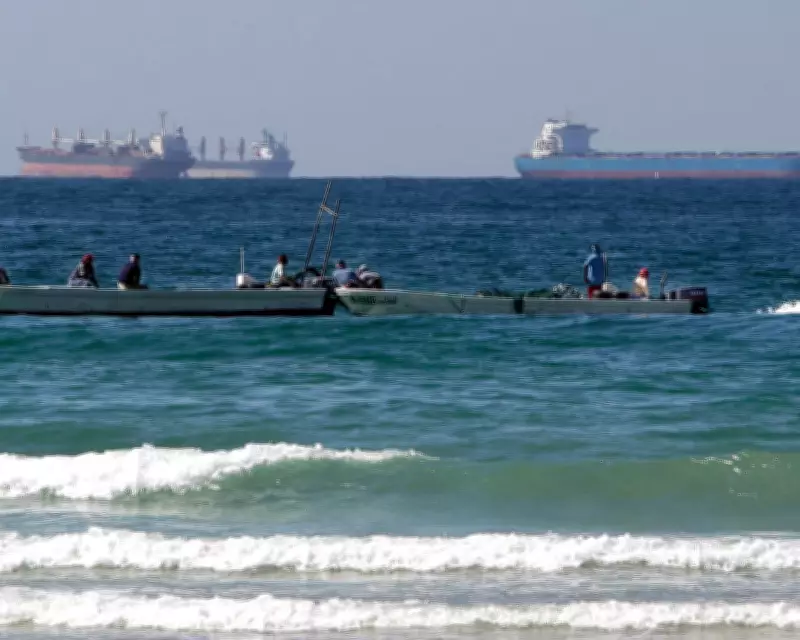
An unsettling silence has descended upon the industrial port of Ras Al Khaimah in the United Arab Emirates. Once a bustling maritime center, the port now lies dormant, with ships anchored and idle. On the hazy horizon, a queue of hundreds of tankers stretches into the distance, stranded along a waterway fraught with peril. Any vessel venturing from Ras Al Khaimah into the Arabian Sea must navigate the world's most dangerous shipping lane today: the Strait of Hormuz.
Immediate Threats and Economic Devastation
Just over 20 nautical miles from Ras Al Khaimah, two oil tankers bound for the strait were struck by Iranian missiles this week, one erupting in flames. This follows a drone attack on Saturday targeting Fujairah, the UAE's primary oil port on its east coast, where thick black smoke engulfed the terminal. These incidents underscore the severe consequences Gulf states are enduring as they are dragged deeper into a conflict they did not initiate and had diplomatically sought to avert.
For decades, Bahrain, Kuwait, Saudi Arabia, the UAE, Qatar, and Oman have hosted US military bases or provided access, while being major purchasers of American weaponry. In return, the US has served as their key military ally and protector. However, analysts note growing unease in the Gulf over this relationship, particularly after Donald Trump was perceived to deliberately sabotage peaceful negotiations in favor of escalating hostilities in the Middle East.
"The perceived Iran threat to the Gulf only became a reality when the US declared the war – Iran did not fire first," asserts Khaled Almezaini, an associate professor of politics and international relations at Zayed University in Abu Dhabi. "There is strong condemnation of the Iranians but at the same time there's a message to the Americans and the Israelis that, well, we have to find a way to end this. This is not our war."
Diplomatic Efforts and Military Backlash
In the weeks preceding the strikes, Gulf leaders engaged in negotiations and made repeated appeals to the US president, highlighting the catastrophic regional security implications of an attack on Iran. Despite these efforts, Trump proceeded with the strikes, reportedly without consulting or alerting Gulf allies. While the Gulf anticipated some backlash, the intensity of Iran's retaliatory campaign has stunned many. Gulf states had assured Tehran that their bases would not be used for attacks, yet Iran has launched thousands of drones and missiles targeting critical infrastructure, including airports, military installations, oil refineries, ports, hotels, and office buildings.
Aviation across the region remains severely restricted, costing airlines billions of dollars. Bahrain is grappling with an economic crisis, and the UAE's reputation as a safe haven for tourism and Western investment has suffered a significant blow. Although states are successfully intercepting most Iranian missiles and drones, the cost of air defense systems is staggering, with the UAE alone spending over $2 billion.
Strait of Hormuz Closure and Economic Losses
Iran's aggressive blockade of the Strait of Hormuz—the sole sea route connecting the Gulf to the open ocean, through which a fifth of global energy supplies pass—has drastically reduced oil and gas exports, the lifeblood of Gulf economies. Experts estimate daily losses in oil exports ranging from $700 million to $1.2 billion. "The UAE and GCC tried to stop the United States declaring this war because they knew the implications," says Almezaini, referencing Iran's prior threats to close the strait. "Now that exact scenario is playing out."
The imbalance in the Gulf's military partnership with the US has never been more apparent, observes Allison Minor, director of the Atlantic Council's project on Middle East integration. She points to Israel's airstrikes on Qatar in September, another US Gulf ally, which elicited no substantial response from Washington. "The most fundamental question is one of consultation," she notes. "Are the Gulf states actually achieving the kind of partnership and security support that they feel is necessary if the United States is going to engage militarily in the region?"
International Law and Strategic Dilemmas
On Thursday, Omani Foreign Minister Badr bin Hamad al Busaidi, who mediated previous Iran-US talks, issued some of his strongest remarks on the conflict yet. He stated that Oman views the military attacks against Iran by the US and Israel as illegal, arguing that as long as hostilities persist, those states are in breach of international law. Al Busaidi suggested the US decision to strike Iran during progressing nuclear negotiations indicates the conflict is merely an attempt to reshape the Middle East to Israel's advantage.
Analysts highlight the Gulf states' conflicted stance: striving to de-escalate the war while urging the US to decisively address Iran, fearing a worst-case scenario of a weakened, volatile Islamic republic on their doorstep. "This is the Gulf's worst nightmare," declares Sanam Vakil, director of the Middle East and North Africa programme at Chatham House. "There's deep anger and frustration at the United States because this is not their war, and yet they're bearing the brunt." Vakil adds that Gulf states had long aspired to a security partnership akin to Israel's with the US but now realize "that may never happen."
Despite recognizing the need to diversify security partners, she notes the Gulf currently lacks viable alternatives to the US as its ultimate protector. "The Gulf is not going to move quickly, nor can they, in finding alternatives to the US. But they're also not going to just double down with an unreliable partner," Vakil explains. "It will likely move forward in the pursuit of strategic autonomy, which has already been on the horizon, perhaps at a more rapid pace."
Impact on Daily Life and Local Businesses
The economic repercussions are filtering down to everyday citizens. At a boat and jetski rental firm in the marina adjacent to Ras Al Khaimah port, Sumon, a 27-year-old employee, reports that business has ground to a halt because coastguard restrictions prohibit vessels from venturing out to sea. "For many days, our boats and jetskis aren't allowed to go out because of all these problems and fighting with Iran in the sea," he laments. "It's very bad news, we don't have customers and my boss can't give me a salary." Gesturing toward the port, he adds, "No boats are moving any more. No one knows when it will end."
As the conflict persists, Gulf states navigate a precarious path, balancing economic survival, security demands, and strained international alliances, all while confronting the harsh realities of a war they never wanted.