
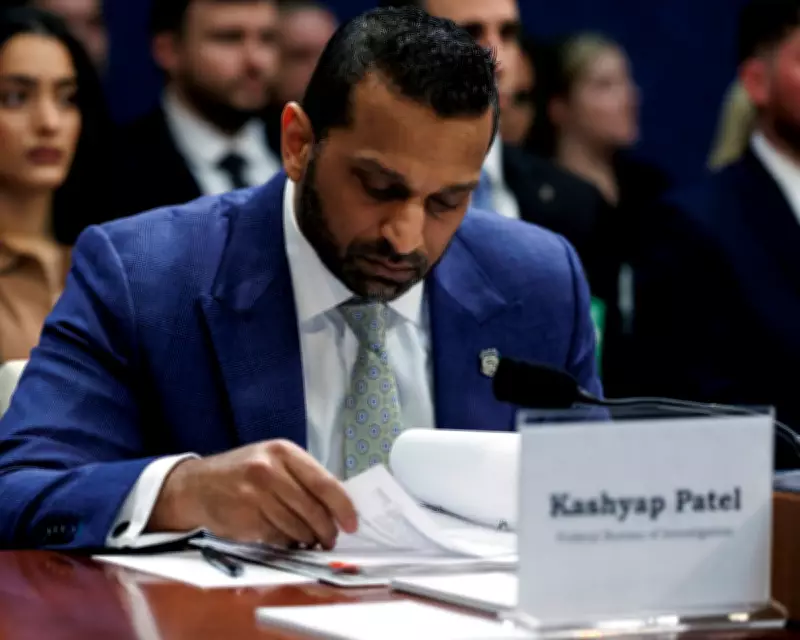
FBI Director Confirms Agency Purchases Americans' Location Data, Igniting Constitutional Debate
FBI Director Kash Patel's recent admission before the House select committee on intelligence has reignited a fierce debate over privacy rights and government surveillance. During a hearing on March 19, 2026, Patel confirmed that the FBI has resumed purchasing commercially available location data on Americans, a practice that many legal experts and privacy advocates argue may violate the Fourth Amendment's protections against unreasonable search and seizure.
The Constitutional Question: Warrantless Data Collection
Federal law enforcement agencies typically require a warrant, based on probable cause approved by a judge, to obtain historical or real-time cellphone location data. The U.S. Supreme Court has previously ruled that warrantless collection of such information is unconstitutional. However, by purchasing data in bulk from commercial sources, agencies like the FBI can potentially circumvent this legal requirement, leading critics to label the practice as an "outrageous end run" around constitutional safeguards.
Senator Ron Wyden, a Democratic lawmaker from Oregon and longtime opponent of warrantless surveillance, directly questioned Patel about the agency's data acquisition practices. Wyden referenced testimony from former FBI Director Christopher Wray in 2023, who stated the FBI was not purchasing location data derived from internet advertising at that time, though he acknowledged past purchases.
"Is that the case still?" Wyden asked Patel. "And if so, can you commit this morning to not buying Americans' location data?"
Patel responded: "We do purchase commercially available information that's consistent with the constitution and the laws under the Electronic Communications Privacy Act, and it has led to some valuable intelligence for us."
Where Does This Location Data Come From?
The location data purchased by government agencies originates primarily from mobile applications that track user movements, often for services like mapping or weather apps. Nathan Freed Wessler, deputy director of the ACLU's Speech, Privacy, and Technology Project, explains: "This is one way that apps that appear to be free or low cost to us are actually making money off of us – by making our very detailed location history the product."
Data brokers – companies that collect, analyze, and sell vast amounts of personal information with minimal oversight – have created a lucrative industry by aggregating location data from app developers. These brokers often combine location information with other personal details such as name, gender, health data, political preferences, and home ownership status.
Lena Cohen, staff technologist at the Electronic Frontier Foundation, notes: "When you give an app permission to see your location, you're also giving the other companies whose software is embedded in that app access to your location as well."
What Can Government Agencies Learn From Your Data?
Location data reveals intimate details about individuals' lives. "It's incredibly revealing knowing where your phone goes over time," Wessler said. "This level of detail shows your patterns of life."
Government agencies can use this information to determine:
- Where you work and live
- Who you spend time with
- What gatherings you attend (political rallies, religious services, medical appointments)
- Your daily routines and habits
Data brokers often maintain portals that allow government agencies to query which phones were in specific areas at particular times, creating powerful surveillance capabilities without traditional investigative constraints.
Historical Use of Location Data by Federal Agencies
Multiple federal agencies have previously purchased location data for various investigations. The Department of Homeland Security used such information to track undocumented immigrants near the Mexican border, while Customs and Border Protection utilized data from online advertising to monitor phone locations.
A 2023 report from the DHS inspector general found that ICE's data purchases were illegal, leading to the program being shut down that year. Congressional Democrats recently called for an investigation into warrantless purchases of Americans' location data by ICE and DHS.
Pushback and Proposed Solutions
Privacy advocates argue that funneling information from data brokers to government agencies violates the Fourth Amendment by allowing warrantless surveillance. Senator Wyden has introduced comprehensive surveillance reform legislation that includes measures to prevent federal agencies from purchasing location information without a warrant.
In the absence of strong federal privacy laws, the Electronic Frontier Foundation recommends several steps individuals can take to protect their location privacy:
- Disable location tracking when possible
- Review and limit app location permissions
- Use approximate rather than precise location settings
- Disable mobile advertising IDs that help data brokers connect information from different apps
However, as Wessler notes, "Not everyone's going to have the savvy to do that. So the real answer is that Congress needs to step in."
The debate over government access to commercial location data continues to evolve, balancing national security concerns against fundamental privacy rights protected by the Constitution.




