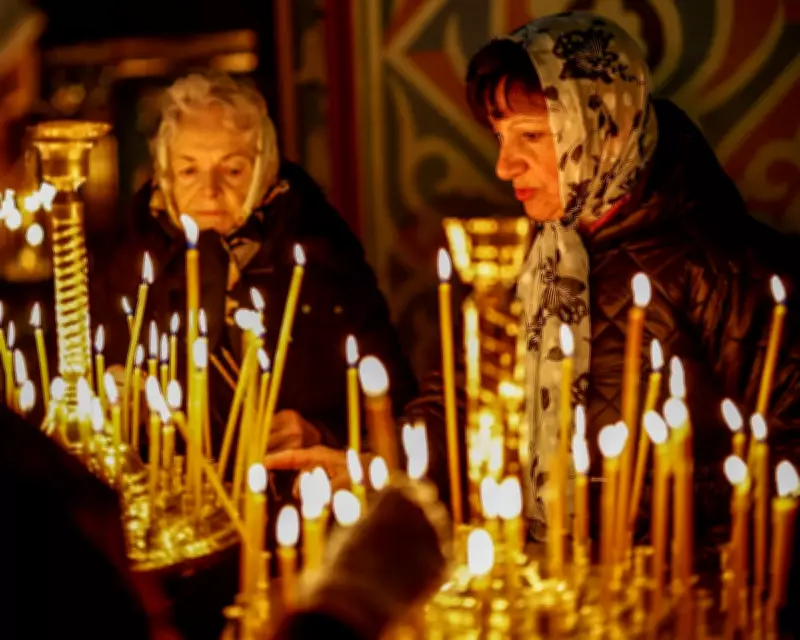
Easter Truce Falters Amid Alleged Ceasefire Violations in Ukraine War
A brief 32-hour ceasefire, intended to mark Orthodox Easter in the ongoing conflict between Russia and Ukraine, quickly faltered as both sides accused each other of numerous violations. The truce, which began on Saturday, was overshadowed by reports of assault actions, shelling, and drone strikes, highlighting the deep tensions in the four-year-old war.
Ceasefire Violations and Military Actions
Ukraine's military reported a staggering 469 ceasefire violations by Russian forces, including 22 assault actions, 153 shelling attacks, 19 strikes by attack drones, and 275 strikes by FPV drones. In total, Russia carried out 57 airstrikes, dropped 182 guided aerial bombs, deployed 3,928 drones, and conducted 2,454 shelling attacks on populated areas and Ukrainian troop positions. Meanwhile, Russian officials in the border regions of Kursk and Belgorod accused Ukraine of breaking the truce by attacking targets with drones, injuring five people, including a baby in a gas station attack in Lgov.
Prisoner Exchange Amidst Tensions
Despite the hostilities, a significant prisoner exchange took place on Saturday, with both sides swapping 175 prisoners of war each. Ukraine brought home 175 servicemen and seven civilians from Russian captivity, with 163 of those freed having been held since 2022. Andrii Yusov, a Ukrainian defence intelligence representative, described the exchange as a "real success" and a "very significant achievement," noting the varying conditions of the returning men. Russia's defence ministry confirmed the exchange, mediated by the United Arab Emirates, and stated that Russia received 175 servicemen and seven civilians originally from the Kursk region.
Political and Diplomatic Context
Russian President Vladimir Putin attended Easter services at Moscow's Christ the Saviour Cathedral, where he praised Easter as a "triumph of love, good and justice" and thanked Orthodox Patriarch Kirill for supporting Russia's military campaign, referred to as a "special military operation." In contrast, Ukrainian President Volodymyr Zelenskyy, in his nightly video address, made no reference to the alleged ceasefire violations but reiterated Ukraine's commitment to the truce, expressing hope for its extension. He warned that if Russia chooses war over peace, it would reveal its true intentions to the world, particularly the United States.
Broader Implications and Regional Dynamics
The ceasefire's failure comes as Hungary, Ukraine's eastern neighbour, holds an election that could end Prime Minister Viktor Orbán's 16-year rule. An Orbán defeat might unblock a €90 billion European Union loan crucial for Ukraine's war effort and deprive Russia of its closest ally within the EU. This political shift could significantly impact the regional balance of power and support for Ukraine in the conflict.
The events of the Easter weekend underscore the fragility of peace efforts in the Ukraine war, with both sides continuing to engage in military actions despite temporary truces. The prisoner exchange offers a glimmer of humanitarian progress, but the widespread violations highlight the ongoing challenges in achieving a lasting ceasefire.