Cuban Medical Missions Expelled Under US Pressure, Caribbean Complicit
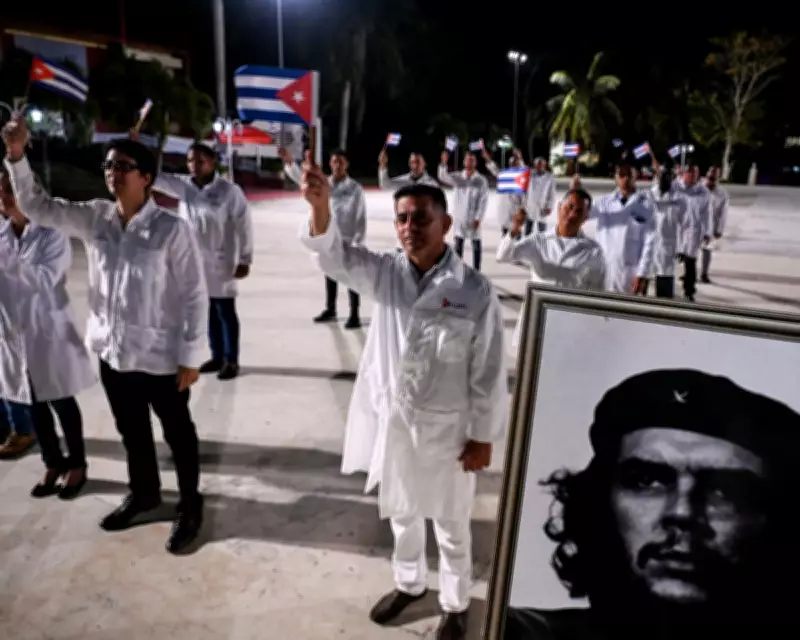
For decades, Cuban doctors have served as a lifeline for the world's most marginalized communities, providing essential healthcare across the Caribbean and Latin America. Now, in a shameful turn of events, the Caribbean region is becoming complicit in a US-driven campaign to expel these medical professionals, leaving vulnerable populations at risk.
The US Campaign Against Cuban Doctors
Under the administration of former US President Donald Trump, a systematic effort has been launched to dismantle Cuba's medical missions abroad. The US government has branded these programs as "forced labour" and "human trafficking," citing the Cuban state's retention of a share of doctors' salaries. This criticism conveniently ignores that Cuban doctors receive free medical training, unlike their counterparts in countries like the UK, who grapple with decades of student debt.
The consequences have been devastating. Nations including Guatemala, Honduras, Jamaica, the Bahamas, Antigua and Barbuda, Guyana, and St Vincent and the Grenadines have terminated their agreements with Cuba, buckling under the threat of US visa and diplomatic sanctions. Only St Kitts and Nevis and Trinidad and Tobago have resisted this pressure so far.
The Impact on Healthcare Systems
The expulsion of Cuban doctors is straining already fragile healthcare systems across the region. Millions of people, particularly in Indigenous communities, risk losing access to basic medical services such as treatment for illnesses, attended births, and cancer diagnoses. Programs that have operated for up to 50 years are being dismantled, with Cuban medical personnel withdrawn en masse.
Cuba's global medical network, comprising over 50,000 professionals working in dozens of countries, has been a cornerstone of public health in places like Venezuela. These missions have also generated billions in foreign revenue for Cuba, sustaining its economy under a longstanding US embargo. However, as US pressure intensifies—disrupting oil supplies, tightening sanctions, and targeting allied governments—this model is under severe strain.
Caribbean Complicity and Moral Failure
What is particularly striking is the Caribbean's response, or lack thereof. While Cuban doctors have quietly served rural communities, underfunded hospitals, and disaster zones for years, the region now looks away as Cuba faces its most acute crisis in decades. Caricom, once vocal in calling for an end to the US embargo, has become hesitant, offering little more than cautious diplomacy.
Barbados stands as a notable exception. Prime Minister Mia Mottley has defended Cuba's medical missions, rejected allegations of trafficking, and asserted that Barbados will stand by what is right, even at the risk of US punishments. In contrast, leaders like Jamaica's Andrew Holness and Trinidad and Tobago's Kamla Persad-Bissessar have shifted toward compliance with US demands, highlighting a slide from pragmatism into acquiescence.
The Broader Geopolitical Context
The US drive to expel Cuban doctors is part of a broader strategy of economic warfare aimed at regime change in Cuba. The island's strategic location near vital shipping lanes, estimated offshore oil reserves of over 4 billion barrels, and resources like nickel and cobalt make it a target for US interests. Historically, from the failed Bay of Pigs invasion to decades of embargo, the objective has remained constant: to force Cuba into submission.
Sanctions have had stark effects on Cuba, leading to blackouts, shortages, and collapsing productivity. Yet, as the island grapples with these challenges, the Caribbean's failure to offer solidarity underscores a moral crisis. The region, which often imagines itself as a community bound by shared history and struggle, must confront its complicity in this geopolitical maneuvering.
In the end, the expulsion of Cuban doctors is not just a political issue; it is a humanitarian one. As the Caribbean turns its back on those who healed its people, it raises a poignant question: when Cuba needed support, where was the region?