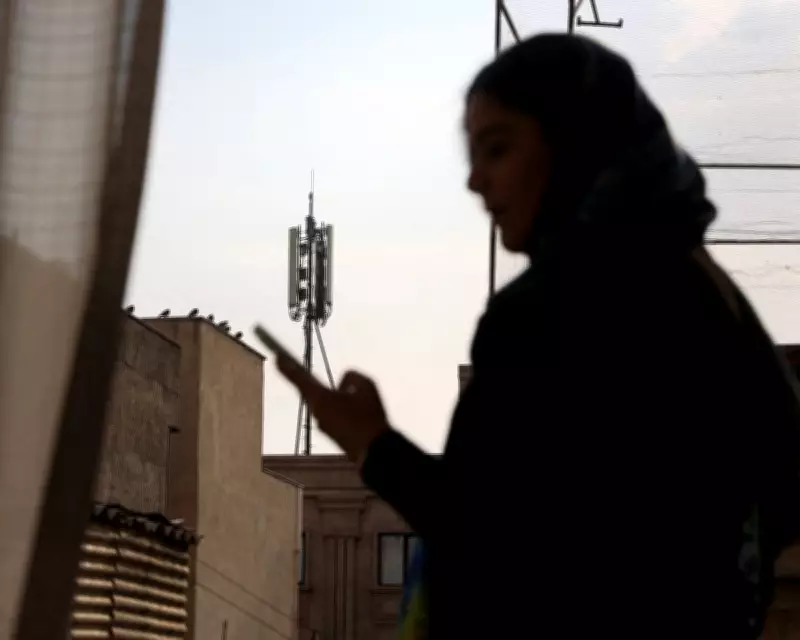
Chinese Technology Forms Backbone of Iran's Internet Censorship System
A comprehensive analysis published by the British human rights organisation Article 19 has revealed that Iran's architecture of internet control is fundamentally built upon technologies imported from China. The report meticulously documents the policies and imported hardware that have enabled the growth of Iran's fine-tuned censorship regime, which allowed authorities to almost entirely sever its population of 93 million from the global internet during the peak of January's anti-government protests.
Surveillance Technologies with Troubling Origins
The technologies identified in the report include facial recognition tools previously used on Uyghur populations in western China and China's BeiDou satellite navigation system, which serves as an alternative to the US-based GPS. According to the findings, Chinese companies have supplied Iran with several critical categories of surveillance equipment, including internet-filtering hardware from telecommunications giants Huawei and ZTE, alongside surveillance technologies from prominent camera manufacturers Hikvision and Tiandy.
Michael Caster, the report's author, highlighted that 2010 marked a significant turning point in the evolution of digital authoritarianism in both China and Iran, as both nations began taking more substantial steps toward establishing national internet infrastructures. The collaboration between the two countries has been guided by a shared vision of "cyber sovereignty" – the concept that a state should exercise absolute control over the internet within its territorial borders.
Opaque Capabilities and Expanding Influence
Researchers from the Outline Foundation and Project Ainita identified a third category of equipment manufactured by smaller Chinese providers, describing these tools as having "alarming" capabilities that remain largely unknown to external observers. This opacity makes it exceptionally difficult for researchers to determine precisely how Iranian authorities can surveil users, with Caster noting that "there's an incentive to not be transparent about a lot of this."
The report details specific contracts between Iranian authorities and Chinese technology companies, including agreements with Tiandy, which bills itself as "No. 7 in the surveillance field" and supplies branches of Iran's Revolutionary Guards and armed forces. Meanwhile, ZTE and Huawei have provided deep packet inspection technologies to Iranian authorities – sophisticated tools that enable extensive monitoring of internet traffic, previously used in China to prevent access to websites discussing sensitive topics.
Global Reach of Censorship Technologies
Iran represents just one customer in a growing global market for these censorship tools. Last year, a series of reports documented how a little-known group of Chinese companies has sold sophisticated censorship systems to multiple nations, including:
- Kazakhstan
- Pakistan
- Myanmar
- Ethiopia
Companies like Geedge Networks sell middleboxes – devices positioned on network cables – that theoretically allow governments to individually sift through users' internet activity. However, as Jurre van Bergen, a researcher at Amnesty International, noted, "It's pretty hard to find out what these deep packet inspections actually do from these providers." He suggested that while these tools could perform sophisticated blocking functions, governments might opt for simpler, cheaper methods like blocking specific domain names.
Corporate Responses and Ongoing Impact
In response to the report's findings, a Hikvision spokesperson stated that the company exited the Iranian market eight years ago and no longer sells products in the country, emphasising their commitment to global trade compliance. ZTE similarly claimed to have ceased operations in Iran in 2016. The other companies mentioned in the Article 19 report have also been approached for comment regarding their involvement.
The internet blackout during Iran's protests has helped obscure grave human rights violations, including mass killings, with the death toll still being calculated. Iran's internet has not returned to its previous state, with authorities instead implementing a patchy censorship regime that allows users only sporadic access. The capabilities enabling this control represent the culmination of a decades-long project developed through collaboration with Chinese authorities, creating a model of digital authoritarianism with concerning implications for global internet freedom.