
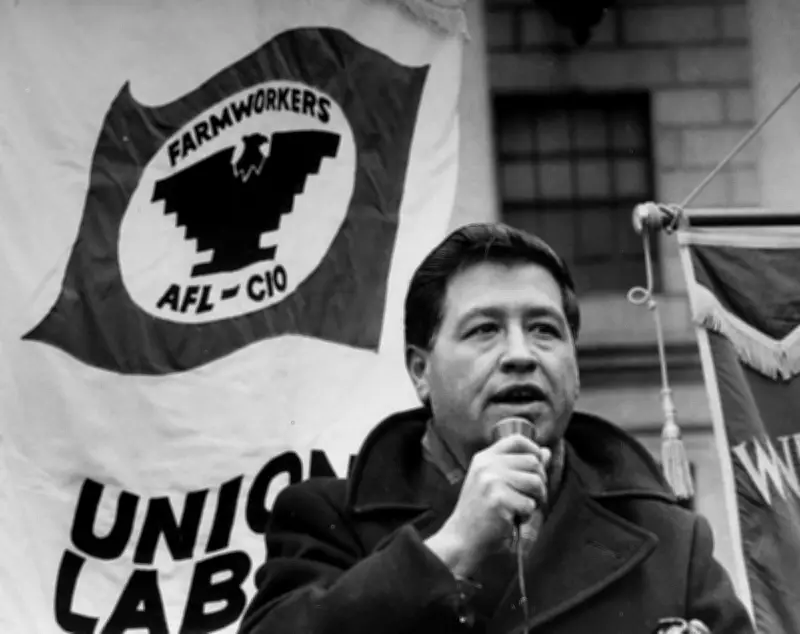
Cesar Chavez Legacy Rocked by Sexual Abuse Allegations
Lawmakers, union leaders, and community organizations across the United States have expressed profound shock and disgust following a New York Times investigation that revealed multiple allegations of inappropriate sexual behavior and abuse by the late labor organizer Cesar Chavez. The report, released on Wednesday, details claims that Chavez, co-founder of the United Farm Workers (UFW) union, groomed and sexually abused girls involved in the farm workers movement over many years.
Widespread Cancellations of Celebratory Events
In response to the allegations, numerous events planned to celebrate Cesar Chavez Day, observed annually on March 31st to mark his birthday, have been canceled or rebranded. States including California, Arizona, Utah, Texas, Colorado, Oregon, and Minnesota, which recognize the holiday, are reevaluating their commemorations. The UFW itself canceled celebrations after media inquiries, describing the allegations as "disturbing, shocking, and indefensible."
California Governor Gavin Newsom addressed the issue in a press conference, stating, "All of us are processing these allegations. The farm workers movement and the labor movement are much bigger than one man." He emphasized a commitment to justice, truth, and transparency, adding, "We want to have the backs of our victims." Newsom also indicated openness to renaming Cesar Chavez Day in California, which became a state holiday in 2000.
Political and Community Reactions
Adelita Grijalva, a US representative from Arizona where Chavez was born, voiced deep concern and extended support to survivors, saying, "To the survivors: estamos con ustedes – we are with you. We hear you, we believe you, and we admire the immense courage it takes to speak out." Arizona has announced it will no longer observe Cesar Chavez Day as a state holiday, with Governor Katie Hobbs, a former social worker, taking the allegations very seriously.
Former House Speaker Nancy Pelosi praised the "courageous women" who came forward, including Dolores Huerta, a prominent labor activist and close ally of Chavez. Huerta revealed in the Times investigation that Chavez raped her in 1966, leading to a pregnancy. She stated, "My silence ends here," after learning she was not the only victim. Pelosi emphasized, "No legacy is above accountability."
Impact on Memorials and Organizations
Several organizations are reconsidering their associations with Chavez. In Texas, La Union del Pueblo Entero (LUPE), co-founded by Chavez, canceled events, calling the allegations "indefensible." The AFL-CIO, the largest labor federation in the US, expressed deep shock and will not participate in Cesar Chavez Day activities, with President Liz Shuler stating, "No legacy can excuse it."
In the Bay Area, discussions are underway to rename memorials honoring Chavez. Myrna Melgar of the San Francisco board of supervisors noted that a street and elementary school named after Chavez will be renamed "in due time," focusing first on addressing the harm caused. The Cesar E Chavez Community Action Center at San Jose State University has paused to determine next steps.
Historical Context and Legacy
Cesar Chavez gained international prominence through boycotts and fasts advocating for higher wages and better working conditions for immigrant farm workers. He died in 1993 at age 66 and was posthumously awarded the Presidential Medal of Freedom in 1994. Despite his achievements, the allegations have cast a shadow over his legacy, with California Senator Alex Padilla calling them "heartbreaking and horrific accounts of abuse."
Xavier Becerra, former US health and human services secretary, acknowledged the painful side of the story while emphasizing the impact of the UFW. He commended Huerta for empowering other survivors, stating, "We must stand behind the truth and those who live it." The ongoing fallout underscores a broader reckoning within the labor movement and communities nationwide.




