
Azerbaijan Accuses Iran of Drone Attack on Nakhchivan Airport
Azerbaijan has formally accused Iran of conducting a drone attack on the airport in Nakhchivan, an Azerbaijani exclave bordering Iran, which resulted in injuries to two civilians. This incident marks a significant escalation, potentially representing the first Iranian strike on a Caucasus nation since the onset of the US-Israel war against Iran, raising alarming prospects of the conflict extending beyond the Middle East's geographical confines.
Details of the Attack and Immediate Aftermath
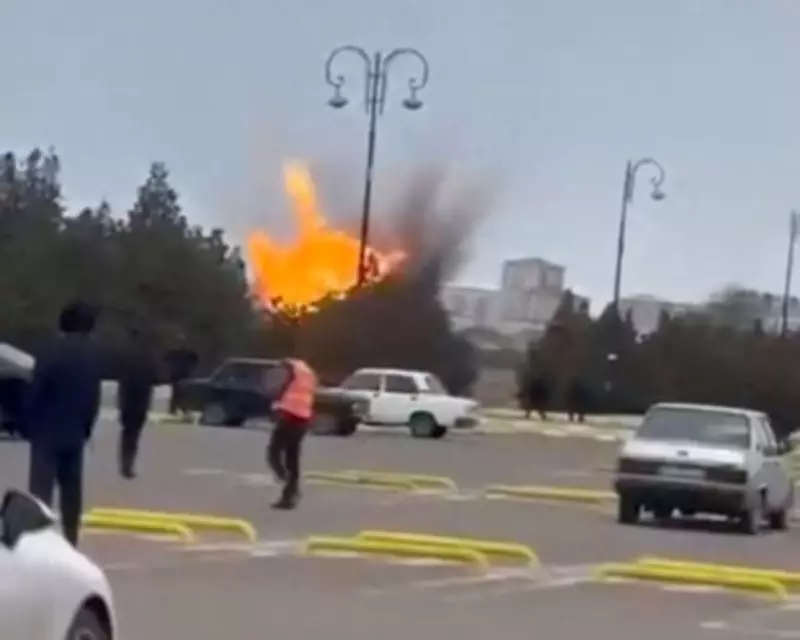
According to Azerbaijan's foreign ministry, one drone directly struck the terminal building at Nakhchivan's sole airport, while a second drone landed near a school in a nearby village. Footage circulating on social media platforms appears to show a drone impacting the airport structure, followed by the outbreak of a fire. In response to the attack, Baku has explicitly stated it reserves the right to undertake retaliatory measures, demanding that Iran provide a swift clarification and implement urgent steps to prevent any recurrence of such incidents.
Iran's Denial and Regional Tensions
Iran has categorically denied any involvement in the drone attack. Kazem Gharibabadi, Iran's deputy foreign minister, asserted via the Tasnim news agency that "The Islamic Republic of Iran has not targeted the Republic of Azerbaijan" and emphasized a policy of not targeting neighboring countries. Despite this denial, the strike occurs against a backdrop of increasing friction between Baku and Tehran, primarily fueled by Azerbaijan's deepening military cooperation with Israel and its gradual realignment away from Moscow's traditional influence in the Caucasus region.
Strategic Implications and Global Concerns
The targeting of critical infrastructure like an airport raises profound security questions. Zaur Shiriyev, a non-resident scholar at the Carnegie Endowment for International Peace, noted that if confirmed as intentional, this attack constitutes a serious incident that cannot be easily dismissed as accidental. The timing is particularly notable, coming just a day after Azerbaijani President Ilham Aliyev visited the Iranian embassy in Baku to offer condolences following the death of Supreme Leader Ali Khamenei.
This drone incident heightens tensions across the Caucasus, where nations like Armenia, Azerbaijan, and Georgia have declared neutrality to avoid being entangled in the widening instability. There are growing fears of a potential migration crisis should the conflict escalate, possibly driving large numbers of refugees northward across borders. Moreover, further attacks on Azerbaijan could disrupt global air travel, as its airspace serves as a crucial corridor for flights between Asia and Europe avoiding Russian airspace, potentially creating significant logistical challenges for airlines worldwide.
Potential Economic and Diplomatic Fallout
Possible future Iranian targets in Azerbaijan might include the Baku-Tbilisi-Ceyhan pipeline, which supplies a substantial portion of Israel's oil imports. Azerbaijan's threats of retaliation could also place Turkey in a diplomatically precarious position, given Ankara's longstanding relations with Tehran alongside its close strategic and military ties with Baku, including mutual defense agreements that could compel Turkish involvement in case of armed aggression against Azerbaijan.




