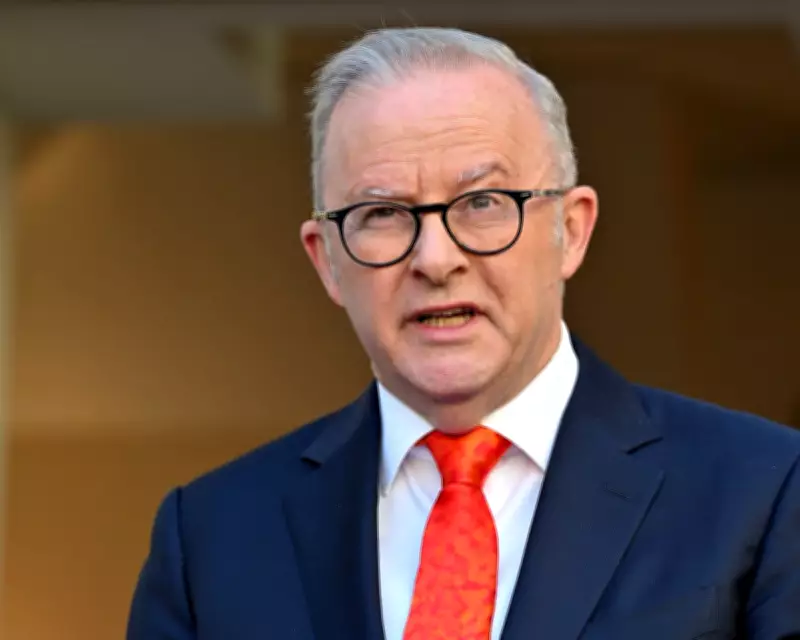
Australian Prime Minister Urges Diplomatic Resolution in Hormuz Strait Crisis
Prime Minister Anthony Albanese has issued a strong appeal for the United States and Iran to return to the negotiating table, emphasizing the critical need to fully reopen the strategically vital Strait of Hormuz. This call comes amidst escalating tensions following a US announcement of an impending blockade of the waterway, which handles approximately twenty percent of global oil supplies.
Defense Chief Confirms Naval Readiness for Potential International Mission
In a significant development, Australia's incoming defense chief, Vice Admiral Mark Hammond, has publicly stated that Australian naval forces stand ready and capable of contributing to any international effort aimed at securing the strait, should the government authorize such involvement. Hammond highlighted the advanced capabilities of the fleet, noting that eight of the navy's ten major combatant ships are currently deployed and equipped with state-of-the-art radar and missile systems.
"The navy is ready as it ever has been," Hammond declared, reinforcing statements made by the outgoing chief, David Johnston. He clarified, however, that while the forces are prepared, the decision to participate would be a governmental one, and no formal request for assistance has been received at this time.
Albanese Expresses Disappointment Over Failed Weekend Negotiations
Prime Minister Albanese described the lack of resolution from recent talks in Pakistan as "disappointing," stressing Australia's firm position on the necessity of freedom of navigation and de-escalation in the region. "We want to see the strait of Hormuz opened and with freedom of navigation taking place," he asserted, urging both Washington and Tehran to resume diplomatic discussions promptly.
The crisis intensified when US President Donald Trump threatened to implement a naval blockade of the strait, starting Tuesday morning Australian time, and warned of potential strikes on Iranian infrastructure if Tehran did not abandon its nuclear weapons program. Iran's Revolutionary Guard responded defiantly, stating that any enforcement attempt would be considered a ceasefire violation and met with a forceful response, asserting continued control over the waterway.
Australian Government Rules Out Joining US Blockade, Focuses on Broader Peace Efforts
Defense Industry Minister Pat Conroy has explicitly ruled out Australian participation in the proposed US blockade, confirming that no offensive actions by Australian troops in the conflict are under consideration. "Our position is we're not considering joining the blockade and no request has been received either," Conroy stated during an interview with ABC television.
Albanese further emphasized that the Australian government advocates for extending the current ceasefire to include the hostilities between Israel and Hezbollah militants in southern Lebanon. He expressed deep sympathy for the Lebanese diaspora in Australia, acknowledging the widespread humanitarian impact of the conflict, particularly on developing nations reliant on fuel supplies.
Energy Security and Diplomatic Outreach Amidst Supply Concerns
Energy Minister Chris Bowen reported that fifty-seven fuel shipments, including crude oil, jet fuel, diesel, and petrol, are en route to Australia, with the government actively preparing contingency plans to ensure supply stability regardless of developments in the strait. Concurrently, Prime Minister Albanese and Foreign Minister Penny Wong are scheduled to visit Brunei and Malaysia this week to strengthen regional fuel supply partnerships and bolster energy security measures.
The international community watches closely as Lebanon and Israel prepare for their first meeting at the US State Department to discuss potential ceasefire agreements and broader peace negotiations, highlighting the interconnected nature of regional conflicts and global energy markets.