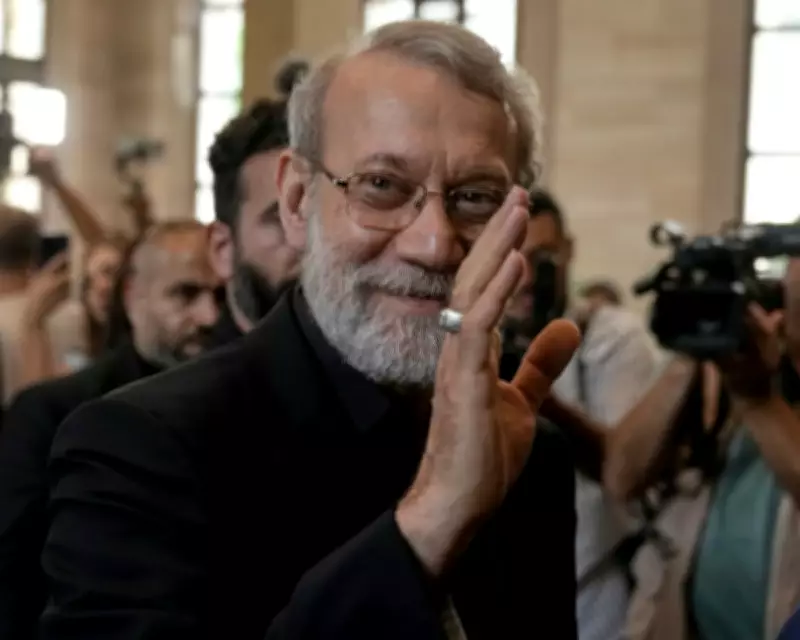
Israel Claims Killing of Iran's Influential Security Chief Ali Larijani in Beirut Strike
Israeli forces announced on Tuesday that they successfully eliminated Ali Larijani, the powerful secretary of Iran's Supreme National Security Council, during overnight military operations in Beirut, Lebanon. The assassination of this pivotal Iranian figure represents what analysts describe as potentially the most significant leadership loss for Tehran since the United States killed Qassem Suleimani in 2020.
A Strategic Blow to Iran's Multilayered Leadership
Larijani, aged 67, served as one of the crucial linchpins connecting various factions within Iran's complex political system. His unique ability to navigate between different power centers—including the Islamic Revolutionary Guard Corps (IRGC), civilian administration, and international partners—made him an indispensable figure in Tehran's hierarchy. Security experts suggest his removal creates a substantial vacuum in Iran's decision-making apparatus.
The significance of this targeted killing extends beyond immediate military calculations. Larijani possessed extensive international connections with key Iranian allies including China and Russia, relationships cultivated over decades of diplomatic engagement. His elimination signals Israel's determination to dismantle Iran's leadership structure systematically, regardless of potential political ramifications.
Broader Implications for Regional Conflict Dynamics
European Council on Foreign Relations Iran expert Ellie Geranmayeh noted the strategic timing of the assassination, stating that Israeli Prime Minister Benjamin Netanyahu appears focused on disrupting potential ceasefire negotiations between the United States and Iran. "Larijani would have been the primary Iranian official capable of facilitating such diplomatic channels," Geranmayeh explained, highlighting how his removal complicates potential conflict resolution efforts.
The killing also reveals important insights about Western perceptions of Iranian leadership alternatives. Unlike some other Iranian figures, Larijani was never considered by Israel or the United States as a potential transitional leader who could assume control if the current government collapsed. This assessment underscores the limited pool of acceptable alternatives within Iran's political landscape from Western perspectives.
Larijani's Complex Political Journey and Recent Resurgence
Larijani's political career spanned multiple Iranian administrations and ideological shifts. After serving as head of state broadcasting—where he frequently criticized reformist movements—he became parliament speaker for twelve turbulent years between 2008 and 2020. During this period, he generally supported the nuclear agreement negotiated with Western powers in 2015, despite his earlier conservative credentials.
His recent appointment as secretary of the Supreme National Security Council in August 2025 marked a dramatic political comeback. Following his disqualification from presidential elections in 2021 and 2024 by Iran's Guardian Council—a move widely interpreted as eliminating competition for Ebrahim Raisi—Larijani returned to a central position in national security planning. His experience in preparing Iran for potential conflict with the United States and Israel was deemed too valuable to remain unused.
The Intellectual Behind the Political Operator
Beyond his political maneuvering, Larijani maintained a reputation as an intellectual who blended religious philosophy with Western thought. Holding a doctorate focused on 18th-century German philosopher Immanuel Kant, he authored numerous works attempting to reconcile Islamic principles with contemporary political theory. Israeli newspaper Haaretz recently described him as "a brilliant thinker who combines, in an unusual way, a life of contemplation with a life of action."
In his writings, Larijani frequently explored concepts of collective identity and national purpose, arguing that societies develop independent "collective souls" that transcend individual members. These philosophical foundations informed his approach to governance and international relations throughout his career.
Immediate Aftermath and Future Uncertainties
The assassination occurs amid heightened regional tensions and follows Larijani's recent efforts to coordinate Iran's military and political responses to external threats. One of his key strategic contributions involved warning Gulf leaders that U.S. bases in their territories would become legitimate targets if Iran faced attack—a message he delivered with more authority than President Masoud Pezeshkian.
Larijani's death raises critical questions about Iran's capacity to regenerate leadership amid ongoing conflict. As he reflected in a November 2024 interview discussing previous losses like Suleimani and Hezbollah leader Hassan Nasrallah, "History repeats itself as great leaders fight, offer themselves as sacrifices for the sake of the cause and pave the way for a new generation." The fundamental test now facing Iran is whether its political and military institutions can identify and develop successors capable of filling the substantial void created by this latest high-profile elimination.