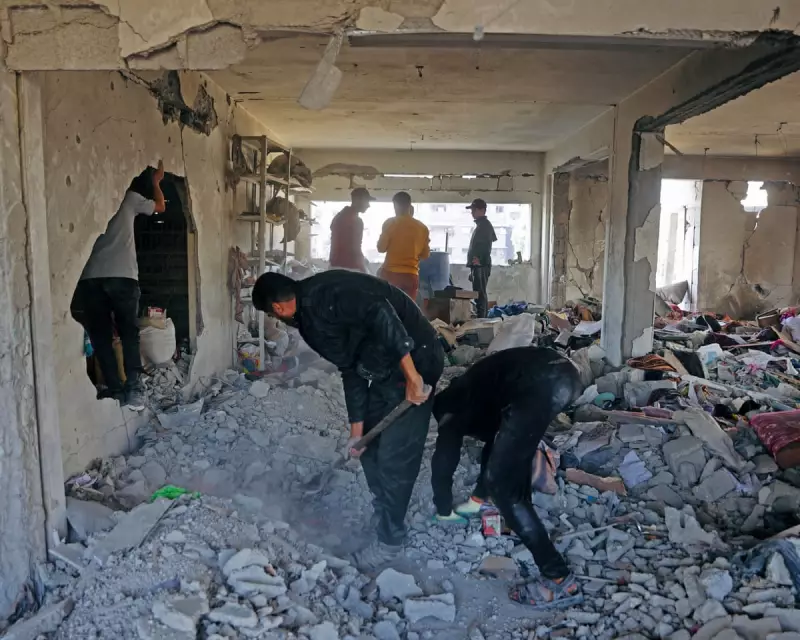
Medical officials in Gaza have reported that Israeli airstrikes killed 33 people in one of the most serious escalations of violence since the US-backed ceasefire came into effect last month.
Casualties Mount Across Gaza Strip
Officials at Nasser hospital in Khan Younis confirmed they received the bodies of 17 people after four separate Israeli airstrikes targeted tents sheltering displaced civilians. The victims included five women and five children, highlighting the devastating impact on vulnerable populations.
Further north in Gaza City, medical personnel reported that two additional airstrikes claimed 16 lives, with seven children and three women among the dead. The attacks have left many more injured, overwhelming already strained medical facilities.
Conflicting Accounts of Trigger Events
The Israeli military stated it launched the attacks after its soldiers came under fire in Khan Younis on Wednesday, though no Israeli casualties were reported. However, Hamas strongly denied firing toward Israeli troops and condemned the strikes as a "shocking massacre."
Palestinians living in Gaza expressed feeling as if the two-year war had never truly ended. According to officials in the territory, more than 300 people have been killed by Israeli strikes since the ceasefire agreement was implemented.
Daily Life Amid Ongoing Violence
Lina Kuraz, a 33-year-old resident from the Tuffah neighbourhood east of Gaza City, shared her family's trauma with Agence France-Presse. "My daughter kept asking me all night, 'Will the war come back?' Every time we try to regain hope, the shelling starts again. When will this nightmare end?"
Mohammed Hamdouna, 36, who was displaced from northern Gaza to a tent in al-Mawasi, provided insight into the ongoing challenges. "The intensity of the death toll has decreased, but martyrs and shelling happen every day. We are still living in tents. The cities are rubble; the crossings are still closed, and all the basic necessities of life are still lacking."
International Response and Regional Tensions
Qatar, a key mediator throughout the conflict, condemned what it described as "brutal" Israeli airstrikes, warning they represent "a dangerous escalation that threatens to undermine the ceasefire agreement."
The violence in Gaza coincided with a barrage of Israeli airstrikes in southern Lebanon on Wednesday. This followed an Israeli airstrike the previous day that killed 13 people in the Palestinian refugee camp of Ein el-Hilweh, marking the deadliest attack on Lebanon since a ceasefire in the Israel-Hezbollah war a year ago.
Broader Context and Ongoing Challenges
The UN Security Council recently endorsed Donald Trump's plan for Gaza, which includes deploying an international stabilisation force and creating a potential path to a sovereign Palestinian state. However, significant obstacles remain unresolved.
Critical questions persist about how Hamas will be persuaded to relinquish its weapons, who will supply troops for the proposed peacekeeping force, and how "full aid" will reach Gaza without Israel lifting many current restrictions on humanitarian supplies.
Hamas continues to hold the remains of three hostages, while Israeli military forces maintain control over more than 50% of Gaza territory despite withdrawing from some positions at the time of the ceasefire. The territory remains divided by what's known as the "yellow line."
Gaza's health ministry has documented an average of more than seven deaths daily since the ceasefire took effect. Both sides have repeatedly accused each other of violating the agreement's terms, which include increasing aid flow into Gaza and returning hostages, whether dead or alive, to Israel.
The two-year conflict in Gaza began when Hamas-led militants killed approximately 1,200 people, mostly civilians, and abducted 251 during a surprise attack into Israel in October 2023. The subsequent Israeli offensive and strikes since the ceasefire have resulted in more than 69,000 Palestinian deaths, predominantly civilians, with thousands more bodies believed buried under rubble.