
Thursday 07 May 2026 1:49 am | Updated: Wednesday 06 May 2026 1:44 pm
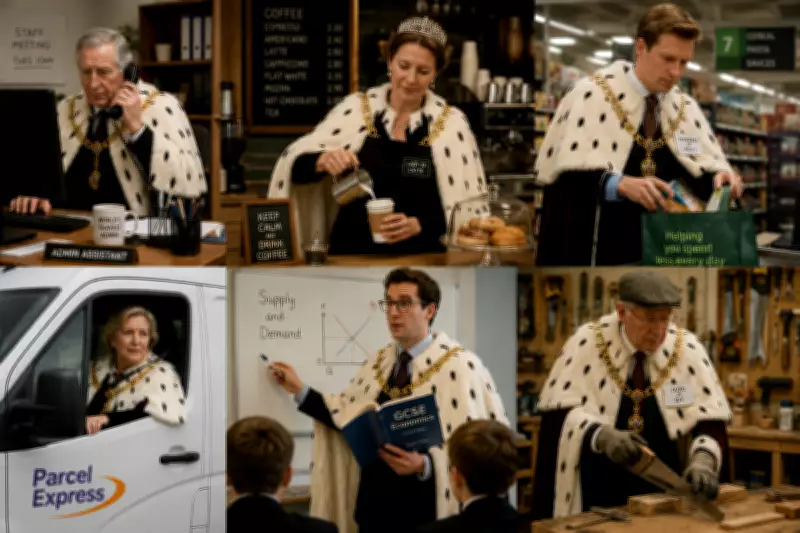
Let's Create New Hereditary Peers and Put Them to Work – Just Not in the Lords
By Bartek Staniszewski
The government was right to abolish hereditary peers, but it would be a mistake to lose the custodians of the memories of great Britons of the past, says Bartek Staniszewski.
In the 1970s, during a debate in the House of Lords, one of the peers quoted a Lord Chief Justice from the reign of King James I: “Where is Bohun, where’s Mowbray, where’s Mortimer? … They are entombed in the urns and sepulchres of mortality.” Upon hearing this, Charles Stourton – the 23rd Baron Stourton, the 27th Baron Segrave and the 26th Baron Mowbray – exclaimed, “Here is Mowbray!”
The House of Mowbray was founded in the 12th century by Nigel d’Aubigny, who died serving King Richard the Lionheart during the Third Crusade. One of d’Aubigny’s descendants, William de Mowbray, was a signatory of the Magna Carta. The Barony of Stourton, after which Charles took his surname, was created in 1448 for Sir John Stourton, who subsequently served in Normandy at the tail end of the Hundred Years’ War. The service of Charles Stourton’s ancestors was very real, and their reward was seeing their heirs honoured for centuries to come.
That reward is no more. On the last day of last month, the last hereditary peers lost their entitlement to sit and vote in the House of Lords. Some will stay on as life peers, but their ancestors will not receive the same honour.
Serving in the House of Lords Is Hardly an Honour
In truth, this change is overdue. Today, serving in the House of Lords is hardly an honour. Although there are many good people in the Lords, it is also filled with political appointees and party donors. Every couple of decades, we get a new scandal about who gets to be awarded a peerage, from the sale of peerages by David Lloyd George between 1916 and 1922, through the 1976 Lavender List, to the cash-for-honours scandal which helped end Tony Blair. In one case described to me by Simon Hoare, the Chair of the Constitutional Affairs Committee, a past party donor at one point began signing his donation cheques as “Lord so and so” to prevent them from being cashed in unless he received a peerage.
Rather than honour Britain’s past, the preservation of hereditary peers only shamed it. To the average person today, the names of Bohun, Mowbray and Mortimer mean little, no matter the achievements of their ancestors. The other hereditary ruler we have – the King – maintains a public enough presence to warrant the legitimacy of his rule. The same could not be said of hereditary peers.
Every Brit and every Englishman should feel a part of a centuries-long story of which people like Nigel d’Aubigny are a part and which we all — not just a few members of the upper classes — inherit. This is a shame. People should feel connected to their past. If we are to reinforce Britain’s ailing social cohesion, we need to build a shared national identity; and this can only be done by building it around a shared national narrative.
Hereditary Peers as Custodians of Memory
Hereditary peers ought to come back as a feature of political life, but not as parliamentarians. Abroad, it is not uncommon for states to get heavily involved in the politics of memory – the Polish Government, for example, in 1999, explicitly created an Institute of National Memory to maintain a continuity between the national consciousness of Poland in the 20th century and the national consciousness of Poland today. We could have hereditaries do something similar, except go much farther back.
The grandsons and granddaughters of the great men of Britain’s past could be officially put in charge of preserving the memory of the achievements of their ancestors; and yet more could be created as Britons continue to build Jerusalem in this green and pleasant land.
Bartek Staniszewski is head of policy at Bright Blue.




