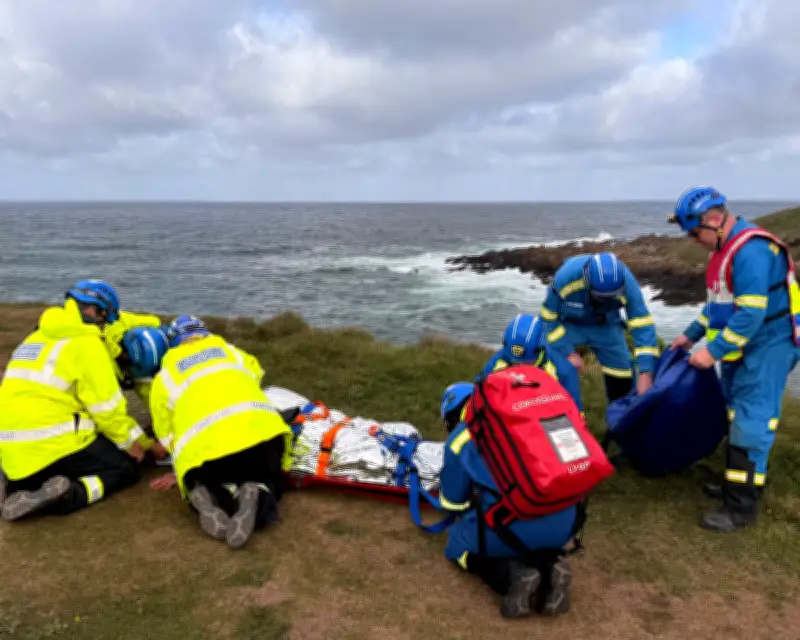
The Maritime and Coastguard Agency (MCA) has chosen to stop the coastguard officers’ payments from September, with the aim of legally classing them as volunteers. This decision follows a Court of Appeal ruling in January that confirmed coastguard rescue officers (CROs) are workers, not volunteers, partly because they receive hourly pay for callouts.
Accusations of Misleading Parliament
Keir Mather, the maritime minister, and Virginia McVea, the MCA chief executive, have been accused of misleading MPs. Conservative MP Joe Robertson, representing Isle of Wight East, stated that Mather made false claims during a Westminster Hall debate on Wednesday, saying the judgment had “changed the legal status of CROs.” Robertson countered: “The court found that CROs are already workers… The very fact the MCA is working through backdated tax liabilities and backdated pay is an admission that CROs have been workers for some time.”
McVea faced similar accusations during a meeting with MPs a week earlier. Liberal Democrat MP Alistair Carmichael, representing Orkney and Shetland, said McVea “tried to mislead MPs.” The MCA did not dispute the accuracy of these accounts and declined to comment on why McVea repeated claims the agency had acknowledged were false.

The Court Ruling and MCA’s Response
The Court of Appeal, led by Lord Justice Bean, ruled that CROs are workers due to their hourly pay and payslips. Instead of recognizing this status, the MCA decided to stop payments from September to reclassify them as volunteers. Initially, the MCA claimed the changes were a “mandated consequence” of the judgment, but on 19 June it acknowledged the “ruling did not specify any specific model the MCA should use.”
Labour MP Torcuil Crichton, representing Na h-Eileanan an Iar, described a “stormy meeting” with McVea, noting MPs were angry on behalf of their volunteers. Robertson added that McVea “seemed to be blaming the court of appeal” and later claimed CROs supported the change, citing a survey with 93% support—though she also termed it “above 90%” at another point.
Survey Results Disputed
A survey of CROs, seen by the Guardian and not disputed by the MCA, did not directly gauge support for the volunteer model. Instead, it asked how each model would affect availability. The MCA’s calculation included those who said they would become less able to respond as volunteers, as well as those who replied “other,” among those it told MPs supported the change. The MCA said “survey findings were considered alongside a range of operational, legal and practical factors” but refused to elaborate. Notably, the survey showed that a similar calculation for the worker model would have attracted greater support than the volunteer model, but this was not presented to MPs.
Legal and Operational Implications
The MCA argued that preserving worker status would require “formal employment requirements and constraints,” contrasting this with the “flexibility” of the volunteer model. However, employment lawyer Nigel Mackay of Leigh Day stated that the MCA could have maintained worker status with minimal extra requirements, such as increasing hourly pay to meet minimum wage and including holiday pay. “Effectively, [worker status] is just slightly more expensive,” he said.
An MCA spokesperson defended the decision: “The court of appeal ruling meant we had to change the way the coastguard currently operates. After careful consideration, we judged the volunteer model to be the best option to protect the future of the service, as it allows members more flexibility to continue to serve alongside their primary employment.” On Wednesday, coastguard officers gathered in Westminster, expressing they were “deeply saddened” and calling for a pause to allow negotiations. The Department for Transport has been approached for comment.