
An investigation by the legal non-profit Global Echo has revealed that Israeli exporters to Europe routinely mislabel agricultural products grown in illegal settlements in occupied Palestine and the Syrian Golan Heights, allowing them to benefit from unlawful tax breaks that bolster the settler economy.
Global Echo analyzed more than 30,000 export documents for thousands of Israeli shipments to the UK and EU over eight years. The study found that one in six shipments contained agricultural products originating from illegal settlements, and at least 42 percent of those were mislabelled as Israeli-grown.
“This isn’t an aberration and it’s not accidental,” said Emily Schaeffer Omer-Man, executive director of Global Echo. “This is a system that the UK and the EU have perpetuated and agreed to.” The group is demanding the UK government review controls on Israeli imports and has promised legal action if HMRC does not address verification concerns.
Europe is Israel’s biggest market, and the EU its single top trading partner, accounting for almost 30% of exports. A 1995 free trade agreement reduced tariffs for Israeli imports, but products from settlements do not qualify because Israel’s military occupation is illegal under international law.
The investigation found that mislabelled settlement goods accounted for “a substantial and recurring component” of agricultural trade from Israel to Europe. Concealing the origin allows importers to claim lower tariffs, making settlement produce more competitive while reducing tax revenues for European governments. “European trade continues to contribute materially to an unlawful territorial regime,” Global Echo said.
Three main techniques were identified: “hiding in plain sight” by listing settlement produce as Israeli despite accurate addresses; using “sham addresses” to falsely indicate production inside Israel; and “mingling” settlement goods with Israeli products for export. European customs authorities also routinely accepted invalid Israeli-issued organic and plant health certificates for settlement products.
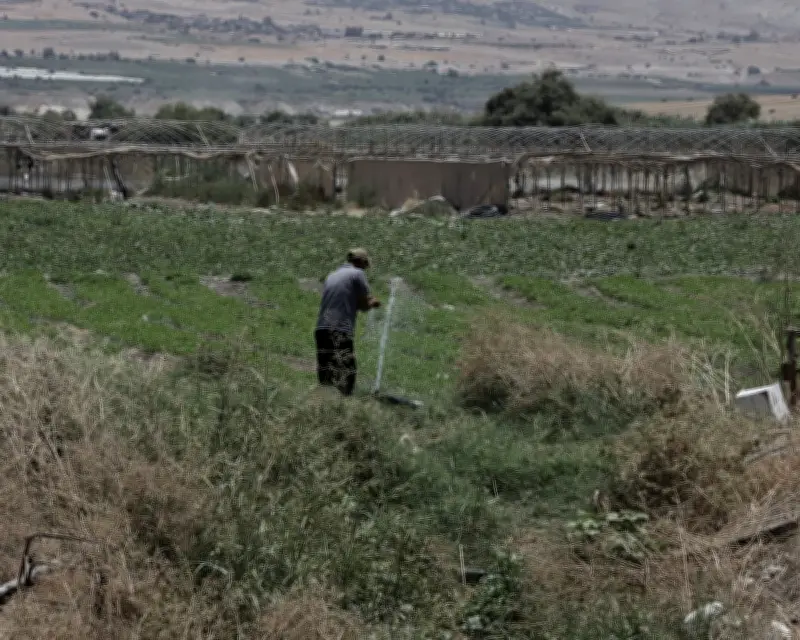
The shipments examined contained €13 million (£11.2 million) worth of mislabelled settlement goods grown on land stolen from Palestinians. One case involves Amer Abu Khader, 35, from Ein al-Beida in the Jordan Valley, whose family land was incorporated into an Israeli firm’s holdings after settlers fenced it off in 1967.
“We have all the documents proving that it belongs to us,” Khader said. Despite European condemnation of settlements, the EU has never used its economic leverage to enforce consequences, said Michael Lynk, former UN special rapporteur. The report calls the situation a “gap between European principle and conduct.”
When exporters are barred from preferential tariffs, they can receive compensation from a secretive Israeli fund. The EU is debating tariffs on goods from occupied Palestine, but data on settlement exports remains scarce. Israel’s finance minister, Bezalel Smotrich, stated in 2024, “We are erasing the Green Line through agriculture in Judea and Samaria [the occupied West Bank].”
Palestinian farmers face water restrictions, movement limitations, and violent attacks, all escalated since October 7, 2023. Mohamed Faiz Daraaq, 53, said, “The spring near our land, that was an essential resource for our farming, has been taken from us. The settlers turned the area into a recreational site for themselves.”




