
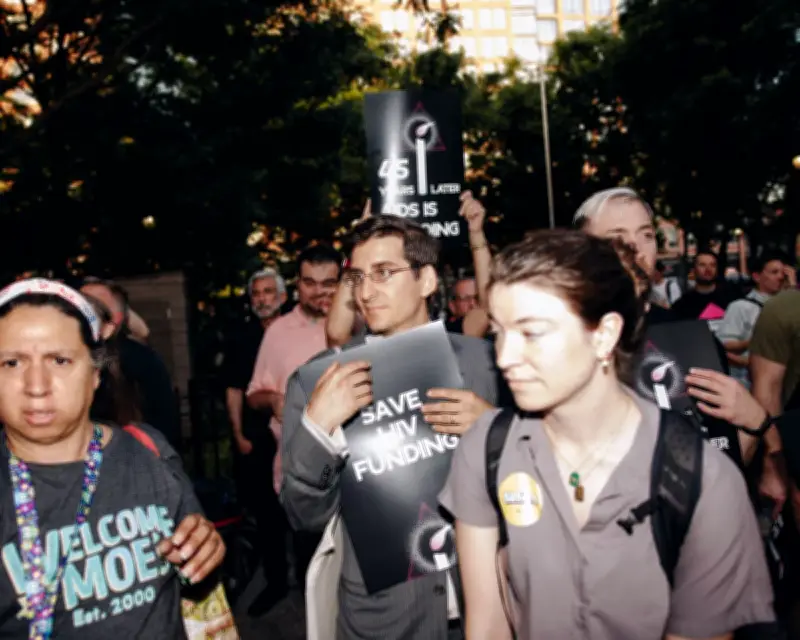
The Trump administration's proposed $1.3 billion cut to global HIV/AIDS programs has ignited a wave of activism and concern among health experts, who warn that the reductions could reverse decades of progress in combating the epidemic. The cuts, part of a broader foreign aid reduction, target the President's Emergency Plan for AIDS Relief (PEPFAR), a program widely credited with saving millions of lives.
Proposed Cuts and Immediate Impact
According to the administration's budget blueprint, the cuts would reduce PEPFAR funding by 18% from the previous year, bringing it to $5.9 billion. This reduction is part of a larger plan to slash foreign aid by 30%. Health officials and activists argue that such a move would lead to an estimated 200,000 additional HIV infections and 150,000 AIDS-related deaths over the next five years, based on modeling by the Kaiser Family Foundation.
The cuts would also affect the Global Fund to Fight AIDS, Tuberculosis and Malaria, with a proposed 15% reduction in US contributions. The US is the largest donor to the Global Fund, contributing roughly one-third of its budget.
Activism and Political Response
In response, a coalition of over 200 advocacy groups, including the Health GAP and the AIDS Institute, launched a national campaign to pressure lawmakers to restore funding. On June 15, 2026, activists staged protests outside the White House and in key congressional districts, demanding that Congress reject the cuts. "These cuts are not just numbers; they represent lives lost," said Dr. Anthony Fauci, former director of the National Institute of Allergy and Infectious Diseases, in a statement. "We have the tools to end AIDS as a public health threat by 2030, but only if we maintain our commitment."
Several Republican senators have expressed reservations about the cuts, citing concerns over national security and humanitarian obligations. Senator Lindsey Graham (R-SC) noted, "PEPFAR is one of the most successful foreign aid programs in history. Cutting it now would be a strategic mistake."
Global Consequences
The proposed cuts come at a critical time. The World Health Organization reported that in 2025, there were 1.5 million new HIV infections globally, a number that has remained stagnant for three years. UNAIDS warned that funding shortfalls could delay the achievement of the 2030 goal to end AIDS. Countries heavily reliant on PEPFAR, such as South Africa, Nigeria, and Kenya, would be particularly affected. In South Africa, PEPFAR supports over 4 million people on antiretroviral therapy.
Health experts emphasize that the cuts would not only increase mortality but also undermine prevention efforts. "We are at a tipping point," said Dr. John Nkengasong, director of the Africa Centers for Disease Control and Prevention. "Reducing funding now would undo years of investment and cost more in the long run."
Economic and Security Implications
Beyond health, the cuts have economic and security implications. The US government estimates that every dollar invested in PEPFAR yields $3 in economic returns through reduced healthcare costs and increased productivity. Additionally, stable health systems contribute to regional stability. A report from the Center for Strategic and International Studies argued that the cuts could weaken alliances and create vacuums filled by other global powers.
Congress is expected to debate the budget proposal in July. Activists plan to continue their pressure, with a rally scheduled for July 4 in Washington, D.C. The outcome remains uncertain, but the stakes are high for millions living with HIV worldwide.




