
Megan Clement, seven months pregnant, endured Paris's worst heatwave on record last week, with temperatures reaching 38C (100F) and over 1,000 deaths reported across France in a three-day period. The heatwave surpassed the catastrophic 2003 event that killed nearly 15,000 people and the 2019 record. Clement lives in Seine-Saint-Denis, the poorest département in mainland France and one of the most exposed to extreme heat.
Tuesday: Cancelled Plans and Rising Anxiety
When Clement learned she was pregnant, her greatest fear was giving birth in summer, as many French hospitals lack air conditioning. A planned information session on the hospital's extreme heat plan was cancelled due to the heatwave. A friend a few weeks further along checked into an air-conditioned hotel after heat in her apartment triggered contractions; the hotel was full of other pregnant women, though this option is unaffordable for most. Clement rented a portable air conditioner, hoping it would get her through to the weekend when the heat was expected to break.
Wednesday: Heatstroke at the Healthcare Office
At 9:30am, it was already 30C (86F). At the public healthcare office, a woman collapsed with apparent heatstroke in reception. Staff called for water and rushed to help. Clement was let in immediately due to her pregnancy. She later worked from a friend's air-conditioned office. At a nearby childcare center, staff taped reflective blankets over windows and sprayed toddlers with a hose. Under a shaded archway, a man had set up a mattress to sleep through the hottest part of the day. Clement's rented air conditioner arrived after midnight, too exhausted to set it up properly.
Thursday: Air Conditioner Struggles
The air conditioner initially failed because Clement cracked the window to let out the extraction pipe, letting in heat. Her partner fixed the window kit in the evening, and the temperature dropped a few degrees. On social media, a new father in Bordeaux shared a video from a maternity unit where it was 36C (97F) inside, and a healthcare worker had collapsed from heatstroke. There were 25 heart attacks in 24 hours across Paris.
Friday: 38C and No Breeze
Clement stayed indoors with shutters down, then headed to the magazine office. People in the park sat listlessly on shaded benches; the occasional splash from the fountain provided fleeting relief. She expressed frustration at media images of young men backflipping into canals, instead wanting to see the homeless pregnant woman living on the streets, children sent home from unsafe schools, and hospitals unable to care for patients. Emergency services reported 109 deaths in 24 hours in Paris, compared to the usual seven. In western Paris, a bus driver succumbed to the heat and crashed into a tree.
Saturday: Body Gives Up
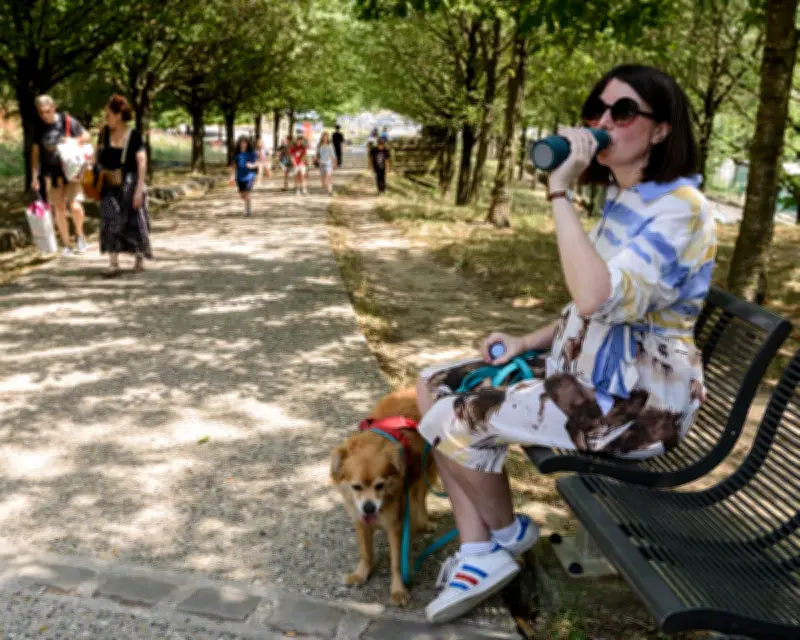
Clement woke aching all over with cramping legs. She tried to keep cool in her local park with her dog, sticking to shade. Her neighborhood lacked air-conditioned refreshment rooms in government buildings, unlike central Paris. She took shelter at the movies, rating the cinema's air conditioning 10/10. By the end of the week, health authorities announced 1,000 deaths in France over three days, including four toddlers who died in hot cars and 74 drowning deaths.
Fury at Inaction
Clement expressed outright fury at the climate crisis. She noted that TotalEnergies posted a €5.8bn (£5bn) profit in the first quarter of 2026, while the AI lobby pushes the EU to abandon climate ambitions for datacentres. City authorities have implemented some measures, but Clement feels abandoned by those in power. French President Emmanuel Macron said on Thursday, 'We cannot adapt to a heatwave that has no equivalent in Europe today and has never had an equivalent in our history.' Forecasters predict another wave of extreme heat next week.




