
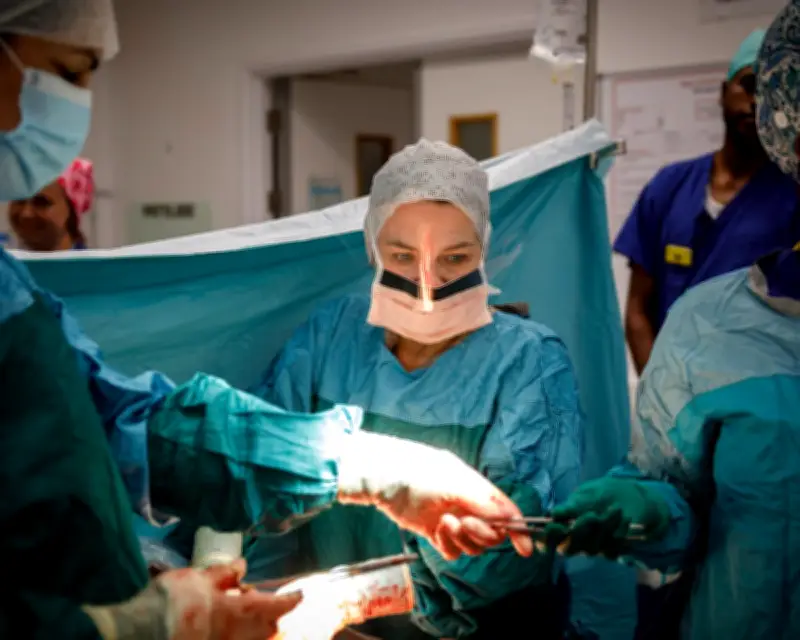
How Queen's Hospital improved maternity care
Two days after giving birth, Juliana Nascimento Barbosa is still ecstatic about becoming a mother. Her son Dominic was born via assisted vaginal delivery at Queen's Hospital in Romford, Essex, on 21 May 2026. The birth was complicated: a CTG trace showed Dominic had passed meconium in utero, a sign of potential distress. Dr Kathryn Tompsett, head of maternity and children's care, explained that the priority is to deliver the baby within 30 minutes when that happens. Juliana's labour lasted 15 hours, and she required a ventouse suction cap and episiotomy. Dominic needed phototherapy for jaundice.
From 'requires improvement' to 'good'
Queen's Hospital's maternity unit, where 7,000 babies are born annually, was rated 'requires improvement' by the Care Quality Commission (CQC) in 2021 and again in 2024. However, after a series of changes, the CQC upgraded the unit to 'good' in August 2025. The hospital is run by Barking, Havering and Redbridge NHS trust (BHR), one of 12 trusts under review by Lady Amos as part of her England-wide maternity and neonatal services investigation. The Amos report is due on 30 June 2026.
Key improvements: staffing and language support
Since 2021, the maternity department increased its staff headcount from 552 to 699, adding 22 doctors (including 14 consultants) and 65 midwives. The vacancy rate dropped from 16% to 4%. Dr Tompsett noted that extra staff helped reduce triage delays: the unit now consistently triages women within 15 minutes. 'Flow coordinators' have been on duty since 2024 to reduce hold-ups between departments. The proportion of caesarean sections has reached 45%, both nationally and at Queen's, requiring more personnel in operating theatres.
BHR also addressed language barriers. Volunteers like Saba Asif and Jobaida Alam, part of the bilingual maternity support service, provide interpretation for women who do not speak English as a first language. Half of the 7,000 women giving birth annually at Queen's do not speak English as a first language, and 61% are from the most deprived neighbourhoods in England. Juliana, a Portuguese speaker, praised staff members Mariane (a psychotherapist) and Yassi (a midwife), both Portuguese speakers, for making her feel safe. 'Everyone played a very important role in our baby's life. They were wonderful, very caring, and they made me feel safe, very safe,' she said via Google Translate.
Reducing stillbirths and future goals
Dr Tompsett reported a 31% reduction in stillbirths over the past year. This was achieved by analyzing data to create a 'heatmap' of postcodes with high stillbirth rates—identified as areas of high deprivation—and providing those mothers with 'dedicated one on one enhanced continuity of care' during pregnancy. Former BHR chief executive Matthew Trainer acknowledged that improvements have come too late for some families but emphasized the need to continue progress. 'We have more to do to ensure every mother and baby get the care they deserve,' he said.




