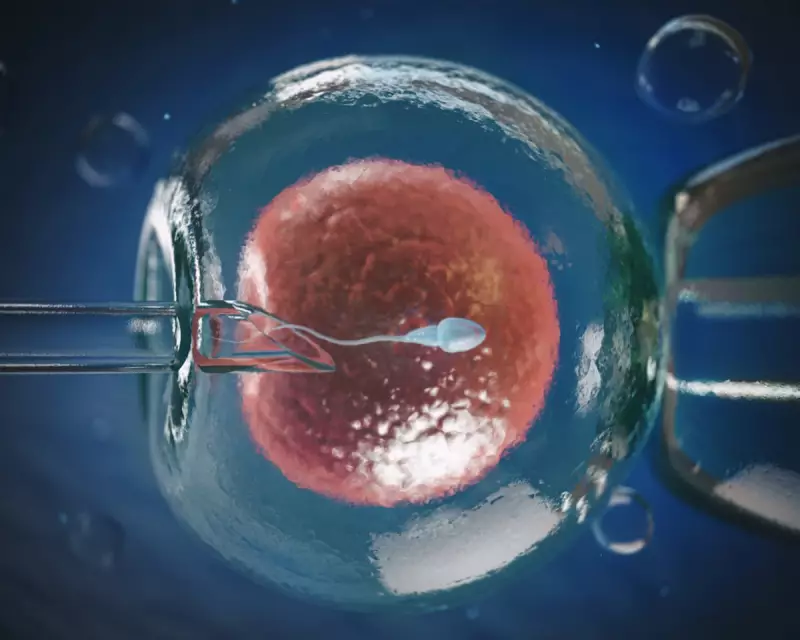
For countless women undergoing IVF, the journey is a harrowing emotional rollercoaster, defined by soaring hope and crushing disappointment. This is especially true for those over 35, where success rates decline sharply. While IVF technology has advanced in many areas, the core issue of age-related decline in egg quality has remained stubbornly unresolved.
The Unmet Need: Ageing Eggs and the IVF Odds
Now, a significant breakthrough presented this week at the British Fertility conference in Edinburgh offers a glimmer of hope. Scientists from a leading German laboratory have revealed they have successfully reversed a common age-related defect in human eggs, a development they believe could be transformative for fertility treatment.
Dr Agata Zielinska, co-CEO of Ovo Labs and one of the scientists behind the work, stated, "Currently there are no methods for improving the ageing egg. It is a very large unmet need." She described the potential treatment as a "first-in-class solution for improving egg quality."
The statistics underscore the urgency. The most recent UK data shows that for women under 35, the average birth rate per embryo transferred is 35%. For women aged 43-44, that figure plummets to just 5%. Critically, it is the age of the egg itself, not the woman's biological age, that is the decisive factor, as evidenced by the high success rates when older women use younger donor eggs.
Cracking the Chromosome Code
The research, led by Professor Melina Schuh, a director at the Max Planck Institute for Multidisciplinary Sciences in Göttingen and co-founder of Ovo Labs, focused on a critical protein called Shugoshin 1. This protein acts as a biological glue, holding an egg's chromosomes in neat X-shaped pairs.
The team discovered that as eggs age, levels of Shugoshin 1 drop. Without this adhesive, chromosomes begin to fray and separate. This leads to a fatal error: when the egg is fertilised, the chromosome pairs fail to split evenly, resulting in embryos with the wrong number of chromosomes.
Dr Güneş Taylor, a fertility researcher at the University of Edinburgh, explained the cruel consequence: "What’s weird about humans is that in the absence of the normal number of chromosomes you can still get quite a long way. That’s how you end up with this horrible IVF rollercoaster when you seem to get pregnant and then the cycle fails."
A Reversible Defect and the Path Ahead
The groundbreaking finding is that this defect appears reversible. In results shared in Edinburgh, the scientists demonstrated that by supplementing eggs with the Shugoshin 1 protein, they could almost halve the incidence of the chromosome abnormality.
This opens up the tantalising possibility of a 'rejuvenating' microinjection for eggs during the window between their retrieval and fertilisation in an IVF cycle. "Our aim is to really reduce the time to successful conception," said Zielinska. "Many more women would be able to conceive within a single IVF attempt."
However, the research is still at an experimental stage. The team at Ovo Labs must now embark on years of further testing to prove the technique is both safe and effective at improving live birth rates, not just egg biochemistry. The field of IVF is also wary of over-hyped and expensive 'add-ons', making rigorous clinical trials essential.
Professor Richard Anderson, head of obstetrics and gynaecology at the University of Edinburgh, who was not involved in the study, offered cautious optimism: "While we await further details and confirmatory clinical trials, including addressing safety issues, these results have great potential for improving IVF success rates."
Professor Schuh, motivated by the struggles of friends, reflected on the broader goal: "It’s a long journey and such an emotional burden. I really hope we can make this entire experience more successful." While a treatment is still several years away, this research represents a pivotal step towards addressing one of the most fundamental causes of female infertility.