
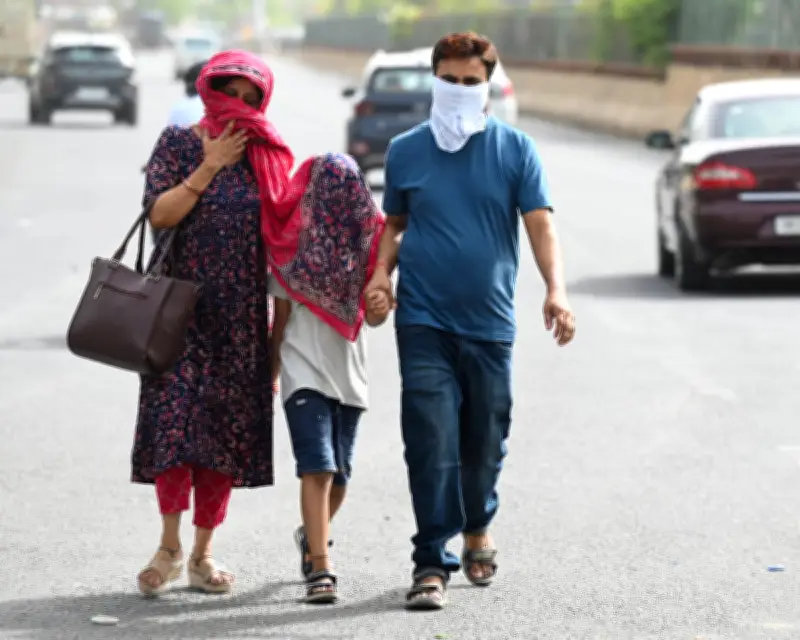
India's escalating heatwaves are shutting down schools and disproportionately pushing women out of the workforce, according to a new report by the Climate and Development Lab at Brown University. The study found that over 10 million girls have been affected by heat-related school closures in the past five years, and women are losing income as they take on childcare responsibilities.
Heatwaves and School Closures
The report highlights that between 2019 and 2024, India experienced 1,200 heat-related school closures, impacting 15 million students. Girls are disproportionately affected, as they are more likely to be kept home during extreme heat due to cultural norms and safety concerns. "When schools close, girls often take on household chores or care for younger siblings, while boys may continue studying or working," said Dr. Anjali Sharma, lead author of the report.
In states like Bihar and Uttar Pradesh, temperatures have exceeded 45°C (113°F), forcing schools to close for weeks. The closures disrupt education and increase the risk of child marriage, as families may marry off daughters early to reduce financial burden.
Impact on Women's Workforce
The heatwaves also push women out of the workforce. Many women work in informal sectors like agriculture or construction, where they lack protection from heat. "Women are forced to stop working when temperatures rise, losing daily wages of about 200 rupees ($2.40),"> said Ritu Agarwal, a researcher at the National Institute of Urban Affairs. The report estimates that women in India lose 20 million workdays annually due to heatwaves, costing the economy $3 billion.
Additionally, women who work from home or in small shops see reduced productivity as they care for children during school closures. "I have to stay home with my daughter when school is closed, so I can't work. We lose half our income," said Sunita Devi, a street vendor in Delhi.
Climate Change and Inequality
The report links the rising heatwaves to climate change, noting that India's average temperature has increased by 0.7°C since 1900. Extreme heat events are now 10 times more likely than a century ago. The impacts are worse for women, who have fewer resources to adapt. "Climate change exacerbates gender inequality," said Dr. Sharma. "Women are often last to receive aid and lack access to cooling centers or financial support."
The Indian government has implemented heat action plans in 23 states, but the report says they fail to address gender-specific needs. Recommendations include providing cool roofs for schools, flexible work hours for women, and cash transfers for families during heatwaves.




