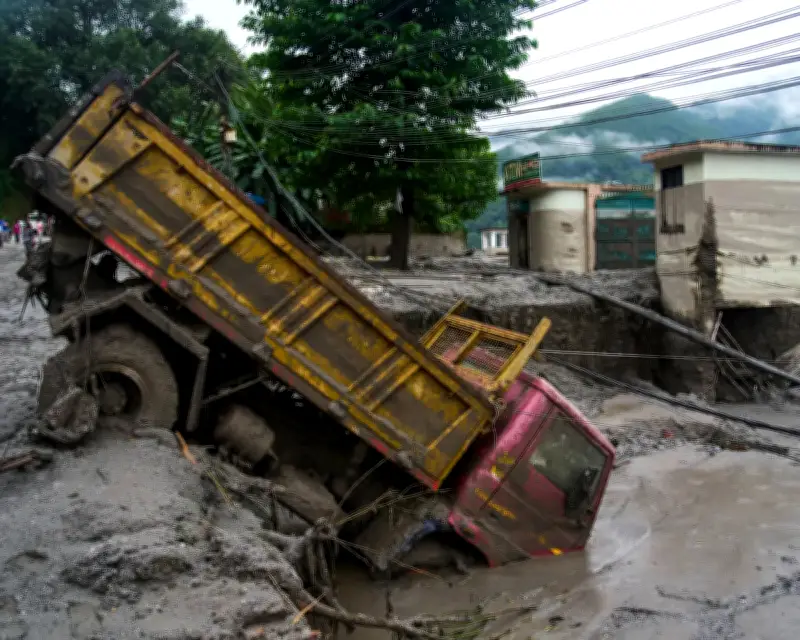
The death toll from catastrophic flash floods in Nepal and Tibet has neared 400, with about 1,300 people still missing, including 39 Australians. Authorities have warned that the region could face another inundation as a lake formed at the disaster site is rising and at risk of bursting, according to reports from the Australian government and international aid efforts.
Aid Efforts and Missing Australians
The Australian government has joined global counterparts in scrambling to send aid to the disaster-hit region. At least 39 Australians are missing, and children as young as 11 are among those unaccounted for. A New South Wales couple on a spiritual pilgrimage have been identified as missing after the disaster struck on Wednesday.
Suman Shrestha, who moved to Australia from Nepal in 2017, says he is frantically trying to contact people in the stricken region. “Lots of my friends are missing,” he says. The Australian government is urgently seeking information on the welfare of its citizens, as international efforts to deliver aid intensify.
Rising Lake and Climate Crisis Concerns
Authorities in Tibet have warned that a lake formed at the site where the deadly torrents occurred is rising and at risk of bursting, posing a fresh threat of inundation. Experts have suggested that the climate crisis may have caused ice to melt and thaw bonds that hold glaciers in place, contributing to the disaster.
The warning comes as rescue and relief operations continue, with fears that the situation could worsen if the lake breaches. The international community is closely monitoring the region, and aid is being coordinated to reach those affected.
Broader Context and Other News
In other news, Ratko Mladić, the Serbian general known as the “Butcher of Bosnia,” has died in prison in The Hague. Mladić was serving a life sentence for genocide, convicted for orchestrating the 1995 killing of 8,000 Muslims at Srebrenica, an atrocity that still haunts the region.
Meanwhile, a Guardian investigation reveals that Donald Trump’s war on Iran has driven the US military into a severe financial crisis, with the US navy forced to transfer money from payroll and other sources to cover combat costs. In Australia, the government’s promise of free energy could come at a price for some, and One Nation’s policy confusion may actually help Pauline Hanson.
As the situation in Nepal develops, the Australian government continues to work with international partners to ensure aid reaches those in need and to account for its missing citizens. The full impact of the disaster is still unfolding, with the death toll expected to rise as search and rescue operations continue.