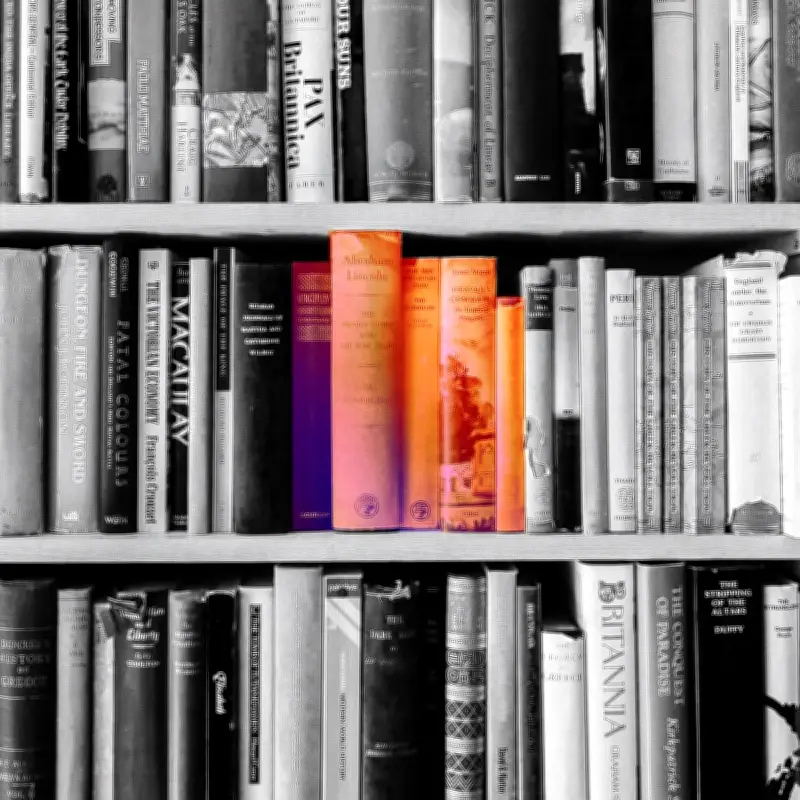
When Andrew McKean and his wife Patricia moved into a nursing home in New South Wales, Australia, they brought little more than clothes, a few photographs, and a handful of books they could still carry. Their collection of a lifetime, gathered page by page over 30 years in their family home, had to be left behind. The shelves that once held hundreds of volumes now stand empty in the house they called home for three decades.
A Library That Defined a Life
Our books told of who we were, or who we thought we might become, McKean writes in his personal essay. There were the novels Patricia read in the long evenings after the children slept, their spines cracked from her hands. There were the histories he brought home from library sales, dusty volumes of wars and voyages that filled quiet hours when rain beat on the roof. Poetry too, slim books with thin paper, marked where a line struck true. They kept them not only for the stories printed inside but for the story they made of their shared life.
The nursing home allows only a small cabinet beside the bed, holding four or five volumes at most. The rest must be given away, sold, or left for strangers to claim. On the day the movers came, Patricia sat in the armchair and looked at the ranks of titles as though they were faces she would not see again. McKean walked the length of the shelves and touched the backs of books he had not opened in decades.
The Marginal Notes That Proved a Life
What struck hardest were the notes in the margins. In one of his novels, a pencil mark still shows where he disagreed with the hero's choice. In Patricia's copy of a memoir, she had written a single word beside a paragraph about loss: 'yes'. Elsewhere, a date appears in the corner of a page, marking the day they first read it together by the fire. Those marks were private conversations with the print, small proofs that they had lived inside those pages. To give the books away was to give away the proof.
They packed a few to keep. One slim volume of poems for Patricia, the one she could recite without looking. One fat history for McKean, its maps still folded at the end, and a precious paperback of James Joyce's Dubliners, where in 'Araby' the unnamed adult narrator describes the former tenant of Joyce's childhood home, a priest who died there and left behind a few paper-covered books, the pages curled and damp: The Abbot by Walter Scott, The Devout Communicant, and The Memoirs of Vidocq.
Leaving the Rooms Where We Had Been Younger
The rest of their books went into boxes. McKean remembers the sound of the tape sealing those boxes—a dry, final sound. Patricia did not cry, but her hands stayed on the last shelf longer than they needed to. Leaving the books was leaving the rooms where they had been younger. The chairs by the window, the lamp that threw a circle of light on the open page, the habit of reaching for a particular volume when the day turned sour—those habits formed a kind of self. Without the shelves, the self felt thinner.
Who was the man who once knew the order of every title? That man stayed behind with the books. The man who now walks the corridor of the nursing home is a smaller edition, abridged. Yet here, though their room holds so little space for their own, the common rooms carry shelves stacked high with books left by those who came before them. Volumes of every kind lean together—novels, histories, and poems—their pages turned by many hands. Anyone may take them, read them, return them. They are not theirs, and the margins hold no marks of theirs, yet they stand open for the days that remain.
Memory in the Margins
McKean can still close his eyes and see the blue spine of the travel book they bought the year they thought they might cross the sea. He can hear Patricia's voice reading aloud from the novel she loved best. The margins they marked are gone, but the memory of marking them is not. In the narrow room, the few books they kept lean against each other on the cabinet. When he opens one, he finds the old pencil lines still speaking of the hours they spent with them. The print is the same, only the room has changed, and the man who holds the book.
Andrew McKean is a writer and a resident of an aged care facility in New South Wales, Australia. His essay reflects a universal experience for many elderly Australians: according to the Australian Institute of Health and Welfare, over 200,000 people permanently reside in aged care facilities across the country, each facing similar difficult decisions about what to keep and what to leave behind.