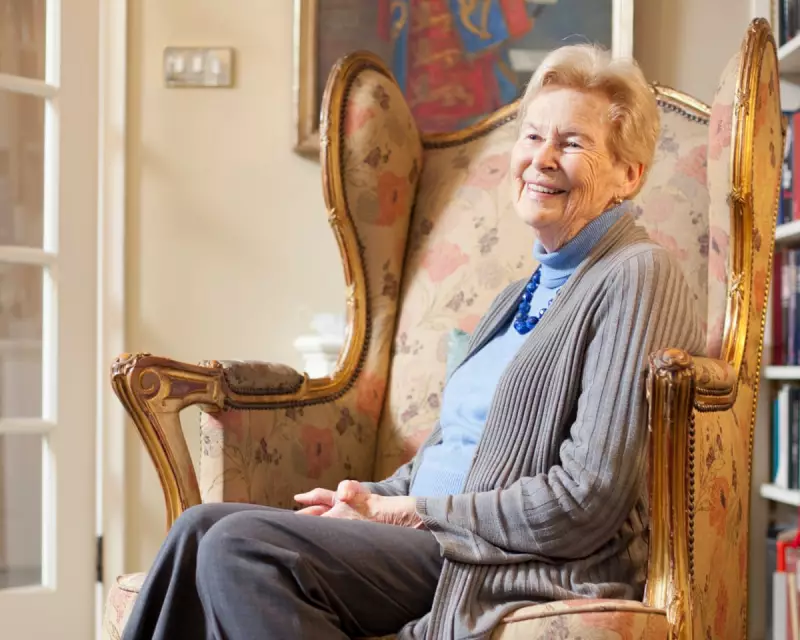
The landscape of British residential social care has lost one of its most formidable and influential champions with the death of Dame Gillian Wagner at the age of 98. For over three decades, Wagner dedicated herself to elevating standards in what she saw as the most neglected and underappreciated sector of the welfare system.
The Wagner Committee: A Vision for Dignity
Her national prominence was cemented in 1986 when she was appointed to chair what became known as the Wagner committee. This came at a time when residential care was deeply undervalued, a poor relation to the NHS, and staffed by poorly paid workers. The committee's seminal report, published in 1988, presented a radical vision: it argued that residential care should be "a positive choice", integrated into a spectrum of support and not merely a last resort.
While the Thatcher government swiftly enacted legislation based on Sir Roy Griffiths' parallel report on community care, Wagner's recommendations received no such official mandate. Her committee's 45 proposals were comprehensive, covering everything from a unified national inspectorate and resident rights to detailed workforce development and staffing calculations.
Driving Change Against the Odds
Faced with legislative indifference and often hostility from local authorities, Wagner refused to let her report gather dust. She embarked on an exhaustive nationwide tour of conferences and meetings to champion its ideas. This relentless advocacy, combined with the work of the Wagner Development Group she subsequently chaired, led to a remarkable outcome: three-quarters of the recommendations were eventually implemented.
Her commitment endured long after the initial push. In 1994, she founded the Residential Forum to continue promoting high standards, later succeeding Norman Warner (now Lord Warner) as its chair in 1997. Her work fundamentally changed the criteria by which the quality of care is judged in the UK.
A Life of Service and Scholarship
Gillian Wagner's path to social care reform was unconventional. Born in London in 1927 into a family with a lineage of politicians and soldiers, she experienced a disrupted childhood, including a period in wartime Normandy. She studied political science at the University of Geneva and later earned a doctorate and a diploma in social administration from the London School of Economics.
Her deep connection to the charity sector began when she joined the council of Barnardo's in 1969, becoming its first female chair from 1978 to 1984. While cataloguing a photographic exhibition on the charity's founder, she uncovered a more complex truth about Thomas Barnardo. Her resulting 1979 biography revealed he used an unqualified medical title, sent children to Canada without parental consent, and entangled his personal finances with the charity's. The book remains the definitive work on the subject.
This research led to another groundbreaking book, Children of the Empire (1982), which documented the migration of children in care to Commonwealth countries. She also authored works on Quaker philanthropy and a biography of Thomas Coram, founder of the Thomas Coram Foundation for Children, which she chaired from 1990 to 1995.
Alongside her writing and care reform work, she chaired Carnegie UK and the National Centre for Volunteering, and served on the governing bodies of the LSE and the Princess Royal Trust for Carers. She was appointed OBE in 1977 and elevated to DBE in 1994. She was a devoted support to her husband, the medieval historian Anthony Wagner, after he was blinded in a medical accident in 1984, until his death in 1995.
Dame Gillian Wagner is survived by her three children, Lucy, Roger and Mark, eight grandchildren, and four great-grandchildren. Her cut-glass accent and impeccable manners may have surprised some in the world of social care, but her toughness, intellect, historical perspective, and unwavering commitment made her a uniquely powerful force for good.