
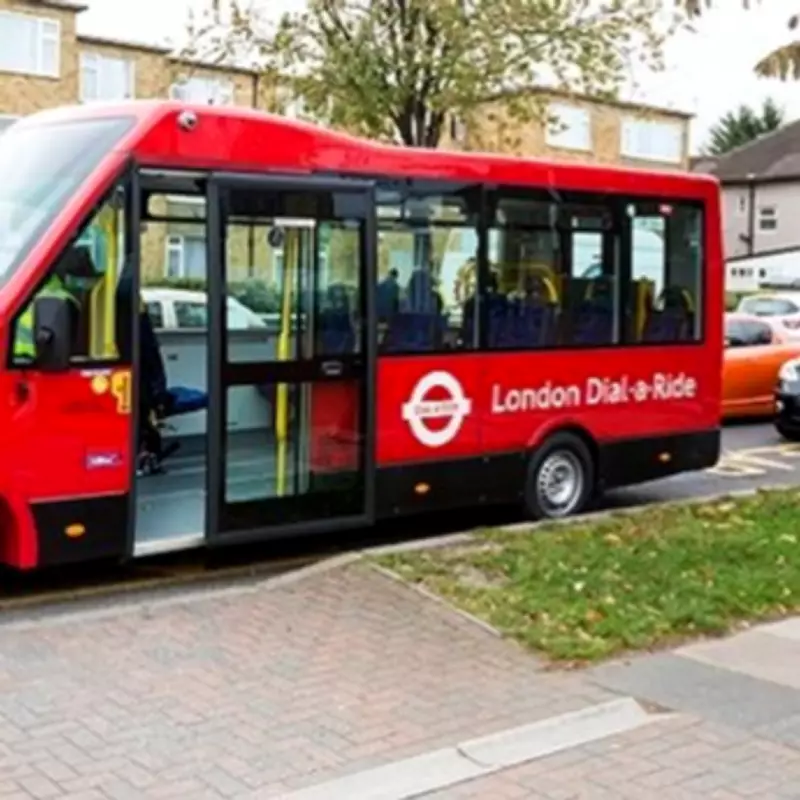
Vulnerable Londoners Left Stranded as TfL's Free Minibus Service Faces Systemic Failures
Elderly and disabled residents across London are expressing growing frustration with Transport for London's Dial-a-Ride service, reporting that frequent journey cancellations are leaving them stranded and isolated. The free door-to-door minibus network, established in the 1980s to provide accessible transportation for those unable to use conventional public transport, has come under intense scrutiny for what users describe as a significant decline in reliability.
Service Deterioration and Driver Shortages
Long-term users of the service have documented a troubling pattern of deterioration. Bryan Pinto, a 73-year-old Hackney resident who has relied on Dial-a-Ride for two decades, reports that cancellations have become increasingly common. "It's more than unacceptable," Pinto told the Local Democracy Reporting Service. "What if someone's made an arrangement to go to a funeral, and suddenly they are left stranded?"
This decline coincides with a dramatic reduction in available drivers. According to official TfL data, the number of Dial-a-Ride drivers plummeted from 321 to just 173 between 2019 and 2023, primarily due to staff taking voluntary redundancy. This 46% reduction in workforce has created severe operational challenges for the service.
Digital Barriers Excluding Elderly Users
Compounding the driver shortage is TfL's transition to a digital booking system that many elderly users find inaccessible. "It's like Uber," explained Pinto. "The majority of elderly people are not very familiar with computers. Their eyesight is very poor."
Hackney councillor Clare Joseph, who represents the Labour party, confirmed she receives regular complaints from constituents struggling with the service. "Older people often don't have smartphones, and would much prefer to talk to someone," she noted. "Once they actually manage to get in the app they are often given the message that no journeys are available, and bookings cannot be made in advance."
Real-World Consequences of Service Failures
The impact of these service failures extends beyond mere inconvenience. Maggie Cooke, a 77-year-old Hackney resident who recently qualified for Dial-a-Ride, described how cancelled bookings and unavailable return journeys threaten her community connections. In December, she used the service to attend a Christmas party at Kingshold Community Centre where she volunteers, only to discover no return journey was available.
"That would isolate me," Cooke explained, recounting how TfL operators suggested she could have chosen not to take the outward trip. For vulnerable residents like Cooke, such limitations risk cutting them off from essential social activities and support networks.
Official Reports Confirm Systemic Problems
These individual experiences are reflected in official assessments of the service. A recent report from City Hall's transport committee concluded that Dial-a-Ride "may be failing to meet its core purpose" and found TfL was "lacking depth or nuance" on accessibility issues. The study identified "unreliability" and inability to meet demand as key factors driving users away from the service.
The report warned: "If Dial-a-Ride is not operating at full potential, a significant number of older and disabled residents may be unable to complete essential journeys - to shops, health appointments, or social activities. This could place them at increased risk of transport-related social exclusion, exacerbate isolation and deepen inequalities."
TfL's Response and Future Outlook
In response to these concerns, James Meade, General Manager of On-Demand Transport at TfL, acknowledged the challenges while defending the service's overall performance. "Our aim is to ensure as many older and disabled Londoners as possible benefit from our free Dial-a-Ride service, and we are very sorry if any of our customers have experienced difficulties," he stated.
Meade added: "While we are currently fulfilling more than the targeted 90 per cent of customer requests, we are always looking to improve all aspects of the service and are open to feedback."
However, critics argue that the 90% fulfillment rate fails to capture the full extent of the problem, as it doesn't account for users who have stopped attempting to book journeys due to previous negative experiences. Councillor Joseph expressed concern that "the service is being deliberately run down when it should be a priority for TfL, and so many people could benefit from it, particularly in a context of road closures and bus cuts."
As London's population ages and accessibility needs grow, the future of Dial-a-Ride represents a critical test of the city's commitment to inclusive transportation. The service's current struggles highlight the complex challenges of maintaining essential support systems in an era of digital transformation and budgetary constraints.




