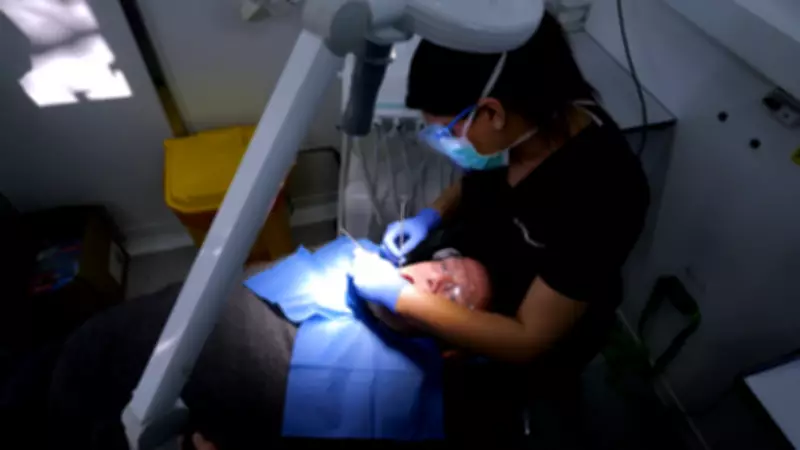
NHS Dentistry Surviving by Skin of Its Teeth as Crisis Deepens
The National Health Service dentistry system is facing an existential crisis, with millions of patients waiting years for basic care and some resorting to dangerous DIY procedures. Experts warn that fundamental reform is urgently needed to prevent the complete collapse of NHS dental services across the United Kingdom.
Charity Designed for Poorer Nations Now Operating in UK
In a stark indicator of how severe the situation has become, the charity Dentaid – originally established to provide dental clinics in developing countries – is now spending more time and resources operating within Britain. The organization has partnered with local support groups in areas like Dewsbury, West Yorkshire, to offer free dental care to people who cannot access NHS dentists.
Demand for these charity services is overwhelming, with volunteers reporting waits of four to five years for regular dental appointments in some regions. The crisis disproportionately affects poorer communities, creating significant regional disparities in oral health outcomes.

Patients Resorting to Desperate Measures
Carl Parkin, a patient receiving care through Dentaid's Dewsbury clinic, described how his toothache became so unbearable that he attempted DIY dentistry. "I took a ring pull from a can of pop and tried to take it out myself," he told Sky News. "It only made things worse, and I ended up seeing the emergency dentist."
Another patient, Roy Wake, who is recovering from alcohol and drug addiction, had not seen a dentist in eight years. "I've got no real chewing teeth left, just nothing to chew with," he said. "It makes you so self-conscious." Wake's upper teeth had worn down to their roots after years of neglect during his addiction struggles.
Systemic Failures and Regional Inequalities
The most recent analysis reveals that approximately 13 million people in England alone cannot access an NHS dentist. Children in northern regions suffer from poorer oral health, while those from the most deprived communities are twice as likely to experience tooth decay compared to children living in affluent areas.
Volunteer dentist Dr. Priya Sharry-Khan highlighted how the shortage of dental professionals creates constant pressure on available services. "I think if there was more access to care, there'd be less problems that we'd see with patients," she explained. "We wouldn't be having to have a van set up on multiple days treating as many patients as we can."
Calls for Fundamental Reform
British Dental Association chairman Eddie Crouch issued a stark warning about the future of NHS dentistry. "Whether NHS dentistry even has a future will depend on the choices made in the next few years," he stated. "Underfunding and failed contracts have fuelled a crisis that's left millions without options. This service's survival hinges on fundamental reform backed up by real investment."
Andy Evans, CEO of Dentaid, noted that changing demographics are increasing demand for dental services. "It's just the changing dynamics, there are different communities coming in who maybe haven't had access to dentists at any time," he observed. "The world is changing and yes we want to carry on expanding what we're doing."
Government Response and Future Outlook
A Department of Health and Social Care spokesperson responded to the crisis by stating: "We are rolling out extra urgent dental appointments and reforming the dental contract to prioritise patients with the greatest need."
However, dental professionals and health advocates argue that more comprehensive action is required to address the systemic issues plaguing NHS dentistry. The combination of chronic underfunding, contract failures, and workforce shortages has created a perfect storm that leaves vulnerable populations without essential dental care.
As the charity Dentaid expands its UK operations to fill gaps left by the struggling NHS system, the question remains whether fundamental reforms will arrive in time to save a service that millions of Britons depend on for basic oral healthcare.