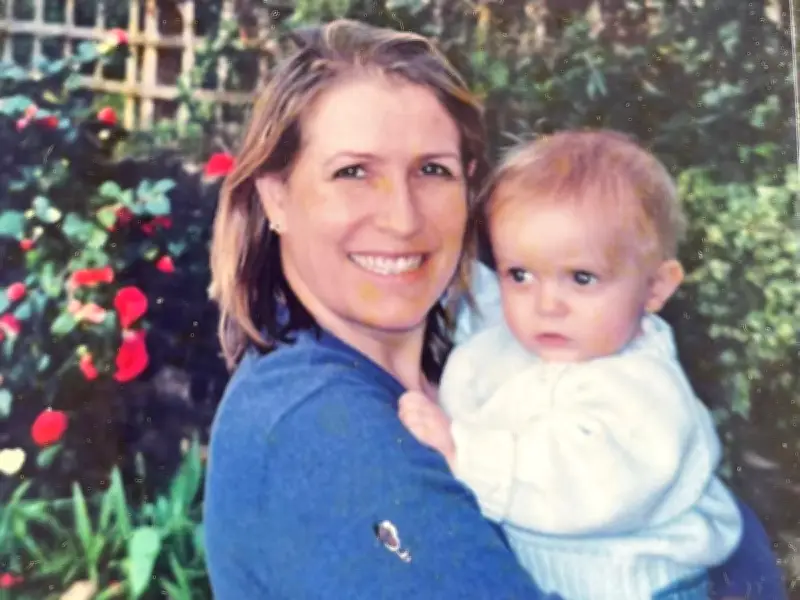
Fiona Macrae, a travel insurance broker from London, was diagnosed with breast cancer in February 2005, just months after giving birth to her son Cameron. Nearly 15 years later, in July 2020, she learned the cancer had spread to her lungs and bones, and that it was incurable.
Macrae, who lives with her husband Elliot Lane, first noticed changes in her left breast in 2004 while pregnant with Cameron. After the birth, the changes persisted, and although doctors initially attributed them to milk production, a GP referral to St Bartholomew's Hospital's one-stop breast clinic led to a same-day diagnosis. At the appointment, five-month-old Cameron was in his pram beside her.
A shocking diagnosis and gruelling treatment
Recalling the moment, Macrae said: "I remember looking at him and thinking: 'God, am I ever going to see my baby go to school?' It was completely shocking. The connotation of cancer is death... Immediately you think: 'Well, that's it. I'm never going to see my baby go to school, or anything like that'."
She underwent six months of chemotherapy from February to July 2005, followed by a mastectomy of her left breast in October 2005 and radiotherapy starting in December of that year. Macrae described the treatment period as a "lonely, lonely time," surrounded by older patients, and admitted she felt "really frightened" — compounded by postpartum hormones.
Treatment concluded in December 2005, and for 15 years there was no sign of recurrence. During that time, Cameron excelled academically and went on to university, with his graduation expected in summer 2027. Macrae also launched her own travel insurance brand specialising in cancer patients, drawing on her personal experience. She attended routine check-ups, had regular scans, and took hormone therapy for a decade, believing "everything was fine."
Secondary diagnosis: 'Always worried'
In 2020, a persistent cough that "wouldn't go away" prompted concern. "At the back of your mind, you're always worried it's going to be secondary breast cancer," she said. A chest X-ray came back clear, but further scans by a respiratory consultant revealed metastatic breast cancer in her lungs and bones.
Macrae described feeling "shocked" at the July 2020 diagnosis, having "always thought I'd got away with it." She explained: "Once you hit that 15 years, you think: 'I might be okay now'. So it was a shock... the stats online and everything are really bleak with life expectancy and everything like that."
She began immunotherapy in August 2020 to slow the cancer's progression, with three-monthly check-ups confirming the treatment is effective. Unlike her first diagnosis, this one came during a Covid lockdown, adding a new layer of isolation alongside the incurable news.
Charity provides lifeline
In 2021, Macrae found support through Future Dreams, a charity founded in 2008 by mother and daughter Sylvie Henry and Danielle Leslie, who both died from secondary breast cancer in 2009. The charity offers practical and emotional support, in-person and online communities, workshops, classes, therapies, and social events.
"My life just changed completely," Macrae said of discovering the charity via Instagram. "I was finally able to meet people in the same boat as me, the same age as me, going through the same things as me. We always say it's the worst club to be in with the best people."
The support has made an "immense" difference, giving her a place to "talk about my darkest fears" with people who understand. "It is even more scary this time because it's not curable at all now," she said. "But to be able to talk about your fears to other people, and also the experts that they have at Future Dreams – the breast care nurses, people that can help you with the grief of your diagnosis, because you do grieve. You grieve for the life that you thought you might have."
Continuing treatment and hopes for the future
Six years after the secondary diagnosis, Macrae continues on immunotherapy as her first-line treatment, with scans every three months to monitor tumour growth. When that eventually stops working, she will switch to an alternative therapy aimed at extending her life.
Cameron is set to graduate from university in summer 2027, and Macrae hopes to be there for many more milestones. "I just want to make sure that I can see as much of Cameron's life as possible," she said. "We encourage him to fly the nest – he wants to travel when he finishes uni. Although I'll miss him when he goes, it'll be our excuse to follow him around the world!"
She added: "Then there'll be something else. Can I see him buy his first house, or something like that? I didn't dare dream about this 22 years ago."