Healthcare Worker’s Heart Attack Went Unnoticed
Julie Charnet, a neurosurgery coordinator at a hospital, experienced a strange pressure in her chest and rib cage when standing and walking. Despite working in a medical environment with posters about heart distress signs, she initially dismissed the sensation as a pulled muscle. A colleague, a nurse, urged her to visit the emergency room, a decision Charnet credits with saving her life.
At the ER, tests including an electrocardiogram and troponin levels showed no abnormalities. She was sent home with cholesterol and blood pressure medication. However, the odd sensation persisted, prompting her to consult a cardiologist the next day. A catheterization revealed blockages in two arteries, including a severe blockage in the largest coronary artery—a condition often called a “widowmaker.” Physicians considered bypass surgery but ultimately placed a stent. Charnet was stunned: “I worked in healthcare and was familiar with the signs of cardiac issues. How could I not know my heart was in serious trouble?”
Why Symptoms Differ in Women
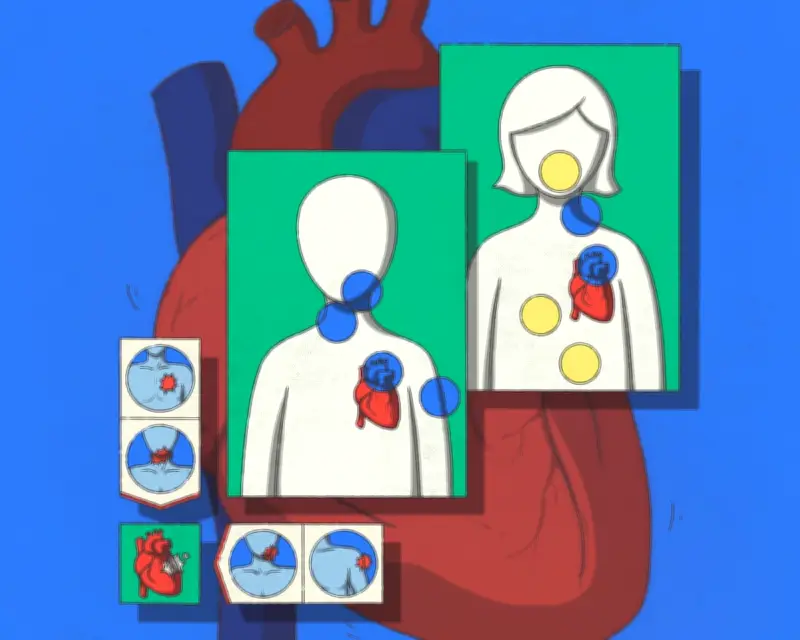
Heart disease is the leading cause of death among women, according to the American Heart Association, causing one-third of deaths annually—more than all cancers combined. Yet symptoms often differ between sexes. Common male signs include chest pain, left arm discomfort, nausea, and shortness of breath. For women, the list is broader: chest pressure in the lower chest, upper abdomen, jaw, neck, or upper back; nausea; vomiting; fainting; shortness of breath; indigestion; and extreme fatigue. Chest pain is not always present.
Dr. Sirisha Vadali, a cardiologist at HonorHealth in Scottsdale, Arizona, specializing in women’s heart disease, notes that the heart and stomach share nerves, so indigestion, nausea, and GI distress can signal heart trouble. “Lesser-known external factors are vital to getting an accurate diagnosis,” she says. Vadali adds that many women feel something is wrong but cannot articulate it in classic terms: “It’s difficult to explain to medical personnel that nothing really hurts, but your body is telling you there is real trouble—somewhere.”
Diagnostic Tests and Advocacy
Dr. Americo Simonini, a cardiovascular specialist at Cedars-Sinai in Los Angeles, emphasizes that women often dismiss symptoms as anxiety or being unfit. “There’s an under-appreciation of cardiovascular risks in women,” he says. He recommends specific blood tests that provide clearer risk assessment: elevated high-sensitivity C-reactive protein (hs-CRP) indicating inflammation and narrowing blood vessels; lipoprotein(a) elevation, a genetic marker for inherited LDL cholesterol; apolipoprotein B elevation, measuring plaque-carrying substances; and coronary artery calcium score (CAC), indicating plaque presence. “There is a misconception that women are protected until menopause. That’s simply not true,” Simonini warns.
Dr. Sonal Chandra of Focus Cardiology in Chicago notes that women are less likely to receive imaging or interventions even with comparable symptoms. She advises patients to ask for additional diagnostic testing if concerns are not addressed. “No one should feel they have to walk away without some answers,” she says. Experts urge women to provide detailed information, including seemingly unrelated issues like persistent stomach aches, and to persist in seeking answers if initial visits are unhelpful.
Research Gaps and Progress
Historically, cardiovascular research has underrepresented women. The Million Veteran Program, a large-scale study beginning in 2011, predominantly involved white male participants, shaping treatment standards. Since then, data sets have diversified. Educational efforts are improving: in 2016, the University of Pennsylvania established a women’s cardiovascular health curriculum for cardiology fellows; Columbia University offers electives on women’s risks; and Harvard Medical School now offers continuing medical education credits on women’s health conditions.
Monitoring and Prevention
Regular checkups with a primary care provider establish baseline data for future comparisons. Experts recommend more than annual visits if medications or procedures change. Providing details about family history, environment, and diet helps design a prevention plan involving nutrition, genetic testing, imaging, medication, or lifestyle changes. “Keep asking more and more questions; we are in a profession where we can’t afford to be wrong,” Simonini concludes.