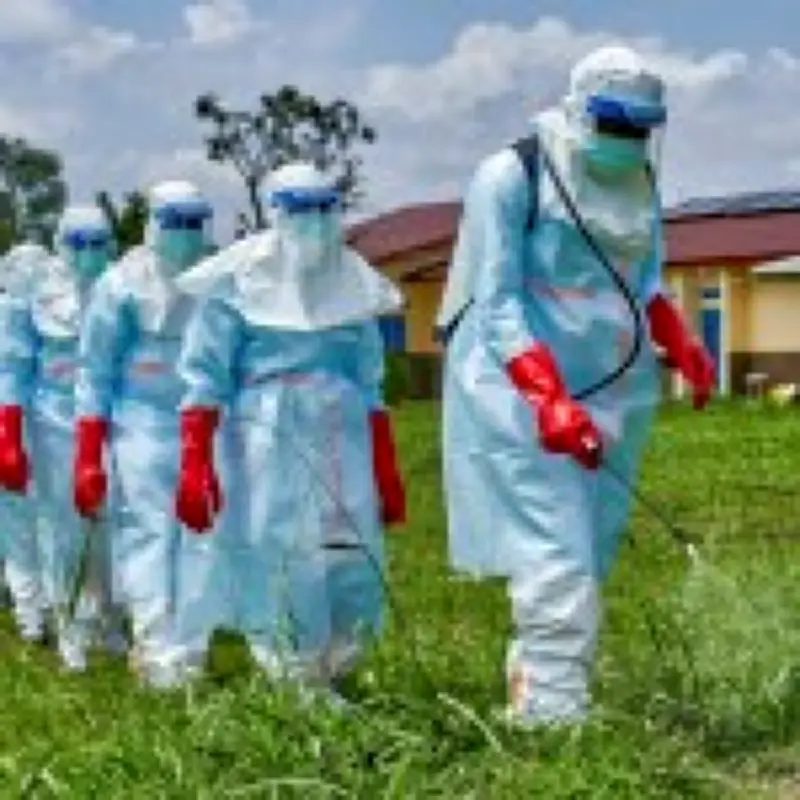
Health officials are investigating whether the deadly Ebola virus is mutating as the outbreak in the Democratic Republic of Congo (DRC) continues to surge, with more than 1,800 deaths and over 4,000 cases recorded as of August 5, according to the US Centers for Disease Control (CDC).
Unprecedented severity of Bundibugyo strain
The outbreak, caused by the Bundibugyo variant, was declared in mid-May but may have been spreading since January. The Africa Centers for Disease Control and Prevention (Africa CDC) has raised the alarm over possible mutation, citing the unprecedented severity of this strain.
Dr Jean Kaseya, director general of the Africa CDC, said plans were discussed for studies to check 'if there is no additional issue, or maybe if the virus is not mutating,' because 'the level of severity of this Bundibugyo outbreak is unprecedented.'
Insufficient contact tracing and shift to active case search
Contact tracing has been inadequate, with only around 10 contacts identified per Ebola patient, far below the expected 40. To address this, the Africa CDC is drafting plans for door-to-door active case searches, shifting from contact tracing to a more aggressive approach, according to Dr Wessam Mankoula.
The majority of deaths in Ituri province have occurred outside medical facilities, suggesting many transmissions are untracked. The outbreak has been complicated by internal conflict, fighting, and a high number of displaced people in the region.
No vaccine for Bundibugyo strain, but hope from other vaccines
There is currently no vaccine specifically for the Bundibugyo strain, but experts are hopeful that an existing Ebola vaccine could reduce disease severity and curb deaths, based on positive data from other outbreaks.
Regional and international spread
Uganda has recorded 20 cases and two confirmed deaths before bringing its outbreak under control. France reported its first-ever confirmed Ebola case in June, involving a doctor returning from a humanitarian mission in the DRC. The UK has no cases in this outbreak, though a 2015 case was linked to the West Africa outbreak.
Understanding Ebola
Ebola, also known as Ebola haemorrhagic fever, is a rare but severe and often fatal illness affecting humans and primates. It transmits from wild animals to people and spreads human-to-human through direct contact with broken skin or mucous membranes. The average fatality rate is around 50%, with past outbreak rates ranging from 25% to 90%.