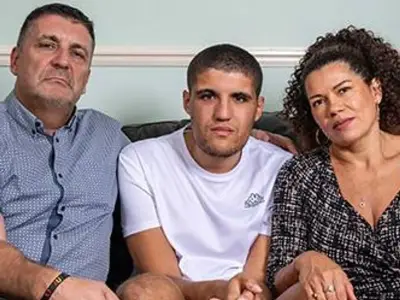
Coronation Street is set to explore a harrowing new storyline, which will see Kit Green (Jacob Roberts) diagnosed with stage three breast cancer. After discovering that they both may carry the familial BRCA gene, both Kit’s mum, Bernie Winter-Alahan (Jane Hazlegrove), and sister, Gemma Winter-Brown (Dolly-Rose Campbell), seek testing to discover the truth after the revelation of a long-held family secret that the gene runs through their family.
Carrying a familial BRCA (Breast Cancer) gene mutation means inheriting a harmful change in the BRCA1 or BRCA2 genes from a parent, which significantly raises your lifetime risk of developing certain cancers. Off-screen, Kit has already sought a medical opinion amid growing concerns about his health, with breast cancer the furthest thing from his mind.
Male breast cancer is a real threat
‘I genuinely didn’t know that men could get breast cancer and I felt, to make it authentic, that Kit shouldn’t know that men can get breast cancer either’, said actor Jacob. Sadly, though, male breast cancer is a very real condition that poses a serious threat to life and something almost 500 men in the UK face every year and, while incredibly rare and accounting for less than 1% of all breast cancer cases, many men are completely unaware that they can get it, which, in turn, leads to embarrassment, delayed diagnoses, and higher mortality rates.
In ITV’s new promo video for the storyline, we see an anxious Kit awaiting his results, while the story, which begins in September, will see Kit on his difficult journey from his initial diagnosis, to the emotional fallout and through his treatment, while also showing how the news affects Kit’s entire family.
Cast and crew speak on the storyline
‘Speaking to the charities and male survivors has been really insightful,’ said Jacob. ‘Lots of men don’t know they can get this and for Kit it’s that utter disbelief of how can this be? Not only for his age, but how can I have this as a bloke and who else in the family could be affected.’
The Coronation Street production team have been working incredibly closely with both Macmillan Cancer Support and Breast Cancer Now, in a bid to accurately portray Kit’s cancer while also raising awareness of the illness occurring in males.
Corrie boss and charities weigh in
Corrie boss Kate Brooks said of the story: ‘This diagnosis absolutely shakes the foundations of Kit’s life as he struggles to digest what this means not only for him, but also for his family and loved ones. Kit’s a complex character, and he struggles as he navigates this new world he’s been thrust into. His vulnerabilities become all too apparent as he wrestles with what this means to his sense of identity. Whilst male breast cancer is rare, it’s important that we show it can happen to anyone. We must normalize conversations around this to encourage people to consult their GP at the earliest opportunity if any changes arise.’
Dany Bell, Cancer Care Strategic Adviser for Macmillan Cancer Support, who has played an integral role on shaping the storyline and scripts also spoke on the upcoming plot line: ‘The team at Coronation Street has worked tirelessly to represent breast cancer in men accurately and responsibly and Macmillan is proud to have partnered with ITV on this story. I know many people diagnosed with cancer will be able to relate with Kit’s feelings of shock and anxiety; going through cancer can be one of the toughest challenges many people will ever face, but this storyline reminds us that no one has to go through cancer alone. Along with Kit being surrounded by caring family and friends, Macmillan is also there to support everyone affected by cancer. Talking about cancer matters and through the support of Macmillan healthcare professionals and services like our Support Line, Online Community and Buddies, we help people like Kit feel less alone. We hope that this story will help show that nobody facing cancer in the UK has to struggle in silence. We’re here for everyone affected by cancer, whoever or wherever they are.’
Breast cancer in men: symptoms and statistics
Common symptoms can include a painless lump or swelling under the nipple or areola, an inverted or retracted nipple that turns inward, nipple discharge or bleeding, skin dimpling, puckering, or scaling on the chest, and sores (ulcers) on the chest or nipple area. Risk factors include older age (most frequently diagnosed in men in their 60s), inherited BRCA1 or BRCA2 gene mutations, high oestrogen levels linked to obesity or liver disease, and genetic conditions such as Klinefelter syndrome.
Around 400 to 420 men are diagnosed with breast cancer in the UK every year. For comparison, roughly 59,000 women are diagnosed annually. Approximately 1 in 870 men in the UK will be diagnosed with breast cancer during their lifetime. There are around 85 deaths from male breast cancer each year in the UK. Since the early 1970s, male breast cancer mortality rates have decreased by about 47%. While breast cancer diagnoses in UK women have risen by roughly a quarter since the early 1990s, incidence rates in men have remained stable.
Sally Kum, associate director of nursing and health information at Breast Cancer Now also spoke about working with the soap: ‘Kit’s story serves as a powerful reminder that breast cancer can happen to anyone. Male breast cancer is very rare, but raising awareness and normalising conversations around the disease is crucial, to encourage men to check their chest regularly and see their GP if they notice new or unusual changes. While most changes won’t be cancer, the earlier it’s diagnosed, the better the chances of treating it successfully. We’ve drawn on our insights and extensive expertise supporting people affected by breast cancer to help guide this storyline and ensure that it’s portrayed authentically, particularly some of the complexities around family history and how Kit may navigate the impacts of his diagnosis and treatment. Information and support is out there for anyone affected by Kit’s experiences – no-one should feel they have to face breast cancer alone.’