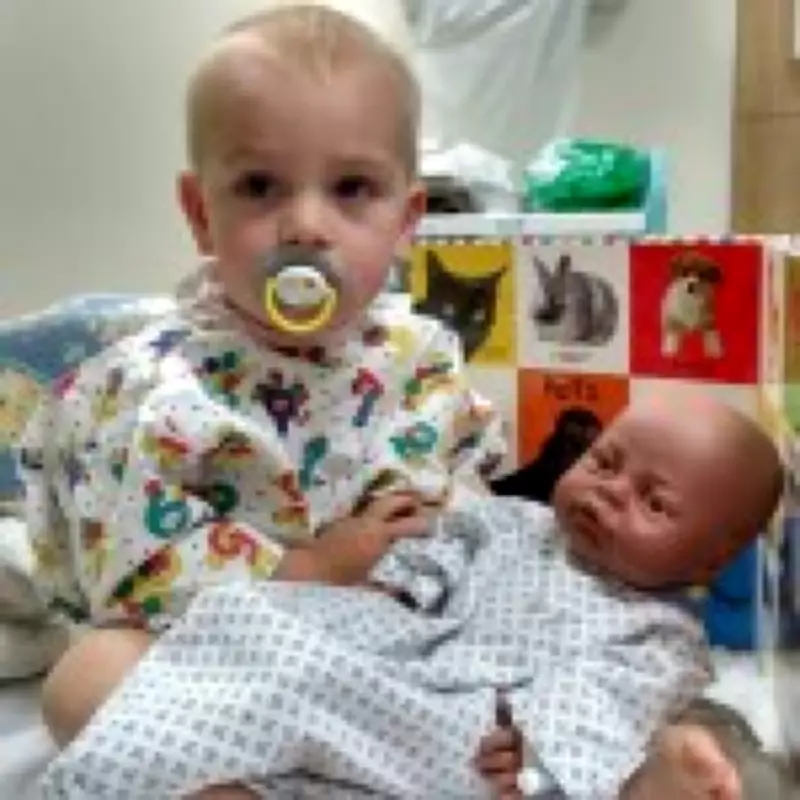
British broadcaster and former Conservative MP Gyles Brandreth has spoken publicly for the first time about his grandson Kitt's devastating cancer diagnosis as an infant, describing the experience as a profound shock to his family system. The 77-year-old television personality has used his platform to call for more compassionate and advanced treatments for childhood cancers, highlighting the significant gap between promising medical research and actual clinical availability.
A Family's Unexpected Journey
Brandreth revealed that his grandson Kitt, now aged ten, was just a baby when his parents discovered a concerning pea-shaped lump near his stomach during a routine nappy change. Initial medical consultations suggested the growth might be a harmless cyst or hernia, but subsequent emergency department visits, ultrasound scans, and comprehensive testing delivered the devastating diagnosis: rhabdomyosarcoma.
This rare soft tissue sarcoma affects fewer than sixty children annually across the United Kingdom, making it an exceptionally uncommon pediatric cancer. "Kitt's diagnosis was a shock to the system," Brandreth confessed. "We typically associate cancer with unfortunate middle-aged individuals, not with infants."
The Treatment Reality
The family quickly discovered that managing childhood cancer involves an extensive, demanding journey. Brandreth admitted they "didn't realise what a long journey it was going to be" as Kitt embarked on aggressive chemotherapy that caused significant side effects including complete hair loss, necessitated multiple blood and platelet transfusions, and resulted in liver damage.
Complications escalated when Kitt developed a serious bacterial infection affecting his heart and was diagnosed with veno-occlusive disease, a potentially life-threatening condition where small liver veins become obstructed, sometimes leading to multi-organ failure.
Sanctuary at Great Ormond Street
Brandreth expressed immense gratitude toward Great Ormond Street Hospital (GOSH), where Kitt received treatment. The family felt "relieved" knowing their grandson would be treated at an institution with a "world-class reputation" for pediatric care.
"What they do brilliantly at Great Ormond Street is remember that children are children," Brandreth observed, highlighting the hospital's thoughtful approach that included a dedicated playroom. "Kitt and I would do jigsaws, build things together – I'd build them up and he'd help knock them down, and I taught him funny poems."
The former parliamentarian praised the hospital staff as "matchless at every level from the consultants right the way through to the nursing staff and everyone else," describing Kitt's treatment period as deeply "emotional" for the entire family.
The Treatment Gap
Despite GOSH pioneering advanced therapies like CAR T-cell treatment for children, Brandreth noted that many young patients still receive medications developed half a century ago. He pointed to the concerning disparity in pharmaceutical development, revealing that over the past decade, only twelve anti-cancer drugs have been approved for pediatric use compared to more than one hundred fifty for adult cancers.
"You read things about new treatments in the paper and think this sounds exciting," Brandreth explained, "but when you speak to the doctors, they aren't available yet." Clinical trials for childhood cancers take approximately six and a half years longer on average to reach approval than adult studies, creating what advocates describe as an unacceptable treatment lag.
Understanding Rhabdomyosarcoma
Rhabdomyosarcoma develops in the body's supporting tissues such as muscle, bone, or cartilage. This rare sarcoma predominantly affects children under ten years old and occurs more frequently in boys than girls. Tumors typically appear around the head and neck region, bladder, testes, womb, or vagina, though they can also develop in limbs, abdominal walls, or chest muscles.
A Hopeful Outcome
Kitt received his all-clear diagnosis in November 2017 and has now maintained remission for eight years. He undergoes annual check-ups at GOSH while living abroad with his family, enjoying what Brandreth describes as a "normal life" – a remarkable outcome given the severity of his childhood illness.
The GOSH Charity echoes Brandreth's call for accelerated development of kinder cancer treatments specifically designed for children, emphasizing that more research investment and clinical focus must be directed toward pediatric oncology to bridge the current treatment gap.