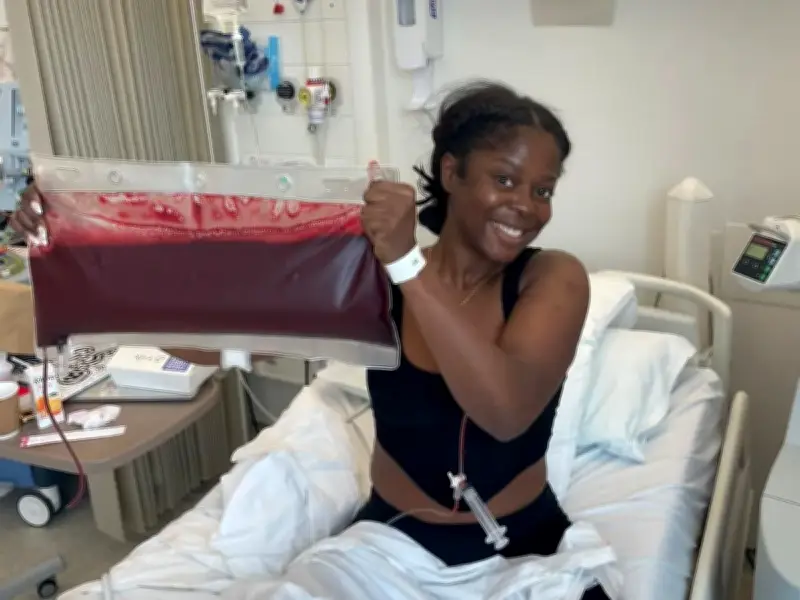
Nikki Fagbemi, a 37-year-old actor and writer from Hackney, East London, has seen her life transformed by regular blood transfusions, which she says have given her a 'new lease of life' after years of living with sickle cell disorder. Fagbemi, who once believed she would not live past 30, now receives approximately ten units of donated blood every six weeks, a treatment that has dramatically reduced her hospital admissions.
A Life Changed by Blood Donations
Fagbemi's condition caused intense pain in her hips, often leading to emergency care. At her worst, she was admitted to the hospital six to eight times a year, with stays lasting at least two weeks. Since starting blood exchanges in 2024, her admissions have dropped to just three since 2022, allowing her to pursue her career and passions.
"Blood donations have helped me finally be able to live the life I want on my terms," Fagbemi told MyLondon. "When I was born, they told my mum that I might not actually live past six weeks because I was so sick. Now it's ironic that I get my blood exchanges every six weeks."
The Importance of Black Heritage Donors
Sickle cell disorder is the UK's fastest-growing inherited blood disorder, predominantly affecting people of Black African and Black Caribbean heritage. Patients often require blood that is closely matched to their own type, making donors from Black heritage communities particularly vital. People of Black heritage are ten times more likely than White people to have the Ro blood subtype, which is essential for treating sickle cell.
Fagbemi emphasized the critical role of these donors: "Without regular blood donations from the black community, I simply wouldn't be able to do what I love. Since starting these blood exchanges, I've had three hospital admissions since 2022. Before 2022, I'd have six to eight hospital admissions and they would last a minimum of two weeks. I'd still be struggling even when they'd send me home."
Debuting 'Bed Five' at Edinburgh Fringe
Fagbemi will perform her debut one-woman play, Bed Five, at the Edinburgh Festival Fringe this year. The play draws on her lived experience with sickle cell and her dependence on blood donations from strangers. She was inspired to create the play after a friend with sickle cell died following a crisis, just a month after watching Fagbemi perform at a comedy show.
"The one way I would describe Bed Five is that it's about a girl who is not scared of death," Fagbemi said. "The older I'm getting, the more I've outlived so many people that I thought I never thought I would. Every time you go into the hospital with a crisis, there's a chance you might not come out."
She added: "Taking Bed Five to Edinburgh feels incredibly special because it's an opportunity to tell an authentic story that isn't often seen on stage. If audiences leave understanding sickle cell a little better, or if someone decides to become a blood donor because of it, then that's an amazing result."
NHS Appeal for More Donors
Gerry Gogarty, Director of Blood Supply at NHS Blood and Transplant, highlighted the ongoing need: "Nikki's story demonstrates the extraordinary difference blood donation makes every single day. Regular donors are not only giving blood; they are helping people live fuller, healthier lives and enabling individuals like Nikki to pursue their dreams."
With only 3 per cent of blood donors coming from the Black heritage community, the NHS is urgently seeking more donors from these backgrounds to help sickle cell patients. Gogarty hopes Fagbemi's story will inspire more people to consider donating.