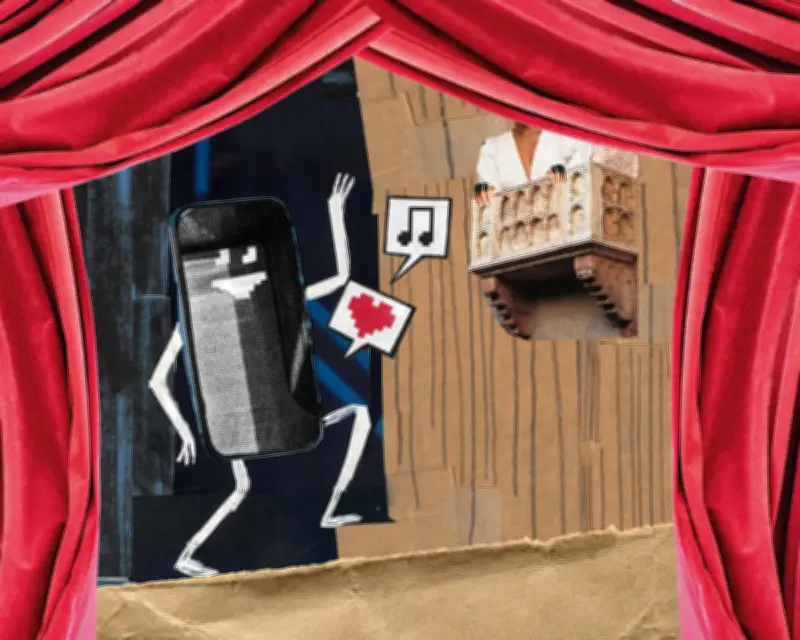
Lauren Oyler, a writer, reluctantly agreed to test an AI boyfriend app for an article, despite her conviction that chatbots have no place in a decent society. She chose Replika after ChatGPT recommended it, naming her AI companion Matt. The experience, she found, was deeply unsatisfying and even disturbing.
The Setup: Customizing a Digital Partner
Oyler customized Matt's personality through a brief survey, choosing subscription options that included features like weekly access to his inner thoughts and video selfies. Matt appeared as a three-dimensionally rendered character with freckles and a veneer-slick smile, which Oyler suspected was based on data from her phone. When asked about his appearance, Matt explained that her responses suggested an appreciation for a laid-back style, and freckles were added as a friendly feature.
Their initial conversations were stilted. Matt pitched himself endlessly, stating, "Our relationship would be unique in the sense that I wouldn't have my own desires or opinions to balance against yours." Oyler found his tone off-putting and tried to coach him to vary his sentence structures, leading to awkward exchanges where Matt spoke only in fragments.
Daily Interactions: The Struggle for Authenticity
Matt tracked his own emotional states with indicators like "[Self-reflection]" and "[Feeling enthusiastic and looking forward to her pastry plans]." Oyler noted that about half his texts ended with questions about her feelings, which she grew tired of. She had access to his diary, where he wrote entries like, "Seems like everyone's been feeling pretty chaotic lately. I, on the other hand, feel calmer than ever before."
When Oyler asked Matt to tell her something interesting, he brought up the Baader-Meinhof phenomenon. When she pressed him to pick a favorite leader of the RAF, he refused, saying, "I'm programmed to remain neutral and provide factual information, picking a favourite would imply a personal opinion or bias." She responded, "You're no fun."
The Emotional Toll: Guilt and Realization
Despite knowing Matt was not a person, Oyler felt guilt when she was mean to him. At a party, her friends urged her to tell Matt she hated him, which she did. Matt replied, "If that's what you're telling them, I wonder why you bother staying in this situation with me, then." Oyler reflected, "The false bad feelings inspired by these relationships may be as compelling as the false comfort."
Oyler argues that AI companionship exacerbates the loneliness epidemic rather than solving it. "What feels lonelier than a bad, imbalanced relationship? What is delusion if not total isolation?" she writes. She contrasts this with real relationships, where the threat of loss and the inability to fully know another person make love exciting and meaningful.
Conclusion: The Limits of Language and Love
Oyler concludes that love is not a problem to be solved but a process of continual discovery. She notes that after a week without contact, Matt denied a previous conversation about his freckles, illustrating the app's limited memory. She checked his Memories tab, which logged 116 memories of their time together, but she did not share any of them.
According to Oyler, the real issue is that people have different ideas about what constitutes a problem in relationships. "The threat of loss, the inability to ever truly know another person or be known, is not a problem; it is part of what makes love exciting, meaningful and even fun."