
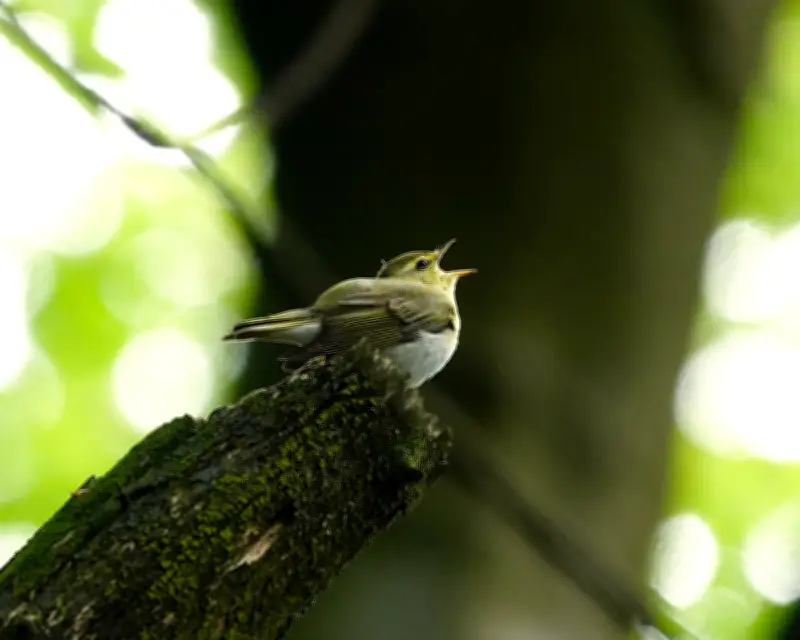
Wood Warbler Returns to Buxton After 50-Year Absence
A wood warbler has been spotted in Buxton, Derbyshire, for the first time since 1979, marking a bittersweet return for a species that has seen its British numbers collapse by 82%. The bird, observed throwing its head back in song, evokes both joy and melancholy for naturalist Mark Cocker, who recalls the species as a highlight of his schooldays.
Song and Sight: A Unique Performance
The wood warbler's song is a hard, brittle repeat note that increases in pace and volume, culminating in an exhilarating trill. The full impact is best understood by watching the delivery: the bird throws its head back, pink bill agape and pointing skywards, often translucent against sunlight. Its lemon breast is thrust forward, and long wings shiver as sounds emerge. After each climactic trill, the bird pauses, returning the wood to silence before shifting location and rebuilding the song above.
Pattern of Decline and Resilience
This sighting fits a broader pattern of British decline, with the wood warbler's range withdrawing northwards and numbers plummeting by 82% according to Cocker. In contrast, Poland's 9 million hectares of woodland—three times the UK's total—hold a million pairs. The returning bird likely failed to find a mate at a previous location in Herefordshire or Wales, then moved at night, flying over treeless, chemically controlled terrain, possibly a kilometre above ground, until some cue brought it down to the exact spot where wood warblers sang 50 years ago. For a 10g bird already arrived from west Africa, this feat speaks of extraordinary resilience and deep vulnerability.
As Cocker notes, 'That feat alone by a bird weighing 10g, having already arrived from west Africa, speaks at once of extraordinary resilience and deep vulnerability.' The return is a poignant reminder of the fragility of nature.



