Malkins Bank golf course in Cheshire, built on a former industrial waste tip containing thousands of barrels of toxic chemicals, has been deemed suitable for recreational use, including a new children's play area, despite warnings that the site will remain toxic for 100 years.
History of Contamination
The 18-hole course, stretching across a narrow strip of land bordered by dairy pastures and the Trent and Mersey Canal, has a long industrial history. In the mid-Victorian era, it operated as a salt works, then an alkali works, and later produced ammonium nitrate for bombs during World War I. It became a waste tip in 1950, but indiscriminate tipping in the 1960s caused severe problems.
A handwritten dump log from March 1968 reveals over 1,000 tonnes of waste dumped in a single month, including waste lime, tannery waste, and drums from companies like ICI and Shell. Polychlorinated biphenyls (PCBs), carcinogenic "forever chemicals" banned in the UK in the 1980s, were also disposed of by Purle Group.
Discovery of Toxic Legacy
Tony Minshall, leaseholder of the golf course from 2011 to 2025, became alarmed after a machine fell into a methane chamber in 2017, covered only by hardboard and carpet. He reported the smell as "horrendous." The council eventually capped the chambers after two and a half years. Minshall was later told it would cost £1.3bn to remediate the site, and that the land had been officially classified as contaminated in 2011—six years before he learned of it.
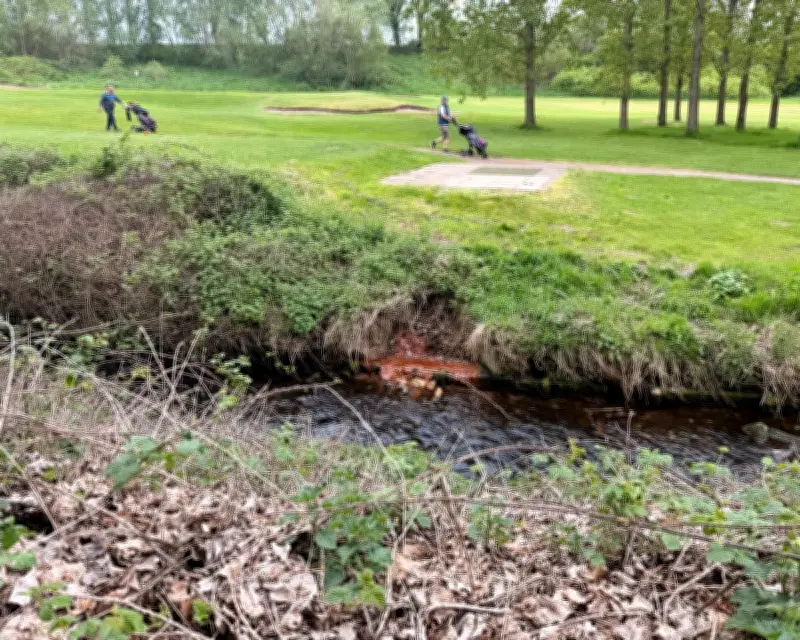
In November 2022, heavy rain caused foul-smelling substances to rise, killing grass and trees and spilling into the river. A report by Obsidian Environmental found inadequate landfill capping and drainage allowed leachate to surface.
Health and Environmental Risks
Former employee Dave Parry recalled that in the late 1960s, ICI dumped drums of acid at midnight. A 1973 report by Cheshire's assistant county planning director, John Long, described the 24-hectare site as "a heap of many thousands of drums containing a variety of toxic substances" with two shallow lakes heavily contaminated with chemical waste and oil, where drums could explode. Hazardous sodium cyanide barrels were also suspected.
A handwritten note from November 1984 referenced possible radioactive waste dumping, though radiation surveys in 1985 and 2002 found no additional risk. Despite this, the council deemed the site's "optimum afteruse" as a golf course, which opened in 1980 after four years of reclamation.
Ongoing Concerns
Graham Warner, a local resident, received a folder of documents from a former councillor revealing the extent of contamination. He found rust-orange dust in his basement, believed to be from landfill gas. Karen Mason, whose husband played golf on the course, expressed outrage: "They have endangered people recklessly for their own gain." Minshall stated, "If I knew that I would never have touched it in a million years." His company went into liquidation, and he lost his leg in 2021, which he believes may be linked to the contamination.
Cheshire East council stated that specialist investigations found the site suitable for its current use, with low risk to human health. The Environment Agency noted no pollution incidents since June 2020. However, Prof Kate Spencer, a landfill specialist, advised reappraising the site's use as capping may fail over time. The current leaseholder has added a zip line and bouncy castles for children.