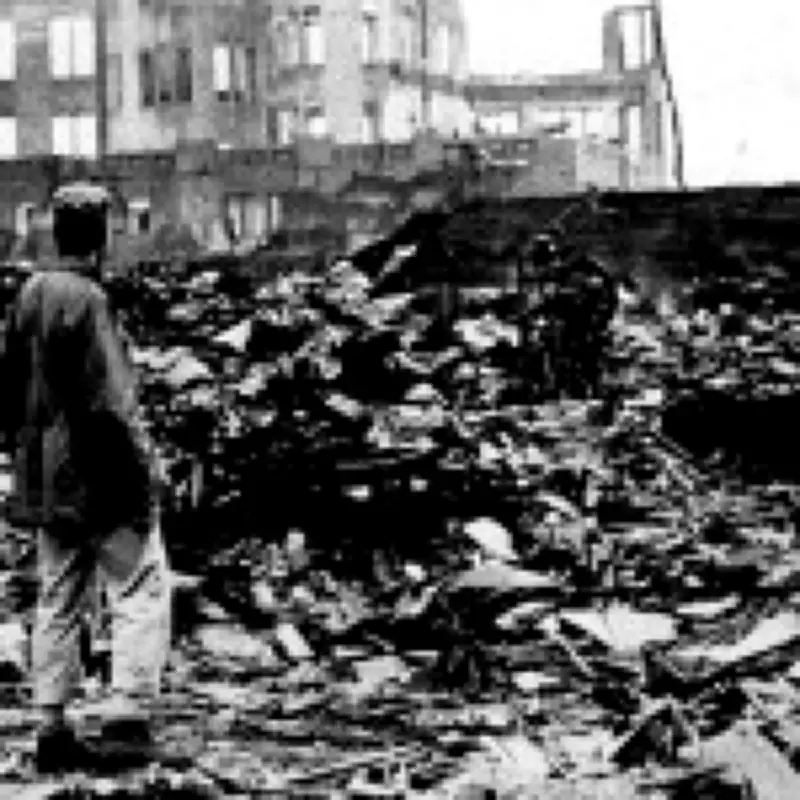
Kiyoshi Tanimoto's 230-page memoir, written in 1947, has been rediscovered at the Beinecke Rare Book and Manuscript Library at Yale University, more than 79 years after the atomic bombing of Hiroshima. Tanimoto, who died in 1986 at age 77, narrowly avoided death on August 6, 1945, because he was out of town. He rushed back to help after hearing news of the attack.
Memoir details the immediate aftermath
In his memoir, Tanimoto described the scene: 'The whole city was covered with dark clouds, and conflagrations were breaking out in various directions. Could all of this have happened at once? It was then that black drops of rain, as big as blackberries, began to fall – rain caused by the atomic bomb. I wondered what had happened to my home and church. With a pale face, I ran down the Koi highway.'
The manuscript was found among the papers of journalist John Hersey, who befriended Tanimoto after visiting Hiroshima months after the bombing. Hersey's 1946 article 'Hiroshima' in The New Yorker brought global attention to the survivors.
Daughter recalls father's mission
Tanimoto's daughter, Koko Tanimoto Kondo, said her father struggled to put his experiences into words but felt compelled to write the memoir so 'no one experienced it ever again.' The memoir remained unpublished until its recent discovery.
Ongoing threat of nuclear weapons
Roughly 100,000 survivors of the atomic bombings are still alive today. On the 80th anniversary last year, Florian Eblenkamp, advocacy officer with The International Campaign to Abolish Nuclear Weapons (ICAN), told Metro: 'It's more important than ever that we listen to the remaining survivors. Their message is clear: these weapons must be abolished. If we want to honour their legacy, that's what we should focus on. We can't continue to gamble with the fate of humanity.'
One forgotten detail is that 38,000 of the thousands killed were children. Eblenkamp argued that nuclear weapons are not abstract deterrents but real threats that must be abolished.