Charlotte Higgins, the Guardian's chief culture writer, has been traveling regularly to Ukraine since 2022. In a recent essay, she reflects on the question she often receives upon returning: "What was it like?" The answer, she suggests, lies not in the accumulation of reporting or the movement of frontlines, but in the fleeting, haunting moments of despair and salvation that flicker in the mind before sleep.
The Reporter's Discipline and the Role of Feelings
Higgins acknowledges that journalism demands a focus on facts, with feelings tidied into the background. Yet, she argues, feelings are inevitable for any functioning human—they are the tentacles of empathy that help understand people and situations. They have an epistemic role, but must be disciplined for the sake of readers and subjects.
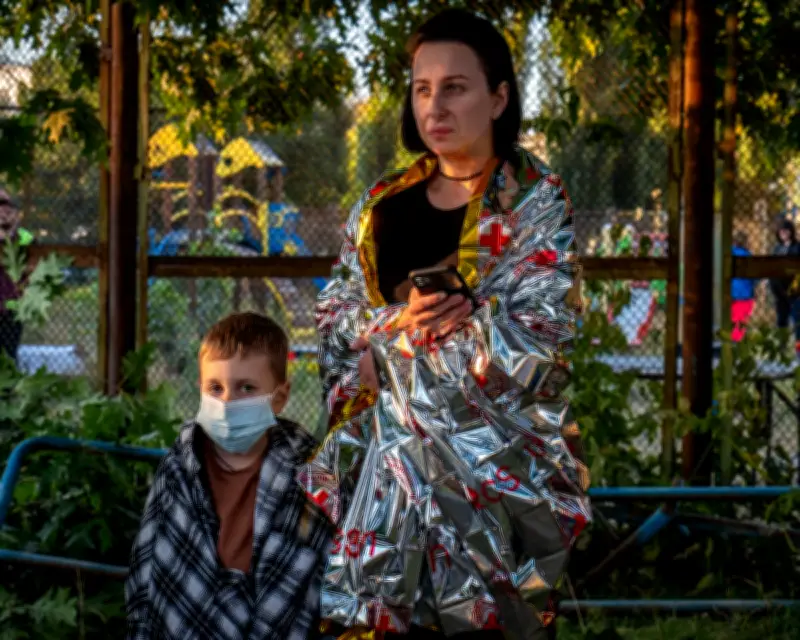
During her latest month-long trip, she visited Kyiv, Lviv, Odesa, and the Mykolaiv region. While broadly safe, she notes the relativity of safety: a woman sunbathing by the sea in Odesa was killed by shrapnel from a drone, and a drone hit the Pechersk Lavra in Kyiv, one of eastern Europe's holiest sites. Daily, the civilian death toll crept up, and people dealt with loss or smaller problems like blown-out windows. Ukrainians also laughed at memes of exploding oil refineries in Moscow, and headlines spoke of unexpected frontline success.
Hauntings from the Balkans and Ukraine
Higgins recalls a conversation with a journalist who reported from the Balkans in the 1990s. Thirty years on, the memories that resurfaced were not of frontlines or politicians, but cinematically vivid images: a hotel manager in his suit amid bombed-out wreckage, the look in parents' eyes unable to contact their child. These were not stories in the journalistic sense—they were hauntings, answers to the question "What was it like?"
For Higgins, the answer comes from examining the places where incompatible experiences touch. She describes visiting a ruined museum, where the weeping director cradled an unharmed ceramic jug found by firefighters, then attending a literature festival with photographer Julia Kochetova. The look on Kochetova's face as she drove between the two—talking about the relentlessness of bombing and asking, "How long will it go on? Until Kyiv is all rubble?"—captures the essence.
Specific Images of Despair and Salvation
Higgins offers precise, personal images. At Lviv railway station, a young father squatted low with his hands on his son's knees, the boy's hands pressing into his father's. The boy, perhaps 10 or 11, looked pale and held-in. As the train pulled in, it became clear the boy and his mother were going to Poland; the father, of fighting age and likely already in the army, was not.
She also notes the strange mundanity: it was peony season, and flower stalls were full of pink, cream, and scarlet blooms. Young people bought them for sweethearts from old ladies who had come in from the country. A friend mentioned she needed to update her emergency backpack because she kept eating her emergency food in non-emergency situations.
Poetry Captures the Compression of War Life
Higgins cites Ukrainian poet Iryna Tsylik's poem My Day, which expresses the intense compression of war life: "At 4am the air-raid siren woke me./ My son and I hunkered down in the corridor,/ I listened to the rockets flying over us –/ that unmistakable eerie thrum./ But we won that round of Russian roulette./ I dozed another hour./ I read the news of how many killed./ I made pancakes for my son."
Oksana Maksymchuk's poem The Fourth Wall also describes war life, ending with the feeling of hearing an air-raid warning: "We stop what we're doing/ stand by the curtain, our eyes/ on the sky, fearing/ how normal it all now feels/ how boring."
Imagining a Perfect Future
Ukrainian artist Stanislav Turina wrote a series of 10 poems, all titled My Perfect Day, imagining an opening out of the painful compressed present into ideal futures. One poem includes: "The war ended a year ago. Rebuilding time. / We remember the fallen. Internal wounds heal. We recall the disa-/ ster of the war. But pain and fear no longer rule us. Any of us." Higgins notes it is hard to tell whether these are optimistic assertions of hope or desperately speculative fictions.
Higgins concludes that the question "What was it like?" invites the reporter's disciplined feelings back into the room. The real answer may be too private to speak of—a diary entry, the flicker of images before sleep, fugitive layers of memory that may resurface years later. Her essay, adapted from her forthcoming book Ukrainian Lessons, offers a deeply personal glimpse into the war's human cost.