
NSW Public Transport to Transition to Fully Renewable Energy by 2027 in Major $1.9 Billion Agreement
The New South Wales government has announced a groundbreaking $1.9 billion deal that will see all public transport operations in the state powered entirely by renewable energy starting from July 2027. This landmark contract with Snowy Energy marks the first time NSW has consolidated its public transport energy needs under a single renewable agreement, setting a new standard for sustainable transit in Australia.
Seven-Year Contract to Drive Emissions Reductions and Cost Savings
The seven-year agreement, which will run until 2034, is expected to deliver significant environmental and financial benefits. According to the Minns government, the deal will avoid more than 800,000 tonnes of carbon dioxide emissions annually compared to conventional power sources. Additionally, it promises to save approximately $130 million on transport power bills, with these savings earmarked for reinvestment into public transport services.
NSW Minister for Transport John Graham emphasized the dual advantages of the contract, stating that it addresses both cost-of-living pressures and environmental goals. "This contract reduces costs and moves us towards better environmental outcomes while we deliver a reliable public transport network," Graham said. He noted that the shift comes at a time when fuel uncertainty is prompting more Australians to opt for public transport over driving.
How the Renewable Energy Matching Works
Snowy Energy, the retail brand of the commonwealth-owned Snowy Hydro, will supply renewable energy through a system of certificates that match public transport's consumption to wind, solar, and hydroelectric generation. Snowy Hydro CEO Dennis Barnes explained that this creates a financially traceable connection rather than a physical one. "What this deal does is match the consumption of Transport for NSW to the production of renewable energy somewhere," Barnes said. Future energy sources will include assets like the Snowy Uungala wind farm near Dubbo, currently under construction.
It is important to note that Snowy Hydro still relies on fossil fuels for 5-10% of its annual power generation from three gas-fired stations. However, the contract ensures that Transport for NSW's energy use is offset by renewable production elsewhere in the network.
Current State of NSW Public Transport and Future Plans
Transport for NSW is a massive energy consumer, using almost as much power as all other NSW public agencies combined. The agency has set ambitious targets to reduce operational emissions by 65% by 2030 and achieve net zero by 2035. Currently, fossil fuels power most of the state's public buses, diesel ferries, and intercity and regional trains.
The government is actively working to electrify the fleet:
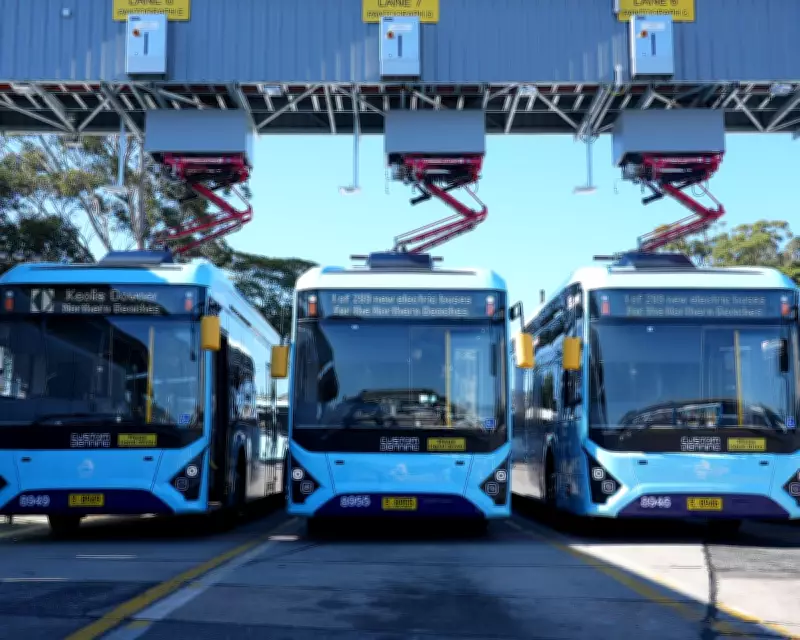
- Over 500 electric buses have been ordered, with hundreds already in operation, and plans to replace all 8,000 diesel buses with 7,500 electric vehicles.
- Electric ferries are scheduled to fully replace diesel-powered vessels by 2035.
- A new bimodal regional rail fleet, running on both diesel and electricity, is in development to replace aging XPT trains, though it faces delays.
Challenges and Controversies in the Transition
Despite the progress, the transition to renewable energy and electric vehicles is not without challenges. Last month, the NSW Anti-Slavery Commissioner raised concerns that Transport for NSW had not adequately addressed potential forced labor issues in the supply chains for lithium-ion batteries, particularly from Xinjiang in China and the Democratic Republic of Congo. This highlights the complex ethical considerations involved in sourcing materials for green technology.
Furthermore, the NSW government has resisted calls to make public transport free during the fuel crisis, opting instead to focus on long-term sustainability through this renewable energy deal. The contract with Snowy Energy was awarded after a competitive two-year process, with Transport for NSW already being Snowy Energy's largest customer, accounting for over 10% of its energy sales.
This move positions NSW as a leader in sustainable public transport, aligning with global efforts to combat climate change while addressing local economic pressures. As the 2027 start date approaches, residents can expect a cleaner, more cost-effective transit system that leverages the state's renewable resources.



