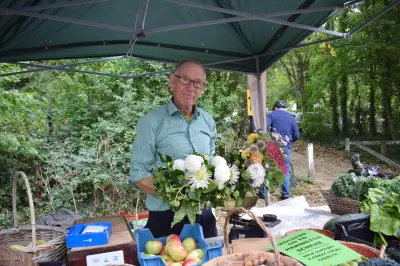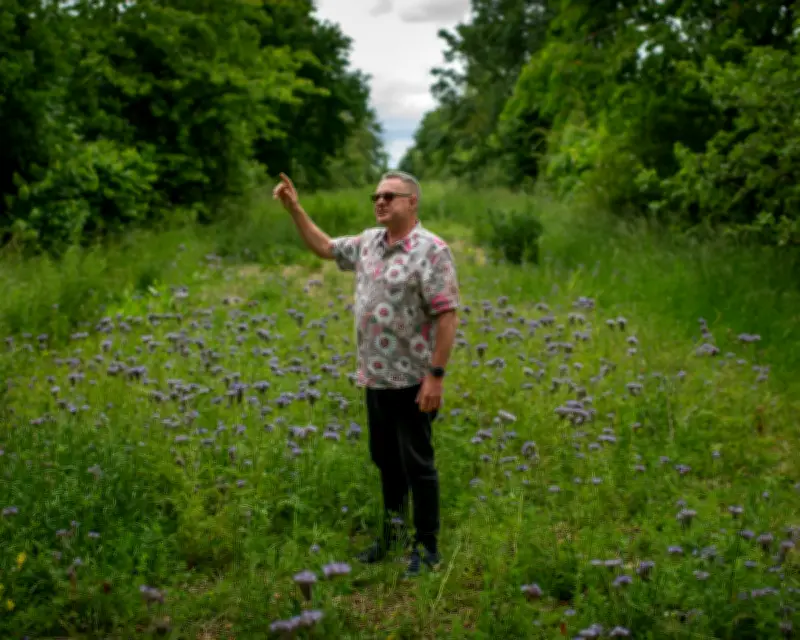
Wakelyns, a 56-acre agroforestry farm in Suffolk, is at risk of being sold on the open market unless £1.2m is raised to convert it into a charitable community benefit society. The farm, hailed as an 'oasis' of biodiversity in a region dominated by arable monoculture, is a living laboratory for sustainable farming and hosts ten micro enterprises including a bakery and honeybee operation.
Origins and Innovation
Martin and Ann Wolfe bought the former pig farm in 1992. Martin, a government plant pathologist, sought to reduce pesticides and fertilizers by creating one of Europe’s first agroforestry schemes. He transformed cereal fields into 56 narrow 'alleys' of crops between rows of planted trees, a method widely regarded as 'mad' at the time. Their son, David Wolfe, now runs the farm with his wife, Amanda Illing.
Diverse Crops and Tree Products
The trees dividing the alleys are all crops: some provide timber, while others yield apples, cherries, and plums. The most lucrative tree crop is hazel, coppiced on a seven-year cycle for high-quality stakes sold at £1.40 each. The alleys grow organic wheat, lentils, hemp, and vegetables like potatoes and squash. Wakelyns pioneered the first commercial lentil growing in the UK and remains the country’s only commercial black lentil grower. 'If Britain is serious about wanting to feed itself, we should stop growing oilseed rape for biodiesel and grow pulses,' said Wolfe.
Enterprise Stacking and Community
Since taking over in 2020, David Wolfe and Amanda Illing added 'enterprise stacking' to the farming principles. Ten micro enterprises, including a bakery, educational charity, and honeybee operation, collaborate directly with the farm. 'We’ve added the complexity of people,' said Wolfe. 'It’s almost a political project about land use – maximising the sustainable productivity of the land.' The farm offers events, away days, and up to 30 beds in the farmhouse and camping pods that rotate with the herbal lay.
Threat and Fundraising
Wolfe is willing to donate his half of the farm to the community benefit society, but his brother needs to sell his half, requiring £1.2m. A community share offer aims to secure the farm’s democratic future. If unsuccessful, the farm will be sold on the open market.
Support from Collaborators
Harry Read, an ornithologist who runs nature tours at Wakelyns, said: 'I’ve grown up surrounded by arable monocultures. Everyone uses the word “oasis” for Wakelyns. It fills up my cup.' Chloe Webb, a chef at the Silva kitchen and bakery, noted that the plum jam’s food miles are just 200 metres. Claire O’Sullivan and Kitty Wilson Brown run Contemporary Hempery, using the farm’s hemp crop for textiles. Wilson Brown said: 'People are running sustainable businesses here and doing really well – it proves it does work. It would be really sad if that was to disappear.' Carrie Phoenix, executive director of Natural Habitat, added: 'Children say: “Why isn’t every farm like this?” Wakelyns is an incredibly rare living laboratory.'
Future Vision
Wolfe, 61, is eager to secure community-based succession. 'We want people to own something together. We are trying to avoid it being one or two people’s private project and give it resilience. I hope in the future I can be in my care home feeling happy it’s carrying on.'