
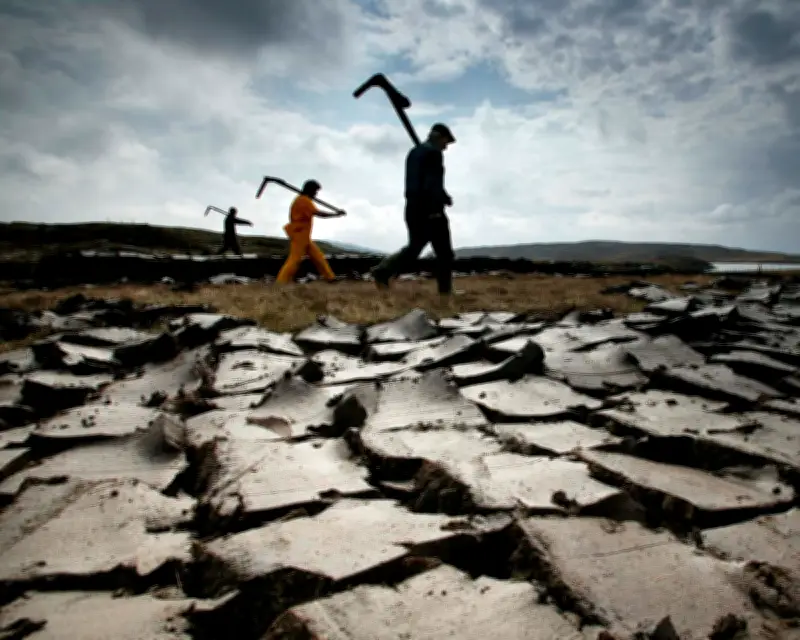
Peat bogs are essential carbon stores, holding twice as much carbon as all the world's forests. In the UK, 80% of peatlands are damaged, and over 90% of extracted peat is used in horticulture. Despite widespread support for a ban, legislation has repeatedly stalled.
Why peat matters
Peatlands cover only 3% of Earth's surface but store twice as much carbon as all forests. The UK's peatlands hold more than 3.2 billion tonnes of carbon. Alistair Griffiths, head of science at the Royal Horticultural Society (RHS), says: "Nothing else, other than the ocean, stores that much carbon for that length of time – tens of thousands of years." Once damaged, peatlands release that carbon rapidly, becoming a carbon source.
The scale of peat use
About 760,000 cubic metres of peat is used in UK horticulture annually. Sally Nex, campaign advocate for the Peat-Free Partnership, says hidden peat is also a problem: most plants sold in garden centres are grown in peat, and many supermarket mushrooms and salads start in peat. "I don't see how I can possibly do my job and eat mushrooms," she says.
Failed bans and political delays
Efforts to ban peat have spanned decades. A voluntary target for 90% peat-free by 2010 reached only 32% by 2011. In 2022, the Conservative government announced a ban, but a private member's bill was dropped when a general election was called. Labour's 2024 manifesto pledged to protect peat bogs, and its October 2025 carbon budget stated: "We will legislate a ban on peat and peat-containing products when parliamentary time allows." The environment improvement plan in December repeated the caveat.
Nex says: "The policy has enormous support right the way across the board, but it's too big to just shuffle in and too small to give it its own space." A 2022 government consultation found over 95% of 5,000 respondents supported a ban, and 80% of the public backed it in a 2024 RHS survey.
Industry moves voluntarily
Many retailers now sell only peat-free compost, including Dobbies, Tesco, Waitrose, Lidl, Co-Op, Morrisons, and Iceland. There are 124 totally peat-free plant nurseries in the UK. The RHS has banned new peat from its garden centres and flower shows, including Chelsea. However, some growers resist. Tim Penrose of Bowdens nursery, a Chelsea exhibitor since 1996, had his application turned down over peat issues and staged a protest. He says: "Carnivorous plants will not grow in peat-free. We get thousands of plants from Holland, which isn't interested in peat-free – what do we do then?"
Landscape architect Bunny Guinness, with six Chelsea gold medals, says: "Loads of people in the Chelsea pavilion were saying to me: 'I'm not coming back, you can't grow this without peat.'" She calls peat "the perfect growing material" and says alternatives require more fertiliser and water. Nex dismisses such objections as "misinformation" and "scare stories".
Alternatives exist
Griffiths, who has grown peat-free since 1999, says the RHS has invested £2.5 million into peat-free research. Alternatives include wood fibre, coir, cellulose fibre, cork, hemp, and seaweed. He says: "For a very long time, the alternatives to peat were bark, wood chip, wood fibre and coir. These do have their own carbon footprints, but peat will always have a bigger one due to its ability to store carbon for tens of thousands of years." He compares substitutes to electric cars: "not the final solution, but the stepping stone."
For carnivorous plants, Chester Zoo now grows over 2,000 entirely without peat. Nex envisions a phased ban: two years for most growers, five years for tricky plants like carnivorous species and rhododendrons.
Seedling challenge
David Denny, head of research at the Horticultural Trades Association, says plug plants use small amounts of peat for germination, then are moved to peat-free soil. The UK buys about 60% of young plug plants from Europe, where peat is still common. But Griffiths notes Germany, Belgium, and Switzerland are pushing forward on peat-free. Seiont Nurseries in Caernarfon is now 100% peat-free and exporting to Europe.
Denny says the HTA does not support legislation: "The industry is leading with solutions. It is reasonable to expect the industry to have transitioned away from peat by 2030." Nex agrees many growers have gone peat-free voluntarily, but they compete against cheap peat-grown imports. She says the most progress occurred when legislation was threatened: "Between 2022 and 2024, peat use went down really steeply. But we're beginning to go backwards now."



