
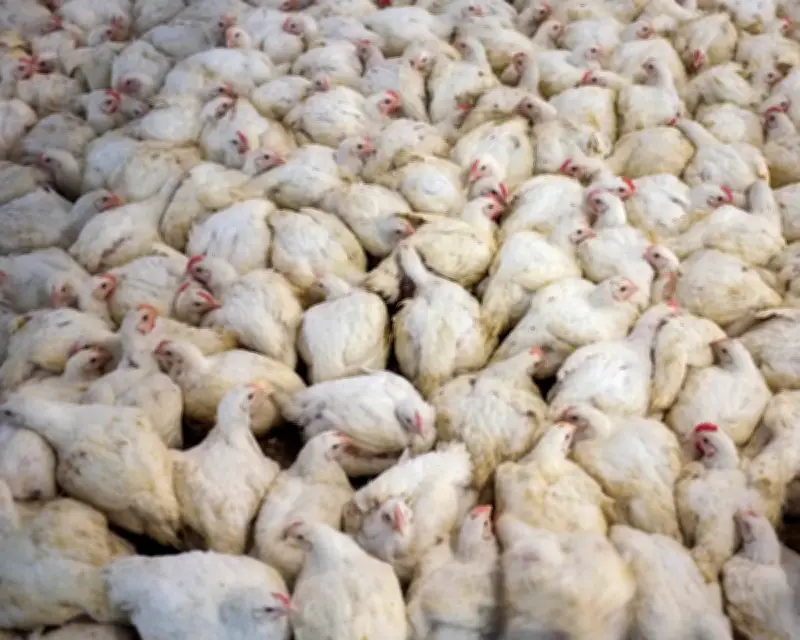
The number of mammals and poultry farmed worldwide has increased by half in the last two decades, according to research from an alliance of campaigning organisations called Stop Financing Factory Farming. This rise is putting increasing pressure on natural systems, threatening wildlife and plant species and adding to the climate crisis.
Rising demand for meat and cropland
The amount of cropland used for feeding livestock has increased by about a quarter since 2006. Global per capita meat supply has also grown. These findings come 20 years after the UN Food and Agriculture Organization’s seminal report Livestock’s Long Shadow. The researchers updated key aspects of the report and found that most trends are moving in a negative direction.
Agricultural land is already becoming less fertile, with an area the size of Canada now suffering degradation. About 90% of water withdrawn from natural systems for irrigation is used to grow animal feed, according to the report.
Emissions and livestock population
Emissions from livestock grew by more than a fifth between 2001 and 2023, according to the FAO. Peter Stevenson, chief policy adviser at Compassion in World Farming, told the Guardian that even where progress had been made, such as reducing greenhouse gas per unit of meat, it was often outweighed by the sheer increase in livestock numbers. “There’s been a huge increase, and it’s simply because there are so many more livestock now,” he said.
About 33 billion livestock mammals and poultry have been added globally in 20 years. In 2023, there were 94.9 billion farmed animals – the number slaughtered or used for milk or eggs – up from 61.8 billion in 2006.
Fertiliser use and dead zones
Increasing quantities of fertiliser are being used to produce animal feed, which along with the dumping of slurry is leading to dead zones in seas. The biggest dead zone is in the Gulf of Mexico, where marine life is being wiped out across an area the size of Connecticut.
Merel van der Mark, head of animal welfare and finance at Sinergia Animal, said only a widespread shift away from meat-heavy diets would reverse the trend towards greater planetary damage. She called on publicly funded development banks, which provided $1.23bn (£930m) to intensive farms in 2024, to lead the charge by changing their investment criteria. “This means a shift away from industrial livestock production, which multilateral development banks must support by stopping financing factory farming and instead aligning their financial flows with a more sustainable world,” she said.



