
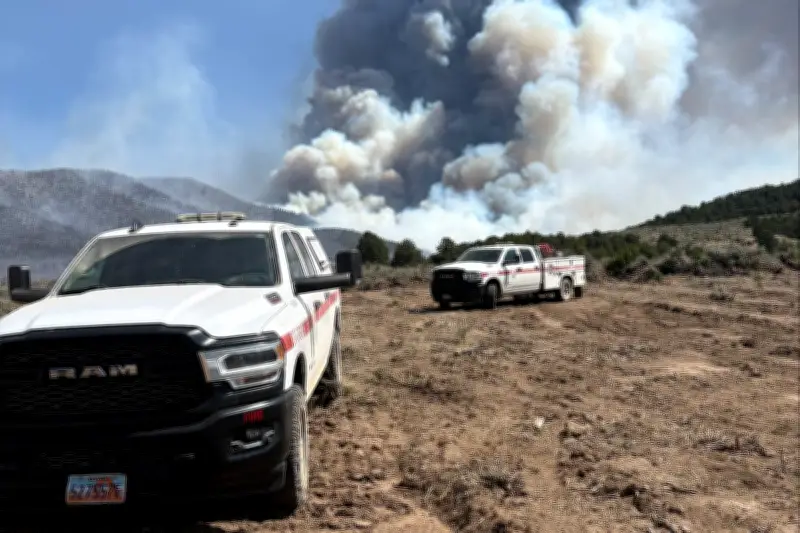
A fast-moving wildfire in Utah has forced evacuations of hundreds of homes as extreme heat continues to bake the region, officials said Sunday. The blaze, which began Saturday afternoon near the town of Fillmore, has grown to more than 2,000 acres and is 0% contained, according to the Utah Division of Forestry, Fire and State Lands.
Evacuations and response
Mandatory evacuation orders were issued for approximately 400 homes in the affected area, with residents urged to leave immediately. “We are seeing extreme fire behavior due to the dry conditions and high temperatures,” said Utah fire spokesman Mike Melton. “Our priority is protecting lives and property.”
More than 200 firefighters are battling the blaze, supported by air tankers and helicopters. The cause of the fire is under investigation.
Extreme heat amplifies danger
The wildfire comes as much of the western United States swelters under a dangerous heatwave. Temperatures in Utah have exceeded 100°F (38°C) for several consecutive days, with little relief expected. The National Weather Service has issued excessive heat warnings for the region, urging residents to stay hydrated and avoid outdoor activities.
“The combination of extreme heat and drought has created tinder-dry conditions, making wildfires more likely and more intense,” said climatologist Dr. Sarah Jenkins of the University of Utah. “This is part of a troubling trend we’re seeing across the West.”
Impact on communities
The fire has destroyed at least three structures, though officials say that number may rise as assessments continue. No injuries have been reported. Local schools and community centers have been opened as shelters for evacuees.
“We grabbed what we could and got out,” said resident Maria Gonzalez, 45, who fled her home with her family and pets. “The sky was orange, and the ash was falling like snow. It was terrifying.”
Air quality in the region has deteriorated significantly, with health officials advising residents to wear masks and limit time outdoors. The Utah Department of Environmental Quality has issued a red air quality alert for particulate matter.
Climate context and outlook
The wildfire and heatwave are part of a larger pattern of extreme weather events linked to climate change. The western US has experienced megadrought conditions for over two decades, with 2026 shaping up to be one of the hottest years on record. Fire season in Utah has been starting earlier and lasting longer, with the state seeing a 30% increase in large wildfires over the past decade, according to data from the National Interagency Fire Center.
Firefighters are expected to make progress as temperatures moderate slightly early next week, but officials warn that the danger is far from over. “We’re asking everyone to remain vigilant and follow evacuation orders,” Melton said. “Conditions can change in an instant.”



