
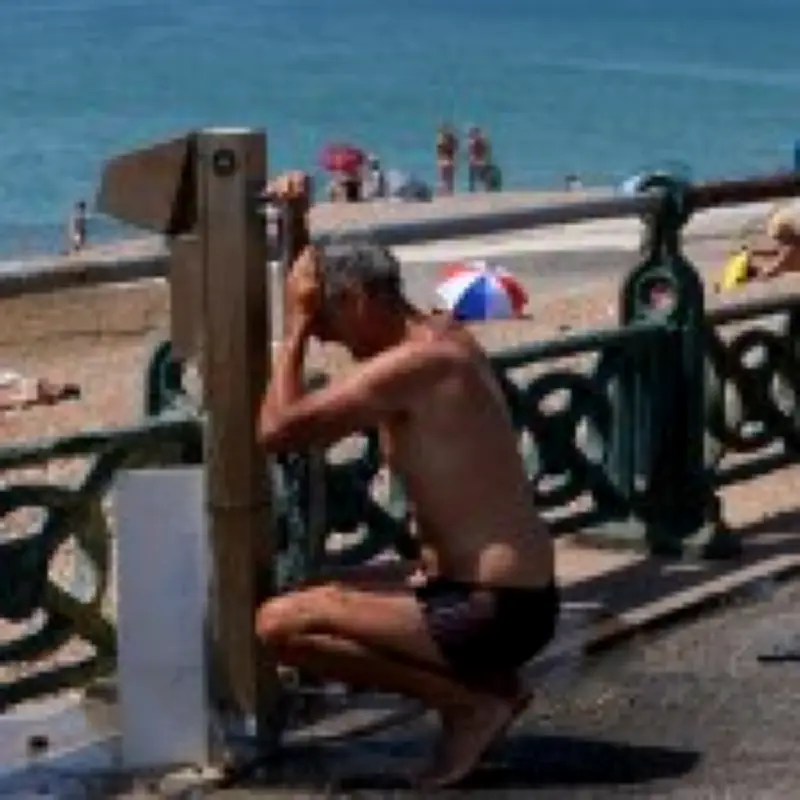
The UK is days away from another potential heatwave, just after a blistering June spell that smashed temperature records on three consecutive days, caused travel disruption, and led to over 1,300 excess deaths across Europe. At least seven people drowned in UK open waters during the 37C conditions, which hit cities like London and Paris hardest due to concrete, narrow streets, and poorly insulated homes.
Record-breaking heat and immediate dangers
Last week, UK temperatures topped those in Death Valley, one of the hottest places on Earth. The Met Office issued a rare extreme heat warning, and London Mayor Sadiq Khan revealed the city's first heat emergency plan, inspired by Phoenix, Arizona. Experts warn that extreme weather is the new normal, driven by climate change that could see global temperatures rise faster than predicted.
Adaptation and mitigation strategies
Jim Dale, founder of British Weather Services, told Metro: 'Heatwaves have happened since time immemorial, but they are exacerbated by climate change – 35C becomes 37C, and 37C becomes 40C, that's what we have had with these plumes.' He emphasised that adaptation must focus on big cities and educating all sections of society, as this is 'the end of the world as we know it'.
Proposed measures include painting houses white to reflect heat, expanding ultra-low emission zones like London's to target fossil fuel pollution, and increasing green canopy coverage for natural protection. However, air conditioning and AI-driven renewable solutions can be 'a catch-22' if powered by fossil fuels, as they release more emissions.
The 1.5C target and risk of tipping points
The global fight against climate change centres on the 1.5C threshold, but Dale warned that the 2C tipping point is no longer a dystopian fantasy. Driven by ongoing fossil fuel use, warming seas, and melting glaciers, it could be reached before 2050, bringing more deaths, floods, droughts, and food shortages. Met Office scientists say the UK regularly reaching 45C is plausible.
Professor Stephen Belcher, the Met Office's chief scientist, said the June heatwave became more intense and likely due to 'human induced climate change'. He added: 'To see temperatures like this in the UK in June is sobering. Events like this bring home the implications of climate change, with very high temperatures and humidity bringing significant health implications from heat stress, as well as impacts to transport, energy and water supply.'
Forecast: another heatwave on the way
After a brief respite with temperatures below 25C, warmer weather is expected from Wednesday, with dry and bright conditions for most. A high-pressure area from the Azores could settle over the UK and western Europe this weekend and early next week, with early modelling showing London and surrounding areas reaching 30C by Tuesday. However, southern areas desperate for rainfall will remain dry, risking drought and further hosepipe bans.
Kent is already under an official hosepipe ban until Friday, with fines up to £1,000 for violations. Dale stressed that these heatwaves are 'not a one-off' and are becoming more frequent and intense. 'We are not a tropical climate, but we are vying with desert worlds, so you know there's something not right,' he said.



