
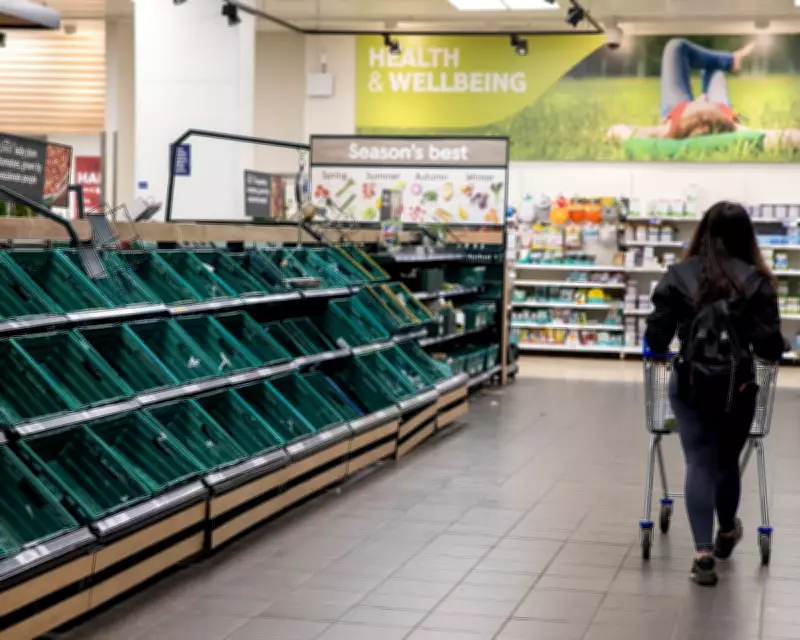
UK Food System a 'Tinderbox' Vulnerable to Riots from Single Shock, Experts Warn
Dozens of the UK's leading food experts have issued a stark warning that the nation's food system has become a "tinderbox" vulnerable to civil unrest or even food riots from just one major shock. According to a comprehensive new analysis published in the journal Sustainability, chronic issues including the climate crisis, low incomes, poor farming policies, and fragile just-in-time supply chains have dangerously weakened food security across the country.
Systemic Vulnerabilities Creating a Perfect Storm
The research, which consulted over 30 experts from academia, government, and industry, first identified the deep-rooted problems making access to food increasingly vulnerable. "The stability of the UK's food system is a critical aspect of national security," said Professor Sarah Bridle of the University of York, who led the analysis. "While we can't always prevent future shocks, we can build resilience to withstand them, and stop a bad situation from becoming a crisis."
These systemic vulnerabilities have left the UK exposed, with the nation currently importing approximately 35% of its food. Many families are already experiencing food insecurity, with one in seven affected in 2025 according to the Food Foundation. The researchers emphasized that addressing these weaknesses is urgent, requiring more coordinated action by government and businesses alongside a wider, more resilient range of domestically produced food.
Three Critical Shocks That Could Trigger Crisis
The analysis then examined potential shocks that could push this fragile system into a full-blown food crisis, ranking three as most dangerous:
- Major extreme weather events disrupting agricultural production
- Cyber-attacks targeting food supply chains and retailers
- International conflicts affecting global trade routes
These shocks would likely hit supply chains hard, dramatically pushing up food prices, which could lead to increased social tension, hidden market sales of unsafe food, and in worst-case scenarios, civil unrest or riots. The researchers noted that the most risky shocks have already occurred at some scale, serving as wakeup calls. Both Co-operative and Marks & Spencer supermarkets experienced cyber-attacks in 2025, while recent overseas droughts and Russia's invasion of Ukraine have already increased food costs globally.
Alarming Probability of Violence Within Decades
According to a related 2023 analysis, a large majority of experts—80%—believe large-scale violence caused by a food crisis is possible within the next 50 years, with 40% saying it could occur within the next decade. The scenario considered involved more than 30,000 people suffering violent injury over a year due to food demonstrations or riots.
"The UK is not immune to disruptions that can lead to severe consequences," said Professor Aled Jones of Anglia Ruskin University, part of the research group. "Policymakers must adopt a long-term perspective to planning."
Social Factors and Global Context
The analysis emphasized that social factors play a crucial role in potential unrest. "A UK food system crisis could arise from hunger and resulting feelings of despair when coupled with a lack of trust in government," the researchers noted. Dominic Watters, a researcher with lived experience of food poverty who participated in the study, added: "Food crises and civil unrest don't come from a lack of calories alone; they come from a lack of dignity, voice, and care."
Global vulnerabilities compound the UK's situation, with much of world food production concentrated in large "breadbasket" countries like the US, Brazil, and Russia, and pinch-points in supply chains such as the Suez Canal creating additional risks. "This centralization has resulted in a very vulnerable system," the researchers stated, noting that digitization also increases vulnerability to cybersecurity threats.
Government Response and Recommended Measures
A UK government spokesperson responded: "Food security is national security, and our high degree of food security is built on both strong domestic production and imports through stable trade routes. This government is investing billions in the development of new technology to increase yields or create climate resilient crops, streamlining regulation, and helping farmers produce food for the nation."
The research group recommended several measures to reduce crisis risk:
- Establishing a national forum on preparedness and planning that includes marginalized voices
- Promoting more regenerative agriculture to reduce crop failure risks
- Implementing cash transfers to the poorest people during emergencies
- Co-designing responses with disproportionately affected communities
Concerns about food system fragility extend beyond the UK. Álvaro Lario, president of the International Fund for Agricultural Development, recently stated: "Fragile food systems pose an underestimated risk to global stability." The UK analysis concludes that understanding how the system might react to extreme pressure is the essential first step toward preventing worst-case scenarios from unfolding in the future.



