
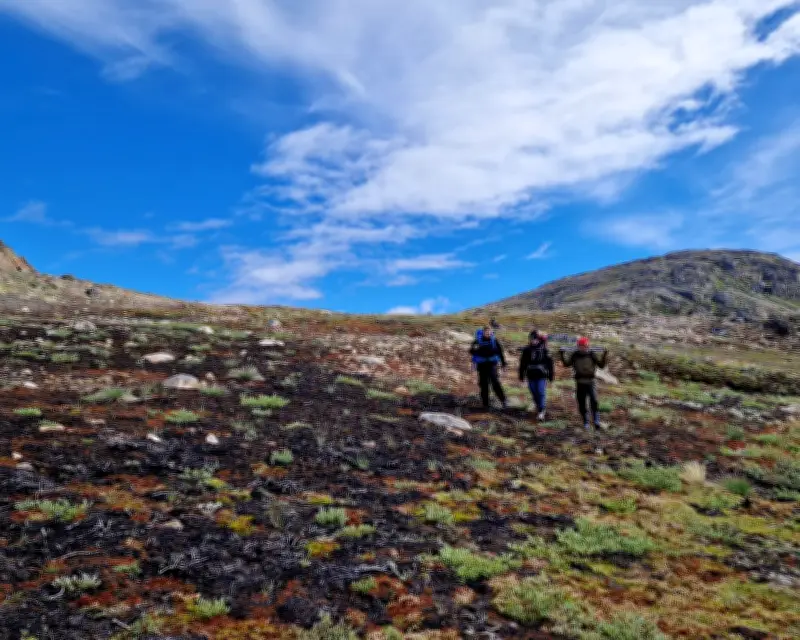
Scientists have expressed alarm over wildfires burning in Greenland, an unprecedented phenomenon in a region typically covered by ice and snow. Satellite images from the European Space Agency have detected multiple fires in western Greenland, including near the town of Sisimiut, where temperatures have been unusually high.
Unprecedented Blazes in a Frozen Landscape
The fires are occurring in areas that are usually frozen, raising concerns that climate change is causing the Arctic to warm at an accelerated rate. According to the Danish Meteorological Institute, the region experienced record temperatures in June, with some areas reaching 20°C (68°F), far above the seasonal average.
Scientists say that the fires are not only a symptom of warming but also a contributor to further warming. The burning of vegetation releases carbon dioxide and black carbon, which darkens the ice and snow, reducing their ability to reflect sunlight and accelerating melt.
Impact on Ice Sheet and Global Sea Levels
The Greenland ice sheet, the second largest body of ice in the world, has been losing mass at an increasing rate. The wildfires threaten to exacerbate this loss by depositing soot and ash on the ice, which absorbs more heat. A study published in Nature Communications in 2023 found that black carbon from wildfires could increase melting by up to 10% in some areas.
"This is a worrying development," said Dr. Maria Jensen, a glaciologist at the University of Copenhagen. "The fires are a new and dangerous feedback loop. They are not only a consequence of warming but also a cause of further warming, and they could have significant implications for global sea levels."
Historical Context and Future Projections
Wildfires in Greenland are rare, but they have occurred before, notably in 2019 and 2023. However, the current fires are the largest and most widespread ever recorded in the region. Scientists say that if warming continues, such fires could become more common, further destabilizing the ice sheet.
The Greenland ice sheet contains enough water to raise global sea levels by about 7 meters (23 feet). Even a partial melt could have catastrophic consequences for coastal communities worldwide. The current rate of ice loss is already contributing to sea level rise of about 0.7 millimeters per year, according to NASA.
Response and Monitoring Efforts
Greenland's government has deployed firefighters to combat the blazes, but the remote location and difficult terrain make firefighting challenging. The Danish government has offered assistance, and international researchers are closely monitoring the situation using satellite data and ground observations.
"We are in uncharted territory," said Dr. Jensen. "We need to understand the long-term impacts of these fires on the ice sheet and take urgent action to reduce greenhouse gas emissions."



