
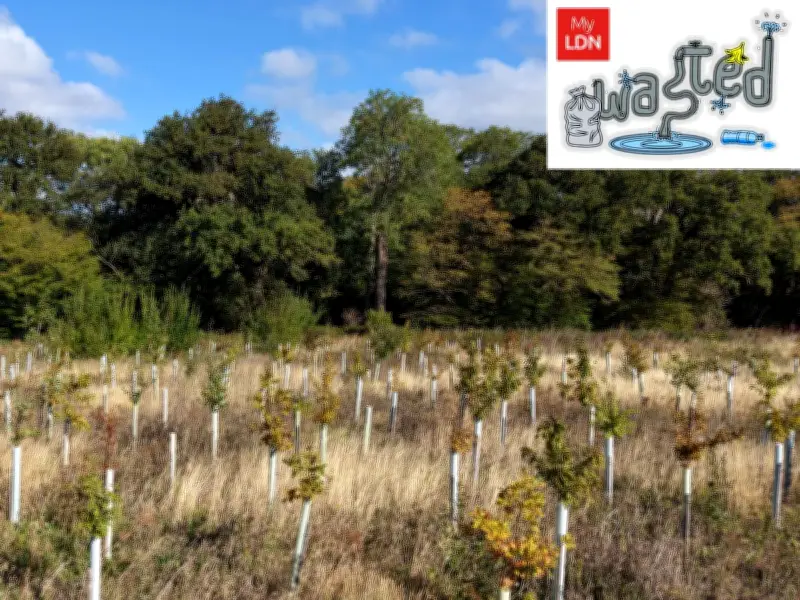
London's councils have planted at least 553,621 trees since 2019, according to data obtained through Freedom of Information requests by the Local Democracy Reporting Service. The push to rewild the capital comes as London meets the UN definition of a forest, with land spanning more than 0.5 hectares, trees above 5 metres, and canopy cover exceeding 10 per cent.
Enfield leads the way
Enfield Council has planted 129,389 trees since declaring a climate emergency in summer 2019, the highest of any borough. Much of this work is focused on the award-winning Enfield Chase reforestation project, described as London's largest woodland and nature restoration initiative. The scheme is creating new habitats, including wetlands and forests, for wildlife.
Other outer London boroughs have also recorded high numbers. Barking and Dagenham planted nearly 120,000 trees (including whips), Hillingdon more than 61,000, and Waltham Forest just over 37,000. The data is not a perfect like-for-like comparison, as some councils included whip trees and private planting, while others did not, and declaration dates varied between 2019 and 2020.
Climate emergencies and missing data
Most London boroughs have declared a climate emergency, but three have not: Bexley, Bromley, and the City of London Corporation. Nine councils, including Croydon, Ealing, and Havering, did not respond to the FOI. The City of London, despite limited space for planting, has a target of net zero emissions across all activities by 2040. Bexley, Bromley, and the City of London were asked for tree planting data but did not provide it.
Planting in the right places
Carolyn Axtell, Kerbside Greening Manager at climate charity Possible, warned that simply planting trees is not enough. She said: "A few weeks ago, London hit 35 degrees. In May. That kind of heat makes being outside genuinely dangerous. Spare a thought for the postal workers, the street cleaners, the children walking home under the boiling sun. Trees are one of the simplest fixes we have. They cool streets by up to 12 degrees, provide shade, and make cities actually liveable. The Mayor of London has pledged to increase tree planting by 10 per cent by 2050 but planting more trees isn't enough. We need to plant them in the right places."
Axtell added that many London streets are too narrow for pavement trees without blocking access, so transforming parking spaces is key. "Less than half of inner Londoners own a car, yet street after street is still dominated by car parking, even though parked cars actually make streets hotter. We could be replacing them with trees that cool things down."
Inner boroughs find creative solutions
Hammersmith and Fulham, one of the smallest boroughs, has planted 15,000 trees since 2019, including whips to create seven Tiny Forests. Cllr Nicole Trehy, Cabinet Member for Climate Emergency and Travel, said: "We're proud to be among the world's best for climate action. Our climate action work has been recognised two years in a row with a top A rating from the world's only independent environmental disclosure system - CDP. We've also been ranked second in Britain in Climate Emergency UK's Council Climate 2025 Action Scorecards. Since 2019 we've planted 15,000 trees across our green spaces, estates and streets. Every tree we plant helps clean the air we breathe and provides a home to wildlife."
Kensington and Chelsea, London's smallest borough, has planted more than 1,000 trees in recent years despite space constraints. Cllr Josh Rendall, Lead Member for Transport, Parks and Clean Streets, said: "Tree planting remains an integral part of our work to improve biodiversity, air quality and climate resilience. Over the last four years we have planted more than 500 new trees across our streets, parks and housing estates, alongside our annual winter planting programme. Kensington and Chelsea is London's smallest borough but already has more than 7,500 street trees, plus thousands more in parks, cemeteries and housing sites. Finding space for additional planting can be difficult because of the borough's Victorian and Edwardian infrastructure. Despite these constraints, we continue to identify new planting opportunities."



