
Sadiq Khan, mayor of London, and Michael Bloomberg, former mayor of New York City, argue that air pollution is a fixable public health crisis, citing their cities' rapid progress. They write that while global threats like Covid-19 and Ebola spur immediate action, air pollution—killing over 8 million people annually—remains largely invisible and ignored. This toll exceeds deaths from HIV, malaria, and tuberculosis combined, causing heart and lung disease, cancers, and other deadly conditions. The burden falls heaviest on low- and middle-income communities but affects all classes and countries.
London cut NO2 in 9 years, not 200
Experts at King's College London predicted in 2016 that without action, it would take almost 200 years for London to meet legal limits for roadside nitrogen dioxide (NO2). However, with robust action from City Hall, London achieved compliance in just nine years. The key was following data: an extensive network of automatic and passive monitors, plus low-cost air quality sensors installed through the Breathe London programme in schools, hospitals, and cultural centres. But data alone was insufficient; the network engaged community leaders and the public to raise awareness and deploy additional sensors in the most needed areas.
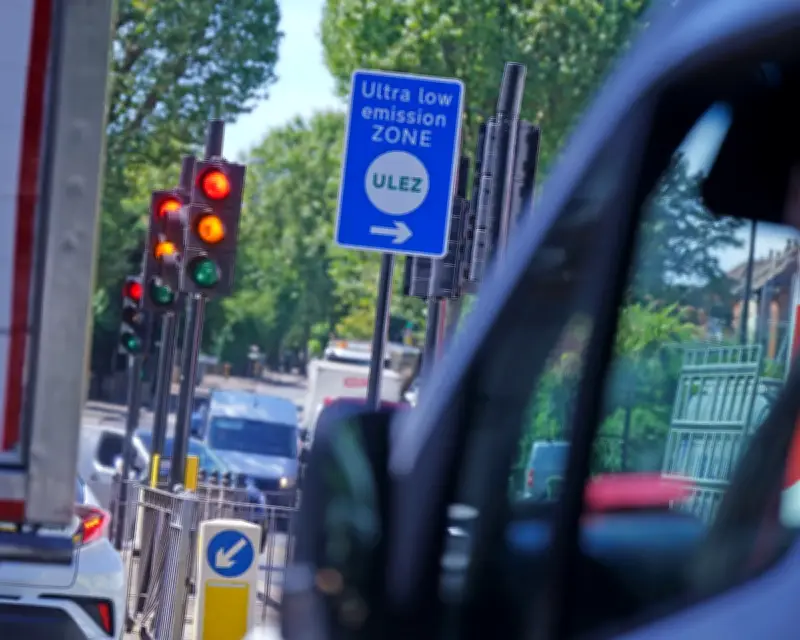
The data informed solutions such as the ultra-low emissions zone (Ulez)—the world's largest clean air zone—and the rollout of zero-emission buses. These steps faced political opposition, pressure groups, and vested interests, but the public has benefited. New research from Imperial College London published this month found that fewer Londoners were admitted to hospital with breathing and heart problems as a direct result of Ulez.
New York reached 50-year low pollution
London built on pioneering work in New York, where air-quality sensors helped target efforts and drive pollution down to a 50-year low. Both cities demonstrate that rapid, measurable progress is achievable. Lower emissions and improved air quality benefit health, the climate, and the economy by attracting private investment. The mayors' mission is now to help other cities replicate this success.
A new programme, Breathe Cities, launched by Bloomberg Philanthropies in partnership with Clean Air Fund and C40 Cities, spreads these best practices worldwide. It provides mayors with real-time data on pollution hotspots, technical support to convert data into policy, and a global network for sharing ideas. When a solution works in one city, other cities benefit as those success stories become roadmaps.
1,200 sensors deployed across 14 cities
Early results are promising. Nearly 1,200 air sensors have been deployed across 14 participating Breathe Cities, including the first hyper-local networks in Accra and Nairobi. Ten cities have committed to clean air zones by 2030, collectively covering an area where more than 18 million people live and work. By using data, cities are tackling air pollution as a public health challenge while also making progress on the climate crisis, even as some national governments retreat from environmental protection. People expect local leaders to make it safe to walk outside, and breathing clean air is a fundamental right. The more cities uphold that right, the more lives will be saved and the more progress the world will make against the climate emergency.



