
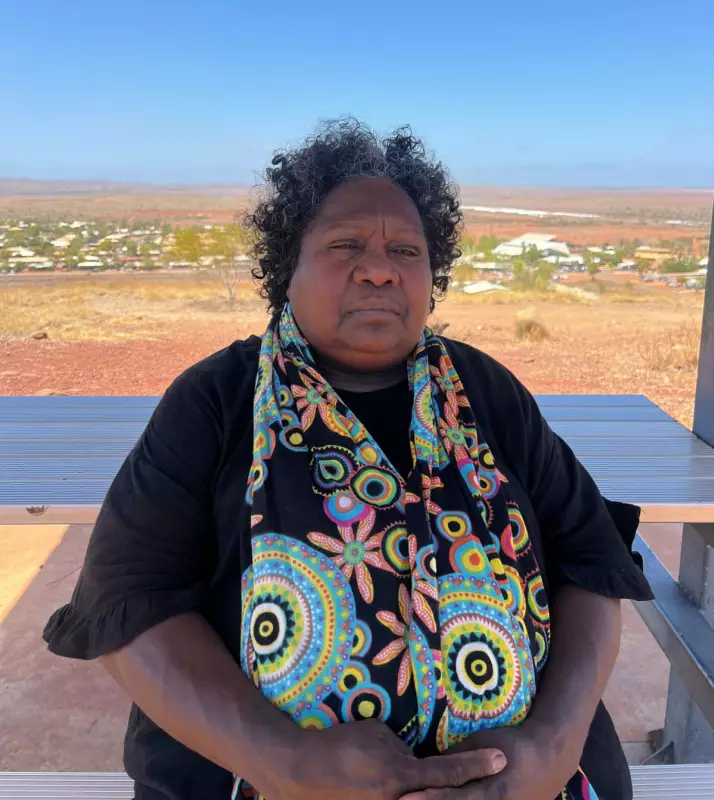
In the tiny, cyclone-prone town of Roebourne on Western Australia's Pilbara coast, public housing residents are enduring searing temperatures exceeding 50 degrees Celsius, often without the relief of air conditioning. This places the local Indigenous community directly on the frontline of the escalating climate crisis.
'The Wind Burns You': Life in Extreme Heat
Yindjibarndi elder Lyn Cheedy describes the brutal reality of a Pilbara summer. Seeking respite, she takes her grandson to the local pool most afternoons. The initial shock of cold water is fleeting, quickly undone by a gust of scorching wind. "The wind burns you," Cheedy says. "I have to keep splashing my face, and your hair is drying that quick … it's like you're sitting in front of an oven."
While heat and cyclones are historic features of the region, Cheedy notes a dangerous intensification. Traditional methods of managing heat, such as following rivers to shaded waterholes, have been disrupted by colonisation, damming, and land clearing. Three years ago, Roebourne recorded a unprecedented 50.5C, signalling a new era of extreme weather.
Substandard Housing and Spiralling Costs
The crisis is exacerbated by inadequate housing. Many Aboriginal people, forcibly removed from their lands, now live in what Cheedy describes as "flimsy" public housing in Roebourne, known as Ieramugadu in the local Ngarluma language. Air conditioning is not a standard inclusion, and when it is installed, it is often done cheaply at the tenant's expense.
This creates a desperate domino effect. Homes with cooling, like Cheedy's, become vital community refuges, with as many as 16 people routinely crowding into a four-bedroom house. The consequence is astronomical electricity bills that struggling residents cannot pay, leading to disconnections. "The government knows that we suffer," Cheedy states. "We have to keep forking out money, which we don't have."
Sean-Paul Stephens, CEO of the Ngarluma Yindjibarndi Foundation Ltd (NYFL), warns of dire health impacts, highlighting the mortality risk for elders living in 50C heat without cooling.
A National Pattern of Underfunded Resilience
The struggle in Roebourne is not isolated. Aboriginal and Torres Strait Islander people are almost four times more likely to be exposed to natural disasters according to analysis by the National Indigenous Disaster Resilience (NIDR) research program. Despite comprising 13.4% of those affected by disasters, Indigenous-led projects received just 3.1% of the federal government's initial disaster ready funding.
Bhiamie Williamson, who leads the NIDR, explains that Indigenous organisations inevitably use their own strained resources to respond to crises, as seen when NYFL staff translated cyclone alerts and navigated cultural protocols during Tropical Cyclone Zelia. "They're not recognised for that, they're not funded for that," Williamson says.
He has called for at least $30 million of the next funding round to be allocated to Indigenous-led projects to match the disproportionate need. A spokesperson for the National Emergency Management Agency said the latest funding round includes guidelines to strengthen support for First Nations communities, with about 10% of total funding awarded to relevant projects.
However, Williamson stresses the need for certainty, warning that the long-term consequence of underinvestment is greater exposure and vulnerability for Indigenous communities as climate-driven disasters intensify across Australia.



