Charmouth beach in Dorset is always bustling, even on grey winter days when walkers and their dogs patrol the hissing waves and fossil hunters sift through rubble from the black cliffs. With summer and school holidays approaching, the sands are crowded with visitors and the car park is packed with gleaming windscreens. It is a lovely place to swim, provided beachgoers heed council signs warning of E. coli and avoid the River Char and its immediate outflow, which is often contaminated.
Seaweed as a Pollution Indicator
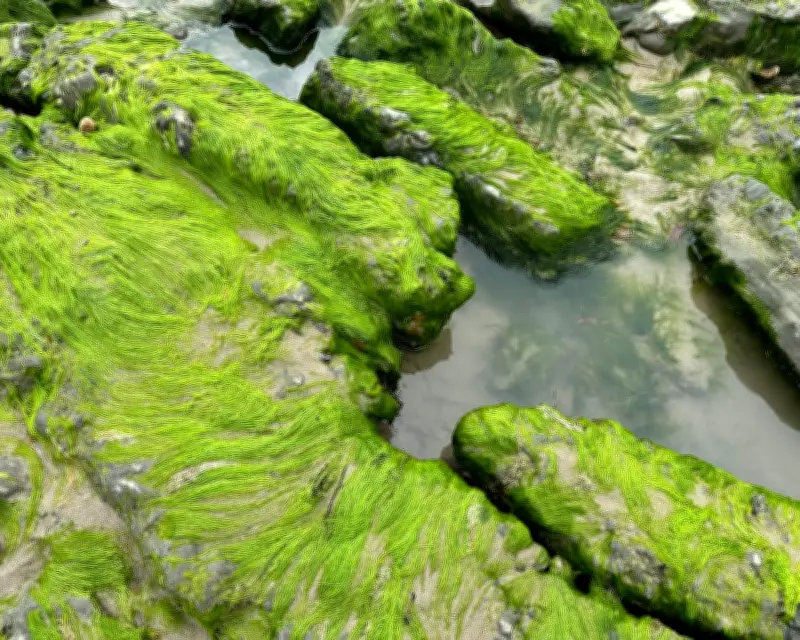
While the seawater is designated safe for bathing, it becomes cleaner as it progresses westward, a process organically mapped on rocks exposed at low tide. Rocks near the river mouth are covered with a rippling mono-pelt of bright-green gutweed (Ulva intestinalis), also known as grass kelp due to its colour. This harmless common seaweed is found around all UK shores and is a fast-growing summer plant that dies off at the end of the season, leaving bleached, deflated white hanks that disintegrate as autumn progresses. Highly resilient, in its prime it can survive in exposed places that dry out completely every low tide.
Gutweed's ability to trap moisture in its dense filaments provides a valuable refuge for tiny marine creatures that would otherwise perish. Hundreds of copepods—microscopic crustaceans that scavenge on bacteria and algae—can shelter in the hollow space inside a single translucent frond. According to the article, gutweed is a useful part of seashore ecology, but its growth can be artificially boosted by nutrients found in sewage and agricultural runoff.
Nutrient Pollution Drives Artificial Growth
Walk away from the river and gutweed becomes less dominant. By the time you reach the flat Blue Lias pavements of Bar Ledges, it intermingles with a brown, rubbery mix of wrack and kelp, tufted with red coral weed, none of which respond as prolifically to extra nitrogen. Some larger boulders are encrusted with brittle frills of pink plates (Mesophyllum lichenoides), a chalky, coralline species that seems halfway to becoming stone. Their fixity echoes the spiral bosses of ammonites in the rock underfoot, a reminder that one day all these weeds and creatures will be another sedimentary layer in Earth's history.